Feeling always tired usually happens because your sleep quality, stress level, hydration, food, or daily routine keeps your body from recovering 😵💫.
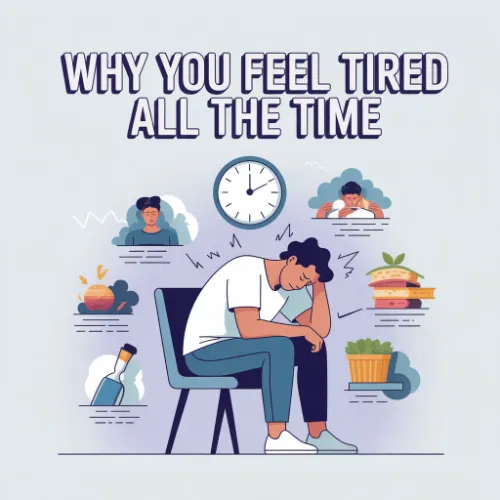
Most people fix it by improving sleep consistency, lowering daily stress, and stabilizing energy habits like water and meals ✅.
What does “always tired” actually mean? 🤔
It means your energy stays low even after rest. You may get through the day, but it feels harder than it should.
This often shows up as brain fog, low motivation, and a heavy body feeling 🪫.
Common reasons why you’re always tired? ⚠️
Most fatigue comes from repeat patterns. Your body reacts the same way each day until you change the inputs.
Main fatigue causes and what they look like 📌
| Cause | What you often notice | What helps most |
|---|---|---|
| Poor sleep quality 😴 | You wake up tired, midday crash, brain fog | Consistent sleep schedule, less screens at night |
| Irregular sleep times ⏰ | You feel wired at night, tired in the morning | Same sleep and wake time daily |
| Chronic stress 😰 | Tense body, racing mind, low energy all day | Breathing, breaks, daily decompression |
| Too much caffeine ☕ | Jitters, anxiety, energy crashes, poor sleep | Cut back slowly, stop earlier in the day |
| Dehydration 💧 | Headaches, sluggishness, low focus | Water steady through the day |
| Sugar spikes 🍬 | Energy up then down fast, cravings | Balanced meals, protein and fibre |
| Low movement 🪑 | Heavy body, stiffness, low alertness | Short walks, standing breaks |
| Mental overload 🧠 | You feel drained without physical work | Less multitasking, fewer notifications |
How does poor sleep cause constant fatigue? 🌙
Sleep is when your body repairs muscles, clears brain waste, and resets stress hormones.
You can spend many hours in bed and still get low-quality sleep if your schedule is inconsistent, your room setup disrupts rest, or your brain stays overstimulated.
If you wake up tired most days, feel foggy, or rely on caffeine to start your morning, sleep quality is a top suspect 😴.
How does stress make you feel exhausted? 😰
Stress keeps your nervous system switched on. Your body uses more energy when it stays in alert mode, even if you sit still all day.
This can make you feel tired but restless at the same time, especially at night.
If your fatigue comes with irritability, muscle tension, or trouble shutting your mind off, stress likely drives a big part of it 🧠.
Can caffeine actually make you more tired? ☕
Yes. Caffeine blocks fatigue signals temporarily. When it wears off, energy drops harder. Late-day caffeine can also reduce sleep quality, which repeats the cycle.
If you need more caffeine over time to get the same effect, your baseline fatigue may be getting worse, not better 📉.
How does dehydration affect energy levels? 💧
Water supports circulation and oxygen delivery. When you do not drink enough, your body works harder to do normal tasks.
That shows up as low focus, headaches, and sluggishness.
Read next: Anxiety Triggers and How to Manage Them 😌
A simple rule helps. If your urine stays dark most of the day, you likely need more water 💧✅.
Does diet play a role in constant fatigue? 🍽️
Yes. Blood sugar swings drain energy. Skipping meals, eating mostly processed food, or relying on sugar and refined carbs can cause quick spikes and crashes.
A steady-energy plate usually includes protein, fiber, and a slower carb source. This keeps energy stable and reduces cravings 🥚🥗.
How does sitting all day drain your energy? 🪑
Low movement lowers circulation and reduces alertness. Your body also stiffens, which adds to the heavy and always tired feeling.
Movement does not need to be intense. Short bursts of walking often increase energy within minutes 🚶♀️.
Can mental overload cause physical tiredness? 🧠
Yes. Mental fatigue is real fatigue. Constant decisions, multitasking, and nonstop notifications use more brain energy than most people realize.
If you feel exhausted after “just working on a computer,” mental load may be the main drain.
How can you fix constant tiredness naturally? ✅
Start with the highest-impact basics first. Do not try to change everything at once. Pick one or two actions and stay consistent.
Quick fixes that work for most people ⚡
- Sleep at the same time every night, even on weekends. 😴
- • Stop screens 60 minutes before bed, or use a strict wind-down routine. 📵
- • Drink water steadily, not only when you feel thirsty. 💧
- • Eat regular meals; add protein to breakfast 🥚
- • Walk 10 minutes daily, then build from there. 🚶♂️
- • Cut caffeine slowly; stop caffeine earlier in the day. ☕⬇️
- • Reduce notification noise, schedule phone-free blocks 🔕
What should you track for 7 days to find your real cause? 🔎
Tracking shows patterns fast. You do not need a perfect journal. You need simple notes.
What to track daily for one week 📓
• Sleep time and wake time ⏰
• How many times you woke up at night 😴
• Caffeine amount and timing ☕
• Water intake estimate 💧
• Meals timing and food type 🍽️
• Movement minutes 🚶♀️
• Stress level from 1 to 10 😰
When should tiredness be taken seriously? 🚑
Talk to a healthcare professional if fatigue lasts more than a few weeks, or if changes to sleep, food, and hydration do not help.
Also get support if you have dizziness, shortness of breath, unusual weakness, or fatigue that disrupts normal daily tasks.
Key takeaway 🧠✅
Feeling tired all the time usually comes from poor sleep quality, stress overload, hydration gaps, blood sugar swings, low movement, or mental strain.
Fix sleep consistency first. Then stabilize water, meals, and daily decompression. Your energy can improve faster than you expect 😌⚡.
Also helpful: Simple Morning Routines That Boost Energy 🌞
Pick one change today. Start with sleep timing for 7 days. If you want more simple, practical guides, explore the Health and Wellness category on FeedFrenzyPlus.

I’m Geraldine Villariza, an SEO Specialist with over 3 years of experience. I’m passionate about beauty, self-care, and helping others thrive. I’ll be discussing topics like lifestyle, beauty, health and wellness, life hacks, daily tips, mindset and motivation, productivity, relationships, and love — all to help you live a more balanced and fulfilling life.