Feng Shui vs Vastu: Which Is Better for Your Home?

Feng Shui and Vastu are traditional systems that aim to improve harmony, energy flow, and balance in homes. Neither is universally better—the right choice depends on your beliefs, culture, and home layout.
Table of Contents
What Is Feng Shui vs Vastu and Why It Matters
Feng Shui is a Chinese practice focused on energy flow and balance, while Vastu is an Indian system based on directional alignment and natural elements.
It matters because both aim to create healthier, more balanced living spaces that support well-being and daily life.
Key Benefits of Feng Shui and Vastu
- Improves energy flow and balance at home
- Supports emotional and mental well-being
- Encourages harmony in living spaces
- Helps optimize room layout and direction
- Enhances comfort and functionality
How Feng Shui and Vastu Work
Both systems work by aligning your home with natural energy.
Step-by-step process:
- Analyze the home’s layout and orientation
- Identify energy flow or directional strengths
- Adjust furniture placement and room use
- Use colors, elements, and symbols thoughtfully
- Maintain balance through cleanliness and order
Feng Shui vs Vastu: Which Is Better for Your Home?
Feng Shui focuses on the flow of energy, known as chi, throughout your living space. It emphasizes balance, movement, and harmony by adjusting furniture placement, lighting, colors, and décor. One of Feng Shui’s strengths is flexibility—you can apply its principles to apartments, rented homes, or irregular layouts without major renovations. For example, improving Feng Shui may involve repositioning a desk to face the door, adding plants for natural energy, or decluttering to allow chi to flow freely.
Vastu, on the other hand, is rooted in ancient Indian architecture and follows strict directional guidelines based on the five natural elements: earth, water, fire, air, and space. Each room has an ideal direction—for example, kitchens are best placed in the southeast, while bedrooms are recommended in the southwest. Vastu works best when applied during construction or major renovations, as it relies heavily on structural alignment and fixed orientation.
Key Differences Explained
- Approach: Feng Shui is adaptive and symbolic, while Vastu is structural and rule-based.
- Flexibility: Feng Shui can be adjusted over time; Vastu follows fixed directional rules.
- Application: Feng Shui suits modern homes and small spaces; Vastu suits traditional homes and new builds.
- Focus: Feng Shui prioritizes energy flow and emotional comfort; Vastu emphasizes cosmic balance and natural forces.
Which One Is Better for Your Home?
Neither system is universally better—it depends on your lifestyle and beliefs. If you want practical, easy-to-apply guidance without changing your home’s structure, Feng Shui may be the better choice. If you value tradition, structure, and are planning a new build or major renovation, Vastu may be more suitable.
Many homeowners also choose to combine both, using Vastu for overall direction and Feng Shui for daily comfort and energy balance.
👉 Ultimately, the best system is the one that makes your home feel more peaceful, balanced, and supportive of your daily life.
Common Questions About Feng Shui vs Vastu
Can Feng Shui and Vastu be used together?
Yes. Many people combine basic principles from both systems as long as they do not conflict.
Is one more effective than the other?
Effectiveness depends on belief, consistency, and application rather than the system itself.
Do Feng Shui and Vastu require major renovations?
No. Most improvements can be made through simple layout changes, organization, and décor adjustments.
Who Is a Good Candidate?
Anyone interested in improving home energy and balance can benefit.
These systems are especially useful for homeowners, renters, and people sensitive to their living environment.
Risks or Considerations
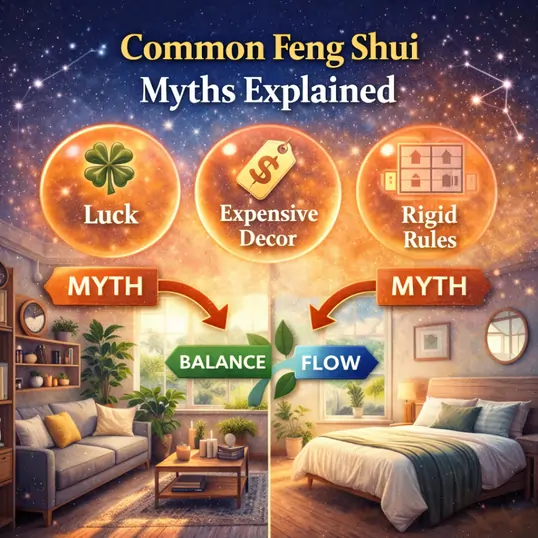
Over-applying rules may cause unnecessary stress or expense. Feng Shui and Vastu should be used as supportive guides, not strict requirements.
What to Expect After Applying Feng Shui or Vastu
You may notice improved comfort, calmness, and organization.
Emotionally, people often feel more relaxed and focused in a well-balanced home environment.
Final Thoughts
Feng Shui and Vastu both offer valuable ways to improve harmony and energy at home. Choosing the right system depends on personal preference, cultural background, and home design.
👉 Explore Feng Shui and Vastu principles and apply what feels right for your home and lifestyle.

I’m Baby Ann Diaz, an accomplished SEO content writer with over ten years of experience producing engaging, search-optimized content. With a strong focus on Astrology, Horoscopes, and Feng Shui, I create clear, concise, and strategically keyword-driven articles that align with user intent and modern SEO standards. My expertise spans comprehensive keyword research, on-page optimization, and enhancing content for mobile responsiveness, page speed, and effective site structure. Throughout my career, I’ve consistently elevated content performance through thoughtful keyword integration, refined formatting, and solid technical SEO practices.