Burnout is not just feeling tired. It is ongoing physical, mental, and emotional exhaustion caused by prolonged stress 😵💫.
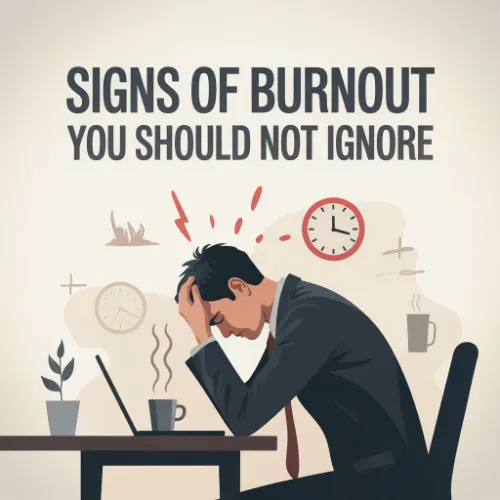
If you ignore early signs, burnout can affect your health, relationships, and work performance.
What is burnout? 🤔
Burnout is a state of chronic stress where your body and mind stop recovering. Rest no longer feels enough. Motivation drops. Even small tasks feel heavy.
Burnout develops gradually. Most people do not notice it until symptoms start affecting daily life.
What are the earliest signs of burnout? 🚩
Burnout shows warning signs long before total exhaustion.
Early signs often include:
• Constant fatigue, even after sleep 😴
• Feeling emotionally numb or detached 😶
• Low motivation for things you once enjoyed
• Increased irritability or impatience 😠
• Difficulty concentrating or remembering things 🧠
These signs tend to repeat. That repetition matters.
May Also Helpful: Burnout: Symptoms, Treatment, and Tips on How to Deal
What are the most common burnout symptoms? ⚠️
Burnout affects the whole system, not just energy levels.
Common burnout symptoms and how they show up 📌
| Symptom | What it feels like | Why it matters |
|---|---|---|
| Physical exhaustion 🪫 | Heavy body, low stamina | Body not recovering |
| Mental fatigue 🧠 | Brain fog, slow thinking | Reduced performance |
| Emotional detachment 💔 | Feeling disconnected | Loss of engagement |
| Sleep disruption 😴 | Trouble falling or staying asleep | Stress hormones stay high |
| Cynicism or negativity 😕 | Loss of optimism | Emotional overload |
| Frequent illness 🤧 | Getting sick more often | Weakened immunity |
How burnout affects your body 🔥
Burnout keeps your stress response activated.
Your body releases cortisol to cope. Over time, high cortisol disrupts sleep, digestion, immunity, and energy regulation. This is why burnout feels physical, not just mental.
Many people describe burnout as being “tired but wired” ⚡.
How burnout affects your mind 🧠
Burnout reduces mental clarity.
You may struggle with decisions, feel overwhelmed easily, or avoid tasks altogether. Creativity drops. Focus fades.
This is not laziness. It is nervous system overload.
How burnout affects emotions 💔
Emotionally, burnout often shows up as detachment.
You may feel:
• Less empathy
• Less patience
• Less excitement
• More numbness
This emotional shutdown is a coping response, not a personality change.
Why people ignore burnout signs 🚫
Many people push through burnout because they believe slowing down means failure.
Common reasons include:
• Fear of falling behind
• Normalising exhaustion
• Believing rest must be earned
• Comparing yourself to others
Ignoring burnout does not make it disappear. It makes recovery longer.
How burnout is different from normal stress ⚖️
Stress is temporary. Burnout is persistent.
With normal stress, rest helps. With burnout, rest alone does not fix the problem because the system stays overloaded.
If stress feels endless and recovery never happens, burnout may be present.
Who is most at risk of burnout? 👥
Burnout affects many people, but risk is higher if you:
• Work long hours without breaks
• Carry emotional responsibility for others
• Struggle to set boundaries
• Feel pressure to always perform
• Have limited recovery time
Burnout is common in high-responsibility roles, but it can affect anyone.
Also helpful: Anxiety Triggers and How to Manage Them 😌
How to reduce burnout before it gets worse ✅
Burnout recovery starts with reducing load, not adding tasks.
Small steps that help most people 🌿
• Improve sleep consistency 😴
• Reduce non-essential commitments 📉
• Schedule real breaks, not scrolling 📵
• Add gentle movement like walking 🚶♀️
• Lower daily stimulation and noise 🔕
• Talk openly about capacity limits 🗣️
Recovery improves when stress inputs decrease.
What not to do when burned out ❌
Some habits slow recovery.
Avoid:
• Pushing harder
• Adding productivity systems
• Ignoring physical symptoms
• Using caffeine to override exhaustion ☕⬆️
• Waiting for motivation to return
Burnout heals through rest and recalibration, not pressure.
When should burnout be taken seriously? 🚑
Seek professional support if:
• Burnout lasts for months
• Sleep problems persist
• Anxiety or low mood increases
• Work or relationships suffer
• Physical symptoms worsen
Early support speeds recovery.
How long does burnout recovery take? ⏳
Recovery time varies.
Many people notice improvement within:
• 2 to 4 weeks of reduced stress
• 1 to 3 months with consistent changes
• Ongoing gains with healthier boundaries
Burnout builds slowly. Recovery also takes time.
Key takeaway 🧠✅
Burnout is a warning, not a weakness. Fatigue, detachment, and low motivation are signals your system needs relief. When you reduce stress, restore rest, and protect boundaries, energy and clarity can return.
Listen early. Recover sooner 🌱.
Read next: Why You Feel Tired All the Time 😴
If these signs feel familiar, pause and adjust your pace this week. Explore more Health and Wellness guides on FeedFrenzyPlus 💚

I’m Geraldine Villariza, an SEO Specialist with over 3 years of experience. I’m passionate about beauty, self-care, and helping others thrive. I’ll be discussing topics like lifestyle, beauty, health and wellness, life hacks, daily tips, mindset and motivation, productivity, relationships, and love — all to help you live a more balanced and fulfilling life.