
Your attachment style plays a major role in how you connect, communicate, and love in relationships.
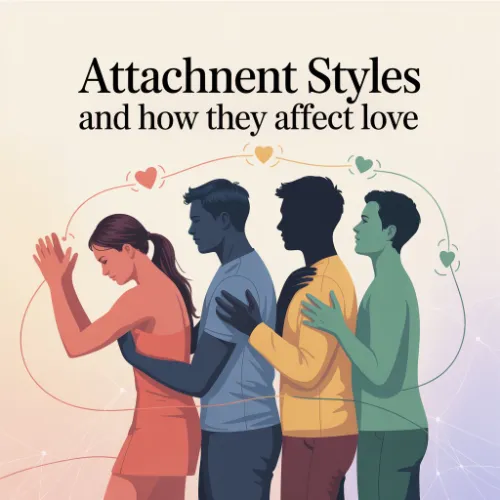
Understanding your attachment style helps you understand yourself and your partner better, leading to healthier and more fulfilling connections.
What are attachment styles? 🤔
Attachment styles are patterns of behavior and emotional responses you develop based on early relationships with caregivers.
These styles influence how you interact with romantic partners and handle emotional closeness, trust, and conflict.
There are four primary attachment styles that affect how we form and maintain relationships:
- Secure Attachment
- Anxious Attachment
- Avoidant Attachment
- Disorganized Attachment
Each style shapes the way you give and receive love, manage stress, and deal with intimacy.
What are the 4 attachment styles? 🚩
The four attachment styles are based on early childhood experiences and can change throughout life with self-awareness and effort.
1. Secure Attachment 💖
People with a secure attachment style tend to have healthy, balanced relationships.
They are comfortable with intimacy, trust their partners, and express their feelings openly. They are also capable of handling conflict calmly.
Signs of a secure attachment style:
• Comfort with emotional closeness
• Clear communication
• Healthy boundaries
• Ability to compromise
• High self-esteem and emotional stability
2. Anxious Attachment 😟
People with an anxious attachment style often worry about their relationships.
They may fear abandonment or not being loved enough. They often seek constant reassurance from their partners and may become overly clingy or jealous.
Signs of an anxious attachment style:
• Feeling insecure or overly dependent on your partner
• Frequent need for reassurance
• Fear of being abandoned or rejected
• Difficulty trusting others
• Tendency to become overwhelmed by emotions
3. Avoidant Attachment 🚪
People with an avoidant attachment style often struggle with intimacy and emotional closeness.
They may value independence over connection and can become distant or shut down when their partner seeks closeness.
Signs of an avoidant attachment style:
• Difficulty expressing emotions or vulnerability
• Tendency to pull away when things get emotionally intense
• Preferring to handle problems alone
• Discomfort with emotional closeness
• Difficulty trusting others
4. Disorganized Attachment 🤯
People with a disorganized attachment style often have mixed feelings about intimacy. They may desire closeness but feel fear or confusion about getting too close. This style often results from traumatic or inconsistent early relationships.
Signs of a disorganized attachment style:
• Conflicting behaviors (wanting closeness but pushing people away)
• Fear of abandonment and fear of intimacy simultaneously
• Emotional outbursts or unpredictable responses to stress
• Difficulty managing emotions in relationships
How do attachment styles affect relationships? ⚡
Your attachment style influences how you approach intimacy, handle conflict, and communicate in your relationships. Understanding these patterns helps you navigate your love life with more awareness.
Here’s how different attachment styles impact love:
| Attachment Style | How it affects relationships | Common challenges |
|---|---|---|
| Secure | Comfortable with emotional closeness, healthy communication | May struggle with partners who have insecure styles |
| Anxious | Craves closeness, can become overly dependent or jealous | Overthinking, seeking reassurance, emotional overwhelm |
| Avoidant | Seeks independence, values personal space | Difficulty expressing emotions, avoids conflict |
| Disorganized | Conflicted about love, wants closeness but fears it | Emotional instability, inconsistent behavior |
How to recognize your attachment style 🧠
Recognizing your attachment style is the first step in creating better relationships. To do this, reflect on your past relationships and how you typically behave in moments of intimacy, conflict, or stress.
You may also notice patterns:
• How do you react to conflict?
• Do you avoid closeness or crave it?
• Do you trust easily or feel constantly insecure?
Understanding these reactions helps you see how your attachment style affects your behavior in love.
Read next: Emotional Distance in Relationships and What Causes It 😴
Can you change your attachment style? 🔄
Yes, with self-awareness and effort, you can change your attachment style. Therapy, mindfulness, and relationship work can help you shift toward a more secure attachment style.
How to build a secure attachment style 🧘♀️
If you struggle with anxious, avoidant, or disorganized patterns, here’s how to move toward a more secure attachment:
• Practice self-love: Focus on improving your self-esteem and emotional regulation.
• Communicate clearly: Work on expressing your needs without fear or defensiveness.
• Build trust: Start with small, consistent actions that reinforce reliability and safety in your relationships.
• Be vulnerable: Share your feelings and fears without the fear of being judged or rejected.
• Manage stress: Practice grounding techniques and mindfulness to reduce anxiety and emotional reactivity.
What does a healthy relationship look like with secure attachment? 💖
A healthy relationship with secure attachment is based on mutual respect, clear communication, and emotional intimacy.
Partners feel safe to express themselves, handle conflict constructively, and support each other through challenges.
Key Takeaway 🧠✅
Understanding your attachment style helps you build healthier, more fulfilling relationships.
Whether you’re secure, anxious, avoidant, or disorganized, knowing how your style affects your love life allows you to create better connections.
Start by improving your self-awareness and communicating openly with your partner. With effort, you can shift towards a more secure attachment style and improve your relationships.
Also helpful: Signs of Burnout You Should Not Ignore 🔥
Want to understand yourself better? Explore more for Relationships & Love guides on FeedFrenzyPlus 💚

I’m Geraldine Villariza, an SEO Specialist with over 3 years of experience. I’m passionate about beauty, self-care, and helping others thrive. I’ll be discussing topics like lifestyle, beauty, health and wellness, life hacks, daily tips, mindset and motivation, productivity, relationships, and love — all to help you live a more balanced and fulfilling life.