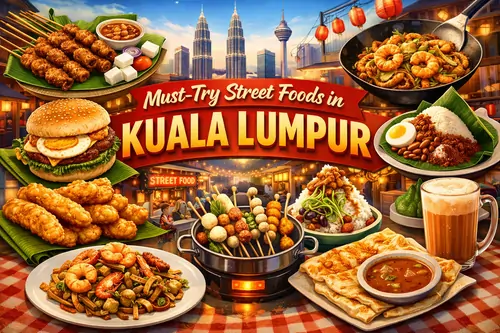
Street foods in Kuala Lumpur is one of the best reasons to visit Malaysia, especially if it’s your first time in the city.
From Jalan Alor and Petaling Street (Chinatown) to Kampung Baru and Brickfields (Little India), KL is packed with hawker stalls, night markets, kopitiam, and mamak eateries serving flavourful, affordable dishes almost around the clock.
Introduction
If you love eating where locals eat, Kuala Lumpur street food is a must‑experience. The city’s food streets and markets bring together Malay, Chinese, and Indian flavours in one compact, easy‑to‑explore destination, with something delicious on almost every corner.
Key areas like Jalan Alor Food Street in Bukit Bintang, Petaling Street in Chinatown, Kampung Baru, and Brickfields (Little India) are the best places to start. You can read more practical tips and stall recommendations in this detailed Jalan Alor food street guide.
This simple Kuala Lumpur street food guide explains what “street food” means in KL, where to find the best stalls, and which dishes you absolutely must try. For another perspective and a map‑based route, check this DIY Kuala Lumpur food tour article.
You’ll also get a practical one‑day Kuala Lumpur food tour route here, plus tips on hygiene, halal food, payments, and basic etiquette so you can enjoy KL like a local.
Quick Guide to Kuala Lumpur Street Food (Prices, Hygiene, Halal)

In Kuala Lumpur, “street food” is more than food cooked on the roadside. It includes classic hawker stalls, busy night markets (pasar malam), kopitiam (traditional coffee shops), mamak eateries, and dedicated food streets such as Jalan Alor.
Street food in KL is usually very affordable. Many everyday favourites like nasi lemak, char kuey teow, roti canai, and cendol range roughly from low to mid tens of ringgit per serving, depending on area and portion size.
Tourist‑heavy streets and seafood restaurants may charge more, especially where items are priced by weight.
For hygiene, choose stalls with a constant flow of customers and high food turnover.
Look for food cooked to order, clean pans and woks, and vendors who keep raw and cooked items separate; if you have a sensitive stomach, stick to freshly cooked, piping‑hot dishes and drink bottled water or hot drinks.
Kuala Lumpur offers plenty of halal street food, especially in Malay and Indian‑Muslim areas.
Kampung Baru, Jalan Masjid India, and mamak restaurants are excellent places to find halal options, but you can also look for halal logos, Muslim owners, or simply ask “halal?” before ordering if you are unsure.
Diversity is at the heart of KL street food: Malay dishes like nasi lemak and satay, Chinese dishes like char kuey teow, Hokkien mee, and claypot chicken rice, and Indian and Indian‑Muslim staples like roti canai and banana leaf rice sit side by side.
For more ideas on what to eat, you can browse this list of must‑try street foods in Kuala Lumpur.
Where to Find the Best Street Food in Kuala Lumpur
Here are the main neighbourhoods to include in your Kuala Lumpur street food plan.
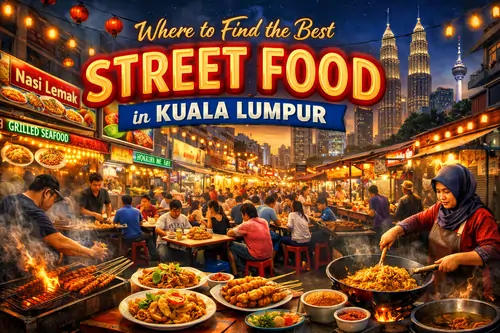
Jalan Alor Food Street (Bukit Bintang)
Jalan Alor Food Street, located in Bukit Bintang, is arguably the most famous food street in Kuala Lumpur. By evening, the entire road fills with plastic tables, smoky grills, and the sizzle of woks, creating a lively night‑market vibe.
You’ll find grilled seafood, satay, rice and noodle dishes, stir‑fried vegetables, and plenty of Chinese‑style hawker favourites here. It’s an excellent place to sample char kuey teow, grilled stingray, barbecued chicken wings, and other crowd‑pleasers in one convenient spot.
Because of its popularity and central location, prices along Jalan Alor can be a little higher than more local night markets, but the atmosphere is worth it for first‑time visitors.
For detailed maps, dish suggestions, and recommended stalls like Wong Ah Wah, see this Jalan Alor food street guide.
Petaling Street (Chinatown)
Petaling Street, in Chinatown, is another essential stop on any KL street food guide. Here, street food stalls and small shops sit alongside market stands selling clothes, souvenirs, and everyday goods.
Chinatown is especially good for noodles, roast meats, dim sum, and snacks. Look for wantan mee, roasted duck or pork, chee cheong fun, and various types of Chinese pastries and cakes. You can also find a strong cup of kopi (local coffee) or tea in one of the many older kopitiam.
Petaling Street is a great place to hunt for char kuey teow, claypot dishes, and classic Chinese soups.
Visit from late morning to evening for food, and stay until night to enjoy the lights, crowds, and atmosphere of this historic part of Kuala Lumpur.
Kampung Baru
Kampung Baru is a traditional Malay enclave in the city centre, famous for its authentic Malay food and more “village‑like” feel despite the nearby skyscrapers. It is one of the best places to explore if you’re looking for halal street food in Kuala Lumpur.
Here you’ll find nasi lemak, satay, grilled fish, nasi campur (rice with an array of side dishes), soups, and traditional Malay cakes and kuih.
Many stalls open in the late afternoon and evening, and the area becomes particularly lively during festive periods such as Ramadan and Hari Raya.
Kampung Baru is ideal if you want to taste home‑style Malay cooking and see a more local side of Kuala Lumpur. It’s also a good area to combine with a visit to KLCC or the Petronas Towers, which are not too far away.
Brickfields (Little India)
Brickfields, often called Little India, is the heart of Indian and Indian‑Muslim food in Kuala Lumpur. Located near KL Sentral, it’s easy to reach by public transport and perfect for a lunchtime stop on a KL food tour.
The streets around Jalan Tun Sambanthan are filled with banana leaf rice restaurants, roti canai and dosai shops, sweet shops, and stalls selling savoury snacks like vadai. Bright shopfronts, colourful sarees, and loud music add to the atmosphere.
Brickfields is the best place in Kuala Lumpur for Indian banana leaf rice and a wide range of curries, as well as fluffy roti canai and other breads.
For specific restaurant names and addresses, this KL food tour article highlights several good banana leaf and roti spots in the area.
Must‑Try Street Foods in Kuala Lumpur
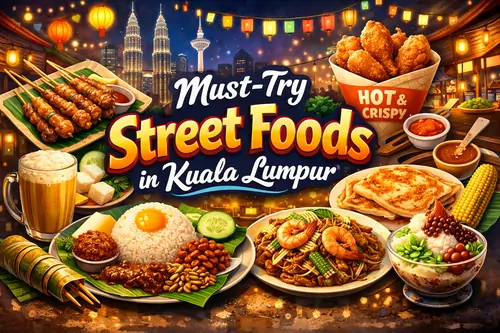
Nasi Lemak
Nasi lemak is Malaysia’s unofficial national dish and a must‑try in Kuala Lumpur. It consists of rice cooked in coconut milk, served with spicy sambal, crispy anchovies (ikan bilis), roasted peanuts, sliced cucumber, and a boiled or fried egg.
Many stalls and shops offer extra toppings such as fried chicken, sambal squid, beef or chicken rendang, cockles, or paru (beef lung). This turns a simple plate of nasi lemak into a full meal that can be eaten at any time of day.
The flavour profile blends rich coconut rice with the heat and sweetness of the sambal and the crunch of the anchovies and peanuts. For more nasi lemak inspiration and other Malaysian street food ideas, you can check this Malaysia street food guide.
You can find nasi lemak at roadside stalls in the morning, in Kampung Baru, at kopitiam, in mamak restaurants, and at night markets all over Kuala Lumpur.
Char Kuey Teow
Char kuey teow is a plate of flat rice noodles stir‑fried over high heat with soy sauce, prawns, egg, bean sprouts, and sometimes Chinese sausage or cockles. It is one of the most beloved noodle dishes in KL, and a staple of Chinese hawker stalls.
A good char kuey teow has “wok hei”, a smoky, slightly charred aroma that comes from cooking quickly over a very hot wok. The noodles should be springy, the bean sprouts crisp, and the sauce savoury with a hint of sweetness.
You can find tasty char kuey teow at hawker stalls in Jalan Alor, around Petaling Street Chinatown, and in local kopitiam all across the city. This KL food guide also lists char kuey teow among the must‑eat dishes in the city.
Hokkien Mee
KL‑style Hokkien mee is different from the lighter versions found elsewhere in Malaysia. In Kuala Lumpur, Hokkien mee is made with thick yellow noodles stir‑fried in a dark, rich soy‑based sauce with pork, lard, cabbage, and prawns.
The noodles are chewy and coated in a glossy sauce, often with crunchy bits of fried pork fat that add a special flavour. The dish is hearty and satisfying, making it perfect as a late‑night meal.
KL‑style Hokkien mee is usually eaten at night in Chinese restaurants, coffee shops, and food stalls, especially in areas like Petaling Street and other older neighbourhoods. Traditional versions are not halal because they use pork and lard, so check ingredients if this is important for you.
Satay
Satay is skewered, marinated meat grilled over charcoal and served with peanut sauce, cucumber, onion, and sometimes rice cakes (nasi impit). In Kuala Lumpur, you’ll commonly see chicken satay, beef satay, and lamb satay.
Each stick of satay is smoky and slightly charred from the grill, with a sweet‑savory marinade. The peanut sauce is rich and slightly spicy, and the cucumber and onion help cut through the richness.
Satay is particularly popular in the evening and at night markets. You can enjoy it in Kampung Baru, at Jalan Alor food street, and at many halal night stalls and Malay restaurants around KL. This Kuala Lumpur street food list also highlights satay as one of the top foods to try.
Roti Canai
Roti canai is a flaky, layered flatbread of Indian‑Muslim origin, usually served with dhal, fish curry, or chicken curry. It is one of the classic breakfast and supper dishes in Kuala Lumpur and across Malaysia.
The flatbread is crispy on the outside and soft on the inside, making it perfect for tearing and dipping into warm curry. Many stalls offer variations like roti telur (with egg), roti cheese, roti bawang (onion), and sweet versions with sugar or condensed milk.
You’ll find roti canai at mamak eateries and 24‑hour restaurants all over Kuala Lumpur, especially in Brickfields and busy local neighbourhoods. Roti canai is often highlighted in KL food guides as one of the most essential dishes to try.
Claypot Chicken Rice
Claypot chicken rice is rice cooked directly in a claypot with marinated chicken, Chinese sausage, soy‑based sauces, and sometimes salted fish. It is served still sizzling, with a smoky aroma that comes from the claypot itself.
Locals love the slightly crispy layer of rice at the bottom of the pot, which adds texture and extra flavour. Before eating, you usually mix the ingredients together to coat all the rice with sauces and juices from the chicken and sausage.
This dish is commonly found in Chinese food streets, older kopitiam, and certain hawker centres, often in the evening. Many versions are not halal because of the Chinese sausage, so ask about ingredients if you need a halal meal.
Cendol
Cendol is a refreshing dessert made with shaved ice, coconut milk, palm sugar syrup (gula Melaka), and green rice flour jelly strands. Some versions add red beans, sweet corn, or glutinous rice for extra texture.
The taste is creamy, sweet, and slightly caramel‑like from the palm sugar syrup, with chewy green jelly that makes every spoonful fun to eat. It’s the perfect treat for Kuala Lumpur’s heat and humidity.
You can find cendol at roadside dessert stalls, in night markets, near markets, and at some Indian‑Muslim or Malay restaurants. Cendol also appears frequently in broader Malaysian street food guides, so you’ll see it recommended again and again.
Pisang Goreng (Fried Banana)
Pisang goreng is battered and deep‑fried banana, often sold as a quick snack at roadside stalls and evening markets. The batter fries up crisp and golden, while the banana inside becomes soft and sweet.
Many stalls also sell other fritters like fried sweet potato, jackfruit, or yam, and some modern versions of pisang goreng are topped with cheese, chocolate, or sauces. These creative twists are popular with younger locals.
You’ll usually see pisang goreng in the afternoon and evening near schools, offices, and local residential areas. It’s an easy snack to grab in a small paper bag while moving between different Kuala Lumpur street food spots.
Indian Banana Leaf Rice
Indian banana leaf rice is a full meal where rice is served on a banana leaf with various vegetable side dishes, pickles, papadum, and your choice of curries. It is usually eaten in restaurants rather than literal street stalls, but it’s an essential part of the KL food experience.
You can choose vegetarian, chicken, fish, or mutton curries, and refills of rice and some sides are often free or inexpensive. Many locals eat banana leaf rice with their right hand, mixing rice and curry directly on the leaf, but you can always ask for fork and spoon if you are not comfortable eating with your hands.
Brickfields (Little India) is the best area in Kuala Lumpur to try banana leaf rice, although you will also find it in other Indian neighbourhoods and around Jalan Masjid India. Food bloggers often recommend Sri Nirwana Maju and similar spots for a classic banana leaf meal.
Kopitiam Breakfast (Kaya Toast & Coffee)
A traditional kopitiam breakfast is one of the most authentic ways to start your day in Kuala Lumpur. It usually includes kaya toast, soft‑boiled eggs, and a hot drink such as kopi (local coffee) or teh tarik (pulled tea).
Kaya is a coconut and egg jam that is spread on toasted bread with butter, giving a sweet‑salty taste. Soft‑boiled eggs are cracked into a saucer, seasoned with soy sauce and white pepper, and eaten with a spoon or used as a dip for toast.
You can find kopitiam breakfasts in Chinatown, older neighbourhoods, and even inside some modern malls that keep a traditional style. This KL food tour article lists several famous kopitiam, such as Ho Kow Hainam Kopitiam, that you might want to try.
How to Plan Your Own Kuala Lumpur Food Tour (Half‑Day and One‑Day Route)
Here is a simple one‑day Kuala Lumpur food tour route that combines the main areas and must‑try dishes:
- Breakfast (Kopitiam + Chinatown):
Start your day at a kopitiam near your hotel or in Petaling Street. Order kaya toast, soft‑boiled eggs, and coffee or tea. After breakfast, stroll through Chinatown, exploring the markets and sampling early snacks like Chinese pastries or a light bowl of noodles. - Lunch (Brickfields – Little India):
Take the LRT or monorail to KL Sentral and walk into Brickfields. Enjoy Indian banana leaf rice or roti canai at an Indian‑Muslim or South Indian restaurant, and finish with Indian sweets or a cup of masala tea or teh tarik. - Afternoon Snack (Kampung Baru or another local area):
In the afternoon, head towards Kampung Baru or another local neighbourhood. Look for stalls selling cendol, pisang goreng, or other small snacks to cool down and recharge. - Dinner (Jalan Alor Food Street):
End your day at Jalan Alor Food Street in Bukit Bintang. Here you can order satay, grilled seafood, claypot dishes, char kuey teow, and KL‑style Hokkien mee while soaking up the night‑market atmosphere. For a guided option that covers similar stops, you can look at KL food tour experiences like this one.
Public transport in KL is straightforward: use the LRT, MRT, and monorail to connect areas such as Chinatown, Brickfields, and Bukit Bintang, and use ride‑hailing apps like Grab for short hops or when travelling with a group.
To avoid getting too full, share dishes at each stop, drink plenty of water, and give yourself time to walk between meals.
Practical Tips & Etiquette for Eating Street Food in KL (Money, Hygiene, Ordering)
A few simple tips will make your Kuala Lumpur street food experience smoother and more enjoyable.
- Hygiene and safety:
Choose stalls with many local customers, visible cooking, and freshly prepared food. Avoid food that has obviously been sitting at room temperature for a long time, especially in the heat. Use hand sanitiser before eating and stick to bottled water or hot drinks if you are worried about your stomach. - Payments and prices:
Many hawker stalls and small eateries still prefer cash, although more places now accept local e‑wallets. Keep small notes and coins handy. Always check if seafood and certain meats are priced per plate or by weight before ordering, especially on touristy food streets like Jalan Alor. - Ordering and seating:
In many food courts and kopitiam, you can claim a table first, then go up to each stall to order and give your table number. At some hawker centres, drinks are ordered from a separate drink stall. Be patient during peak hours and confirm your order if the stall is very busy. - Respectful behaviour:
It’s polite to greet vendors, smile, and say thank you (“terima kasih”) when paying. If you try banana leaf rice and want to eat with your hands, use only your right hand. Staff understand that visitors may not know every custom, so don’t worry too much about making mistakes. - Useful phrases:
- “Nasi lemak satu” – one nasi lemak.
- “Kurang pedas” – less spicy.
- “Tak nak pedas” – not spicy.
- “Halal?” – is this halal?
- “Boleh tambah?” – can I have more?
For more background on halal food in Malaysia and how to recognise halal outlets, this halal food guide is helpful.
FAQs About Kuala Lumpur Street Food
Is Kuala Lumpur street food safe to eat?
Yes, Kuala Lumpur street food is generally safe to eat if you choose busy, clean stalls and stick to freshly cooked dishes.
Avoid food that has been sitting out too long, watch how vendors handle ingredients, and drink bottled or hot beverages if you have a sensitive stomach.
Can I find halal street food in Kuala Lumpur?
Halal street food is very easy to find in Kuala Lumpur. Focus on Malay and Indian‑Muslim areas such as Kampung Baru, Jalan Masjid India, and mamak restaurants, and look for halal signs or ask the staff directly if the food is halal.
You can learn more about halal dining in Malaysia in this dedicated guide.
What time does street food usually start in KL?
Street food in Kuala Lumpur starts from late morning in many places, but the most famous streets are liveliest in the evening.
Jalan Alor and many night markets are busiest from around 6 pm onwards, while kopitiam and mamak eateries handle early breakfasts and late‑night meals.
Is street food in KL expensive?
Street food in KL is generally not expensive and offers very good value. Many popular dishes cost only a modest amount per serving, with prices increasing mainly in tourist‑heavy locations and seafood restaurants that charge by weight.
Budget‑focused KL food guides often highlight how much you can eat in a day with a small budget.
KL Street Food Areas and What to Eat
Kuala Lumpur street food is one of the easiest and most rewarding ways to experience the city’s culture in a single day.
Use this KL street food guide together with resources like the Jalan Alor food street guides and DIY KL food tour maps to plan your own Kuala Lumpur food tour through Jalan Alor, Petaling Street, Kampung Baru, and Brickfields, and enjoy nasi lemak, char kuey teow, Hokkien mee, satay, cendol, and more like a local.

I’m John Michael Palmes, an SEO practitioner with over three years of hands-on experience in search engine optimization and digital marketing. I help websites improve visibility, build effective SEO content strategies, and rank better on Google using practical, data-driven approaches.
My focus is on on-page SEO, keyword research, and content optimization—the fundamentals that help both search engines and users understand a site clearly. I continuously test, analyze results, and refine strategies, sharing honest and actionable SEO insights as search algorithms evolve.