
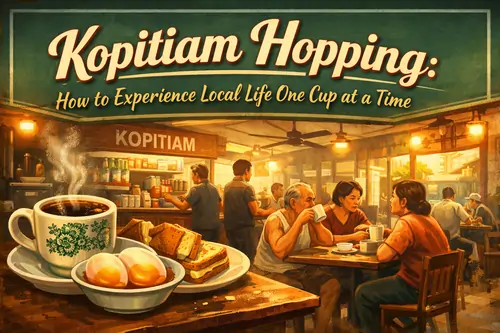
It’s around 8:00 AM. The air is warm, the floor is slightly damp from an early mop, and the drink stall is moving like a machine—cups clinking, spoons tapping, hot steam rising.
A tired office worker grabs a quick breakfast before work, an uncle orders his usual kopi, and two aunties settle in for a chat like they’ve done for years. You sit down, take a breath, and realize: this isn’t just breakfast. This is kopitiam culture.
If you want a destination guide that feels genuinely local, try kopitiam hopping. Instead of visiting a single coffee shop, you visit a few in one morning, sampling drinks and classic bites while watching real neighborhood life unfold—one cup at a time.
This guide is designed for travelers (including Filipinos exploring SG/MY) who want a simple, practical, and culturally respectful way to enjoy an authentic kopitiam experience. We’ll cover what a kopitiam is, what to order, how to plan a mini food trail (or breakfast trail), and the small habits—like chope culture—that make kopitiams feel like home to locals.
What Is a Kopitiam?
A kopitiam is a traditional coffee shop found across Southeast Asia—especially in Singapore and Malaysia. According to the Singapore Tourism Board and various cultural references, kopitiams have long been central to everyday food culture.
The word combines “kopi” (coffee) and “tiam” (shop), and it’s often used to describe an old-school coffee shop where you can get coffee, tea, toast, eggs, and sometimes full meals.
Many kopitiams work like a compact food hub:
- a drink counter (or drink stall)
- separate food stalls (toast, noodles, rice, snacks)
- casual seating—often shared tables
- fast-paced mornings and steady foot traffic
A traditional kopitiam is not just about caffeine. It’s a multi-generational hangout, a daily meeting spot, and a living part of Singapore breakfast culture and Malaysia kopitiam culture.
What Is Kopitiam Hopping?
Kopitiam hopping means visiting multiple kopitiams in one morning (or half-day) to try different drinks and bites, and to experience everyday local life.
Think of it as coffee shop hopping, but grounded in heritage, routine, and comfort food—not latte art.
If you enjoy market walks or street-food crawls, kopitiam hopping is basically the breakfast version: a relaxed, tasty local eats guide you can do without planning too much.
Why Kopitiam Culture Feels So Local
Kopitiams are where “normal life” happens.
You’ll see:
- commuters fueling up for the day
- retirees taking their time with the newspaper
- regulars on a first-name basis with stall owners
- families grabbing affordable comfort food
The tradition of kaya toast and soft-boiled eggs has been widely documented, including by the MICHELIN Guide, which highlights how deeply rooted these breakfast staples are in daily life.
That’s why many consider kopitiams a heritage coffee shop experience—something that carries memory and identity, not just a menu.
What to Expect at a Kopitiam (So You Feel Confident)
1) Shared tables and quick decisions
Seats can be communal, especially during peak hours. Shared tables are normal, and it’s okay to sit near strangers (politely).
2) Self-service seating
Many places are self-service seating: you find a seat first, then order.
3) Ordering at stalls
A common setup is ordering at stalls—drinks from one counter, food from another.
4) A practical vibe
Kopitiams are not meant to be quiet study cafés. They’re lively, functional, and fast.
How to Order at a Kopitiam (Step-by-Step)
Scan for seats. In Singapore, you may notice reserving seats with tissue paper—this is part of chope culture, a uniquely local habit covered by multiple local lifestyle publications like Time Out Singapore.
Order your drink first. Popular options include:
- kopi
- kopi o
- kopi susu
- teh tarik
- teh o
Order food at a separate stall if needed, then follow proper queue etiquette.
If you’re unsure, observe locals—it’s the fastest way to learn.
Kopi and Teh Cheat Sheet (Order Like a Local)
Understanding kopi terminology helps you feel confident. According to food culture explainers from outlets like Serious Eats, kopi has specific variations:
Kopi basics
- kopi – coffee with condensed milk
- kopi o – black coffee
- kopi susu – milk coffee
- kopi tarik – pulled-style coffee
Teh basics
- teh o – tea without milk
- teh manis – sweet tea
- teh tarik – pulled milk tea (popular across Malaysia; see background from Food & Wine)
Comparing kopi vs teh across different kopitiams is part of the fun.
What to Order: The Classic Kopitiam Starter Pack
Start with:
- kaya toast
- soft-boiled eggs
- kopi or teh tarik
This is the iconic Singaporean breakfast set, also widely featured in official tourism resources like Visit Singapore.
In Malaysia, you may also see nasi lemak offered in kopitiams, which is recognized as a national breakfast staple (see overview from Tourism Malaysia).
Planning a Route Like a Destination Guide
When building a practical itinerary, structure it like this:
Stop 1: Heritage Area
Look for a heritage kopitiam Singapore-style establishment near cultural districts.
Stop 2: Near Transit
Search for kopitiam near MRT for busy commuter energy.
Stop 3: Near Food Centres
Blend the experience with hawker centre breakfast culture, which UNESCO has recognized as part of Singapore’s intangible cultural heritage (see UNESCO listing).
This makes your kopitiam hopping experience culturally richer and globally recognized.
Old-School Kopitiams vs Modern Cafés
Old-school kopitiams:
- practical
- affordable
- community-focused
Modern cafés:
- aesthetic
- slower-paced
- specialty-focused
Both are valid experiences, but kopitiams reflect daily life more authentically.
Kopitiam Etiquette: Do’s and Don’ts
Do:
- respect shared tables
- follow queue etiquette
- observe local habits
Don’t:
- ignore chope culture
- occupy large tables alone during rush hour
- expect café-style customization
These habits ensure a respectful and smooth experience.
Budget Guide
Kopitiams are known for affordable local food. Compared to specialty cafés, they offer better value per meal.
For 2–3 stops, budget for:
- multiple drinks
- one toast set
- possibly one savory dish
That’s usually enough to complete a satisfying kopitiam hopping morning.
FAQs
What is kopitiam hopping?
Kopitiam hopping means visiting multiple traditional kopitiams in one morning to experience local breakfast culture.
What is chope culture?
Chope culture refers to reserving seats—often using tissue packets—in busy food centres and kopitiams.
What should I order first?
Start with kaya toast, soft-boiled eggs, and kopi or teh tarik.
Is kopitiam hopping expensive?
No. Kopitiams are known for affordability compared to modern cafés.
Experience Local Life One Cup at a Time
Kopitiam hopping is one of the simplest ways to feel a destination—not just visit it.
You walk in without a big plan, follow the rhythm of ordering at stalls, respect kopitiam etiquette, and enjoy everyday local life.
Whether you’re exploring kopitiam in Singapore or kopitiam in Malaysia, the heart of the experience remains the same: comfort, routine, and community.
Order your first cup. Sit down. Look around.
That’s how you experience local life—one cup at a time.

I’m John Michael Palmes, an SEO practitioner with over three years of hands-on experience in search engine optimization and digital marketing. I help websites improve visibility, build effective SEO content strategies, and rank better on Google using practical, data-driven approaches.
My focus is on on-page SEO, keyword research, and content optimization—the fundamentals that help both search engines and users understand a site clearly. I continuously test, analyze results, and refine strategies, sharing honest and actionable SEO insights as search algorithms evolve.