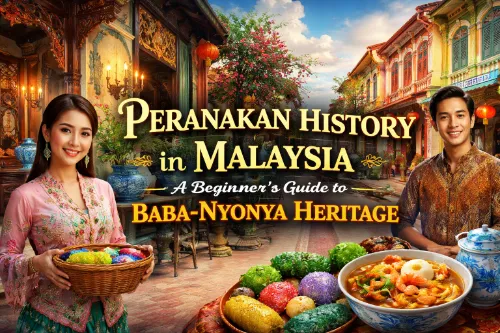
Peranakan History in Malaysia: A Beginner’s Guide to Baba-Nyonya Heritage
Peranakan history in Malaysia tells the story of a community shaped by centuries of trade, settlement, and everyday life in port cities. Often called the Peranakan Chinese, Baba Nyonya, or Straits Chinese, this Chinese-Malay community developed a distinct identity that blends Chinese roots with local Malay influences.
You can see this living heritage most clearly in Peranakan in Melaka and Peranakan in Penang, where museums, historic streets, food traditions, language, and architecture still reflect a unique Sino-Malay culture.
This beginner-friendly guide explains the origins of the Straits Chinese (also known as Straits-born Chinese), how cultural assimilation in Malaysia shaped the community, and where travelers can experience Baba-Nyonya culture today.
It also includes practical destination tips for Melaka and Penang, plus an FAQ section designed to answer common search questions clearly.
What “Peranakan,” “Baba,” and “Nyonya” Mean
“Peranakan” generally means “locally born,” a term used in Malay and Indonesian to describe descendants of immigrants who became rooted in the region.
In Malaysia, it commonly refers to the Peranakan Chinese community whose ancestors settled in the region generations ago and developed a blended way of life. Traditionally:
- Baba refers to Peranakan men, an honorific title for Straits-born Chinese gentlemen.
- Nyonya refers to Peranakan women, often associated with distinctive dress and domestic skills.
- Baba-Nyonya is often used as an umbrella term for the community and its heritage, especially in heritage tourism and museum contexts.
You may also hear “Straits Chinese” or “Straits-born Chinese,” terms closely tied to the colonial-era Straits Settlements trading ports of Melaka, Penang, and Singapore.
While the exact labels can vary by family history and location, they generally point to the same cultural world: a community that became distinct from both newly arrived migrants and the wider local population through time, intermarriage, language shift, and shared customs.
A Simple Timeline of Peranakan History in Malaysia
Understanding Peranakan heritage becomes easier when you place it on a timeline.
- Early trading era
Maritime trade connected China to Southeast Asia, and port cities in the Malay Archipelago became meeting points for merchants and local communities, especially along the Melaka Strait. - Melaka’s early importance
Melaka grew as a major regional port under a Malay sultanate and later foreign powers, creating the conditions for long-term settlement and cultural blending. - Intermarriage and community formation
From roughly the 15th century onward, Chinese traders who settled in the region often married local Malay women, laying the foundations of what later became known as Baba-Nyonya culture. - Straits Settlements heritage era
Under British colonial rule, ports like Penang and Melaka were grouped into the Straits Settlements, and “Straits Chinese” emerged as a clearer social category linked to urban life, English education, and commerce. - Modern change and revival
Urbanization, new migration waves, and language shift reduced everyday use of Baba Malay and some formal customs, but recent decades have seen renewed interest through Peranakan museums, academic studies, and cultural preservation.
Origins: Trade, Settlement, and Cultural Blending
Early Chinese migrants in Malaya and the port city story
Peranakan history in Malaysia is inseparable from maritime trade across the South China Sea and the Melaka Strait. Long before modern borders, the Malay Peninsula sat within a busy trading network linking China, India, the Middle East, and other parts of Southeast Asia.
Some early Chinese migrants in Malaya settled near ports, built livelihoods in commerce and local administration, and formed families over generations.
Intermarriage history in the Straits
A central part of the Peranakan story is intermarriage between Chinese settlers and local Malay women, especially in Melaka and later Penang. When settlers built families locally, customs began to evolve in response to local language, food, climate, and community relationships, creating a hybrid household culture.
Over time, these households developed their own traditions, neither “fully Chinese” nor “fully Malay,” but something distinct that we now describe as Peranakan.
Colonial-era identity and the Straits Chinese label
During the era of the Straits Settlements, the community’s identity became more visible in urban life and colonial records. English-medium schooling, Western legal structures, and commercial roles helped shape a recognizable Straits Chinese middle and upper class.
This colonial-era identity matters because it helps explain why Peranakan culture often reflects global influences—Victorian, Dutch, and British—while staying rooted in local everyday life.
Cultural assimilation in Malaysia
Peranakan heritage is a strong example of cultural assimilation in Malaysia, not as a one-time event but as a gradual, multi-generation process. Language, cuisine, dress, and family customs evolved through daily interaction with Malay neighbors, colonial authorities, and later migrant Chinese communities.
The result is a rich, recognizable Peranakan identity that still has local variations between Melaka, Penang, and Singapore.
Language and Identity: Baba Malay and Local Influences
One of the most distinctive markers of Peranakan identity is language. Baba Malay, also known as Bahasa Melayu Baba, is often described as a Malay-based creole shaped by Hokkien Chinese and other local influences.
It incorporates Malay grammar with a mix of Hokkien vocabulary, older Malay words, and some English loanwords that reflect colonial-era contact.
In Penang, you may also hear about Hokkien influence and specifically Penang Hokkien, a local variety that long served as a lingua franca in parts of the island. Penang’s multilingual environment shaped how people spoke at home, in markets, and in community spaces, including Peranakan households.
The result is that Peranakan speech patterns can differ depending on whether a family’s history is linked to Melaka, Penang, or other regional networks.
Today, fewer people speak Baba Malay fluently, and many younger Peranakans use English or standard Malay in daily life. Even so, the language remains a powerful heritage symbol, and there are ongoing efforts to document and teach it through cultural groups and researchers.
It represents family history, humor, identity, and the soundscape of older Peranakan homes and neighborhoods.
Peranakan Culture in Malaysia: Customs, Clothing, Beliefs
Peranakan traditions and customs
Peranakan traditions often emphasize family ties, hospitality, and ceremonial life, especially around weddings, major festivals, and ancestral rites.
Community reputation and social networks historically mattered in port-city settings where families were linked through trade, politics, and civic life. Customs vary by region, but many practices reflect the blending of Confucian values with local Malay social habits and etiquette.
Religion and ancestral rituals
Many Peranakan families maintained ancestral rituals connected to Chinese traditions, including household altars and memorial practices. These customs often draw from a mix of folk religion, Buddhism, and Taoism, interpreted through local norms and family history.
Ancestral remembrance, such as rituals during Qing Ming and death anniversaries, has long been a meaningful part of Peranakan identity.
Clothing: Nyonya kebaya and cultural elegance
The Nyonya kebaya is one of the most iconic symbols of Peranakan heritage. This fitted blouse, often worn with batik sarongs and ornate accessories, is admired for its lacework, embroidery, and bright colors.
Clothing in this context expresses identity, status, and local adaptation, showing both Malay and European fashion influences.
Craft: Peranakan beadwork and beaded slippers
Another standout tradition is Peranakan beadwork, especially beaded slippers or kasut manik. These handmade shoes feature tiny glass beads arranged in floral, bird, or geometric motifs and are closely associated with Nyonya artistry and bridal wear.
Seeing beadwork up close—whether in a museum display or a heritage boutique—gives a deeper appreciation of the patience and skill behind Peranakan material culture.
Peranakan Cuisine: Nyonya Food as Living History
For many travelers, the most memorable gateway into Peranakan heritage is food. Nyonya cuisine (also called Peranakan cuisine) is widely seen as a hallmark of Peranakan identity and is often described as Chinese-Malay fusion.
What defines Nyonya food in Malaysia
Nyonya food in Malaysia is known for layered taste: savory, sweet, sour, spicy, and aromatic notes in a single dish. Common flavor-building ingredients include belacan (fermented shrimp paste), pandan leaves, lemongrass, galangal, and coconut milk, all of which appear in classic spice pastes (rempah).
Signature dishes to look for
Laksa is among the most famous dishes associated with Peranakan food culture, with regional variations like Nyonya laksa and Penang asam laksa.
Beyond laksa, travelers often seek dishes such as ayam pongteh (braised chicken with fermented bean paste), itik tim (duck soup), and a variety of Nyonya kuih (traditional sweets).
Food plays a major role in ceremonies too, especially weddings and festive gatherings, where family recipes are treated as heritage.
Why cuisine matters to history
Peranakan cuisine is not just “good food”; it is a record of how families lived, which ingredients were available, and how local tastes shaped everyday cooking.
Many recipes were passed down orally or through handwritten notebooks, functioning like family documents across generations. Contemporary restaurants, cookbooks, and heritage projects now help preserve and reinterpret this culinary legacy.
Architecture and the Peranakan Home: Townhouses, Tiles, and Antiques
Peranakan heritage is also highly visual, especially in the architecture and interiors of historic homes. Many visitors first fall in love with the look of a Peranakan townhouse: patterned tiles, carved panels, inner courtyards, and layered décor that reflects both Chinese and European tastes.
Historic Peranakan homes and what to notice
In many historic Peranakan homes, look for:
- Decorative encaustic tiles and patterned floors that mix Chinese motifs with European designs.
- Open courtyards (air wells) that bring light and ventilation into deep terrace houses.
- Display areas for heirlooms, ancestral tablets, and ceremonial items.
- Furniture that reflects mixed influences—Chinese carved wood, Victorian chairs, and local craftsmanship.
You will often hear about Peranakan home décor, Peranakan antiques, and Peranakan furniture as key features of these houses, especially in heritage museums.
Another recurring element is Peranakan porcelain, often pastel-colored and decorated with phoenixes, peonies, and auspicious symbols, which appears in family collections and museum displays.
These objects help visitors understand how taste, identity, and history were expressed inside the home, not only in public life.
Where to Experience Peranakan Heritage in Malaysia
This section is written for destination-guide intent: it helps you plan where to go and what to prioritize if you want to experience Peranakan history in Malaysia firsthand.
Melaka: A classic starting point for Baba-Nyonya heritage
Melaka is often the easiest city for first-time visitors who want a concentrated heritage experience in a compact, walkable area. Key places are close together and sit within a UNESCO World Heritage zone.
Baba Nyonya Heritage Museum
The Baba Nyonya Heritage Museum is a top introduction to Peranakan home life in Melaka. Housed in a row of 19th-century terrace houses on Jalan Tun Tan Cheng Lock, it showcases original furnishings, décor, and heirlooms from a prominent Peranakan family.
A guided tour is ideal because it explains what you’re seeing: household layout, furniture, décor, heirlooms, and ceremonial objects in context.
Jalan Tun Tan Cheng Lock (Heeren Street)
Walking along Jalan Tun Tan Cheng Lock (also known historically as Heeren Street) is one of the best ways to see heritage townhouses. Even without entering every building, the street itself tells a story through façades, five-foot ways, and old shophouse proportions.
It helps visitors understand the connection between urban life, commerce, and family identity in historic Melaka.
Food and cultural stops
Try Nyonya cuisine in Melaka as part of your heritage learning, ideally at restaurants that specialize in traditional Melaka-style dishes. When staff are open to it, asking about ingredients like belacan or rempah can add meaningful context to what you taste.
Some eateries and cafés in the old town also offer Nyonya kuih and desserts that reflect local Peranakan influences.
Penang: Port-city diversity and a deeper heritage landscape
Penang offers a different but equally important Peranakan experience set within the broader multicultural landscape of George Town.
Pinang Peranakan Mansion
The Pinang Peranakan Mansion is one of Malaysia’s most famous attractions for Peranakan heritage. It recreates the typical home of a wealthy Baba from a century ago, with more than a thousand pieces of antiques and collectibles on display.
The mansion’s eclectic architecture and lavish décor make it a striking place to understand Peranakan antiques, home décor, and porcelain in a single visit.
George Town heritage zone
Exploring the George Town World Heritage Site helps you situate Peranakan culture within a wider port-city story that includes Malay, Indian, Eurasian, and other Chinese communities.
As you walk through the streets, you’ll see shophouses, clan temples, churches, and mosques that reflect centuries of trade and migration. Peranakan heritage houses, signboards, and eateries appear within this wider urban mosaic.
Food culture and language texture
Penang is famous for food, and it’s a strong place to explore Nyonya cuisine through local variations of laksa, otak-otak, and desserts. You’ll also encounter Penang Hokkien in markets and kopitiams, which shapes the soundscape and cultural texture of the city.
This helps explain why Peranakan in Penang developed with a slightly different character and everyday language mix than Peranakan in Melaka.
Festivals, Weddings, and Celebrations
Peranakan culture is not only preserved in museums; it also lives in ceremonies and celebrations.
Weddings
Peranakan weddings are known for their elaborate rituals, special clothing, symbolic gifts, and multi-day banquets. While practices vary by family and region, they often highlight community ties, ancestral respect, and the visual flair of Nyonya kebaya and beadwork.
Chinese New Year customs
Many Peranakan households observe Chinese New Year customs, sometimes with local twists shaped by generations in Malaysia. Food, visitation patterns, and household rituals may blend older Chinese elements with Malay-style hospitality and local etiquette.
Ancestral rituals and remembrance
As mentioned earlier, ancestral rituals remain important in many families, reflecting long-standing Chinese heritage practices adapted through local life. Visitors may see this heritage expressed through household altars, ancestral tablets, or museum interpretations that explain remembrance practices.
The Decline and Revival of Peranakan Heritage
Modern life has changed many heritage communities, and Peranakan culture is no exception. Urbanization, language shift, migration, and broader intermarriage patterns reduced the everyday use of Baba Malay and some formal customs in certain families.
At the same time, there has been a visible revival supported by museums, academic research, and community groups.
Institutions like the Baba Nyonya Heritage Museum in Melaka and the Pinang Peranakan Mansion in Penang play a key role in preserving built heritage and material culture. Articles and digital projects, such as this feature on keeping Baba-Nyonya culture of Penang alive, help document changing identities and revival efforts.
For travelers, the best approach is to engage with heritage responsibly by choosing educational museums, supporting authentic craft and food businesses, and treating cultural spaces as living history rather than just photo backdrops.
Why Peranakan History Matters in Malaysia Today
Peranakan history matters because it shows how culture forms through time, not in a single moment. It reveals how communities adapted to local language, food, and social life, creating a distinct identity that is both deeply local and historically global.
In a practical sense, Peranakan heritage also supports Malaysia’s cultural tourism landscape and adds depth to how visitors understand the country’s diversity.
For visitors, exploring Baba-Nyonya culture offers a focused way to move beyond surface-level travel: you learn history through food, architecture, language, and family traditions in specific neighborhoods.
Whether you are walking along Heeren Street in Melaka or stepping into Pinang Peranakan Mansion in George Town, you are seeing how centuries of movement and intermarriage shaped a distinctive Malaysian story.
Quick Itinerary Ideas for First-Time Visitors
One-day heritage route in Melaka
- Start at the Baba Nyonya Heritage Museum for a guided look at a historic Peranakan home.
- Walk through Jalan Tun Tan Cheng Lock (Heeren Street) to observe heritage façades and shophouses.
- Explore nearby heritage areas at a relaxed pace within Melaka’s UNESCO core zone.
- Finish with a Nyonya cuisine meal and traditional kuih at a reputable Peranakan restaurant in the old town.
One-day heritage route in Penang
- Visit Pinang Peranakan Mansion in the morning for a deep dive into Peranakan interiors and antiques.
- Walk through the George Town heritage zone, paying attention to shophouses, clan houses, and temples.
- Try laksa and a second Nyonya dish—such as otak-otak or a Nyonya curry—at well-known Penang eateries.
- Look for heritage houses and architectural details as you explore, including decorative tiles, air wells, and traditional signboards.
If you have time, doing both Melaka and Penang gives you the best beginner overview of Peranakan history in Malaysia, showing how one culture can take on local character in different port cities.
Frequently Asked Questions
Who are the Peranakans in Malaysia?
Peranakans in Malaysia are commonly the Peranakan Chinese (Baba-Nyonya or Straits Chinese), a community formed through generations of local settlement, intermarriage, and cultural blending, especially in heritage port cities like Melaka and Penang.
Are Peranakans Malay or Chinese?
Peranakans are typically Chinese by ancestry but culturally distinct through long-term local life. Their identity reflects Sino-Malay cultural blending, including language (Baba Malay), customs, cuisine, and local social practices.
What is the difference between Peranakan Chinese and later Chinese migrants in Malaya?
Peranakan Chinese developed earlier, over generations, with blended customs and often Baba Malay language, while later Chinese migrants arrived in larger waves in the 19th–20th centuries and tended to maintain stronger ties to specific dialect groups and homeland customs.
Is Baba Malay still spoken today?
Baba Malay (Bahasa Melayu Baba) is less widely spoken fluently today, but it remains an important heritage marker. Cultural groups, some families, and heritage institutions contribute to preservation through education, documentation, and public events.
Where is the best place to learn about Peranakan heritage in Malaysia?
For beginners, start in Melaka at the Baba Nyonya Heritage Museum and walk Jalan Tun Tan Cheng Lock (Heeren Street). In Penang, visit Pinang Peranakan Mansion and explore the George Town heritage zone to see Peranakan culture in a wider port-city context.
What food should I try first to understand Nyonya cuisine?
Try laksa (often highlighted as a classic Peranakan or Penang specialty), then explore other Nyonya dishes that use flavor-building ingredients like belacan, pandan, and lemongrass. Nyonya cuisine is best understood through a mix of savory dishes and traditional desserts, ideally sampled in both Melaka and Penang.
Peranakan history in Malaysia is best understood as living heritage: it is visible in language, food, crafts, and architecture, not only in textbooks.
The Peranakan Chinese, known as Baba-Nyonya or Straits Chinese, built a distinctive identity through trade, settlement, intermarriage history in the Straits, and long-term cultural assimilation in Malaysia.
You can experience this most clearly through Peranakan in Melaka and Peranakan in Penang, where heritage streets, museums, and Nyonya kitchens still carry the story forward today.

I’m John Michael Palmes, an SEO practitioner with over three years of hands-on experience in search engine optimization and digital marketing. I help websites improve visibility, build effective SEO content strategies, and rank better on Google using practical, data-driven approaches.
My focus is on on-page SEO, keyword research, and content optimization—the fundamentals that help both search engines and users understand a site clearly. I continuously test, analyze results, and refine strategies, sharing honest and actionable SEO insights as search algorithms evolve.