
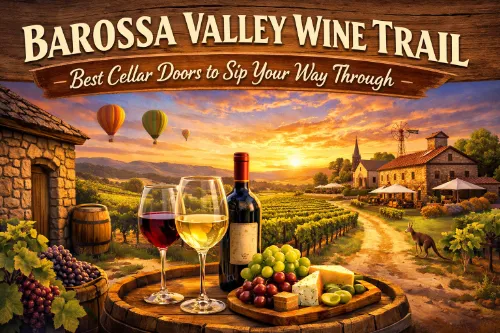
If you love good wine, vineyard views, and relaxed country charm, the Barossa Valley wine trail is one of the most rewarding trips you can take in South Australia.
This destination guide walks you through the best Barossa Valley wineries, iconic and boutique cellar doors, and practical tips to plan a relaxed wine tasting itinerary under your “Destination Guides” category.
Welcome to the Barossa
The Barossa wine region sits just over an hour’s drive northeast of Adelaide in South Australia, making it perfect for both day trips and weekend escapes. You can explore an overview of the region on the official Visit Barossa site.
It’s famous worldwide for bold Barossa Shiraz, old vines, and warm hospitality, but you’ll also find refined whites, characterful Grenache, and classic fortifieds.
The valley is dotted with villages and townships like Tanunda, Angaston, and Nuriootpa, each with its own personality.
Tanunda town centre feels like the heart of the region, with heritage buildings, cafes, and easy access to nearby vineyards, while Angaston township combines stone cottages with cosy wine bars and excellent local food.
A broader introduction to the area’s villages and vineyards is available in Tourism Australia’s Guide to the Barossa Valley.
For travellers searching for a clear, practical destination guide, this article answers where the Barossa is, what to drink, and how to explore its wineries and cellar doors in a simple, structured way.
2. Why This Wine Trail Stands Out
Rather than a single marked path, the Barossa Valley wine trail is best understood as a flexible route connecting world‑class producers, small family estates, and local food stops. Think of it as a choose‑your‑own‑adventure wine route that links:
- World‑class Barossa wines from historic estates and new‑wave makers
- Friendly cellar doors ranging from grand heritage buildings to rustic sheds
- Boutique Barossa wineries tucked along quiet back roads
- Scenic drives through villages and vineyards with plenty of photo stops
For a curated list of standout tasting rooms, you can cross‑reference this guide with the official list of Barossa wineries and cellar doors and regional round‑ups like South Australia’s top wineries and cellar doors in the Barossa.
What sets the region apart is its combination of wine quality and personality. Many tasting rooms are still staffed by owners, family members, or people deeply involved in the vineyards, so you’re often tasting with someone who really knows the story behind each wine.
This makes it ideal for first‑timers as well as seasoned wine travellers who want more than a quick pour at the bar.
3. Planning Your Barossa Valley Wine Trail
When to go
You can follow this wine route year‑round, but each season brings its own character:
- Autumn (March–May): Harvest is finishing, temperatures are pleasant, and vine leaves shift to gold and red.
- Spring (September–November): Fresh green rows of vines, new releases on tasting, and mild weather ideal for patio sessions.
- Summer: Hot days but long evenings, great for late‑afternoon Barossa wine tasting and sunset views.
- Winter: Cool days and cozy fires in stone cellar doors, perfect for sipping the full‑bodied red wines Barossa is famous for.
Tourism Australia’s seasonal advice in their Barossa Valley guide is a helpful reference when choosing dates.
How long you need
You can squeeze a lot into a single day, but a Barossa Valley weekend lets you slow down and enjoy more of the region. As a rule of thumb:
- Day trip: 3–4 tastings and a long lunch.
- Barossa Valley 2‑day itinerary: 6–8 cellar doors across two days, plus local markets, lookouts, and a farm shop stop.
For a sample trip structure and accommodation ideas, the Expedia Barossa travel guide and independent blogs like A Winter Escape’s Barossa Valley guide are great complements to this article.
Getting around
Choose transport based on how hands‑on you want to be with driving and planning:
- Self‑drive: Maximum flexibility if you have a designated driver, ideal for exploring quieter back roads and lesser‑known Barossa Valley wineries.
- Barossa Valley wine tour: Guided tours featured on sites like Tourism Australia or major booking platforms can handle your route, bookings, and commentary.
- Barossa Valley hop‑on hop‑off wine tour: Hop‑on‑hop‑off style routes (often listed on local tour operators and the Visit Barossa site) let you step off at different tasting rooms along the way.
- Private driver: Best for couples or small groups wanting a custom Barossa Valley wine tasting itinerary with a local at the wheel.
Booking tastings
Many popular Barossa Valley cellar doors now require or strongly recommend bookings, especially on weekends, public holidays, or during vintage. Check:
- Tasting fee and whether it’s redeemable on purchase
- Length of tastings and number of wines poured
- Whether they offer special Barossa wine tasting experiences like vertical Shiraz flights, blending sessions, or vineyard walks
Official winery pages and regional lists, such as World‑Class Barossa Wineries & Cellar Doors, usually link through to booking information.
4. Key Wine Styles to Know
Understanding the local wines makes your Barossa Valley wine trail smoother and more rewarding. You can also explore the varietal mix in Wine Australia’s Barossa Valley education resource.
Red wines
- Barossa Shiraz: The region’s signature style, often rich and plush, with dark fruit, spice, chocolate, and a velvety mouthfeel.
- Barossa Grenache: Frequently from old vines, offering fragrant, medium‑bodied wines with red berry and spice notes.
- Barossa Cabernet Sauvignon: Structured and age‑worthy, with dark fruit and firmer tannins, sometimes blended with Shiraz for extra depth.
Whites and lighter styles
- Eden Valley Riesling: From the cooler, higher Eden Valley, producing citrus‑driven, mineral, age‑worthy whites.
- Barossa Semillon: Typically rounder and fuller than its Hunter counterpart, often gaining toasty, honeyed character as it matures.
- Alternative whites and rosés: Increasingly common at modern and boutique producers.
Fortified wines
The region has a long heritage with fortified wines Barossa style—tawnies, muscats, and other fortifieds aged in old barrels. Many historic producers highlighted in lists like Best Barossa Valley Wineries and Cellar Doors include a fortified in their line‑up.
5. Must‑Visit Cellar Doors and Experiences
With dozens of places to taste, curating a shortlist is essential. When building your own list of top cellar doors Barossa, draw inspiration from:
- Visit Barossa’s winery directory
- South Australia’s guide to top wineries and cellar doors in the Barossa
- Editorial round‑ups such as The Best Barossa Valley Wineries and Cellar Doors
When shortlisting, consider:
- Wine quality and focus: Shiraz, Grenache, Eden Valley Riesling, Barossa Semillon, or fortifieds
- Setting and those scenic vineyard views Barossa is known for
- Atmosphere: Sleek and architectural versus rustic and homely
- Food options and Barossa wine and food experiences like platters or full restaurant menus
How to present each cellar door
In your version of the guide, describe each stop on the Barossa Valley wine trail using a consistent mini‑profile:
- Location: Mention whether it’s near Tanunda town centre, Angaston township, Nuriootpa, or Eden Valley.
- Star wines: Call out standout Barossa Shiraz, Barossa Grenache, Barossa Cabernet Sauvignon, Eden Valley Riesling, Barossa Semillon, or notable fortified wines.
- Tasting options: Note standard tastings, premium flights, and unique Barossa wine tasting experiences (you can use examples like the cellar‑door‑exclusive flights at Barossa Valley Estate as a model).
- Setting: Explain if it feels like one of the classic heritage winery estates Barossa is known for, or a modern space with polished architecture.
- Why visit: Sum up what makes it a must‑visit Barossa cellar door—views, history, hospitality, or a particular wine.
Grouping these profiles under headings like “Best Wineries in Barossa Valley” or “Top Cellar Doors to Visit in Barossa” helps capture high‑intent queries.
6. Sample One‑ and Two‑Day Wine Trail Itineraries
Itinerary examples answer common planning questions and work well for answer‑engine and snippet results. For more inspiration, you can compare with itineraries from Tourism SA’s Barossa travel ideas or commercial guides such as Expedia’s Barossa page.
One‑day Barossa Valley wine trail
If you’ve only got 24 hours, focus on one cluster of Barossa Valley cellar doors to minimise driving:
- Morning:
- Start at a classic estate to taste benchmark world‑class Barossa wines and admire broad vineyard views.
- Move to a nearby boutique Barossa winery pouring small‑batch Grenache or Eden Valley Riesling.
- Lunch:
- Book a table at a cellar door restaurant or choose a tasting room known for generous regional platters. The official Visit Barossa food and drink section and state tourism guides list many venues combining wine and local produce.
- This is the perfect moment to lean into the Barossa food and wine trail idea and talk about pairing local cheese, charcuterie, and bread with your favourite bottles.
- Afternoon:
- Visit another venue known for elegant whites or an alternative style.
- Finish at a relaxed spot offering fortified wines in true Barossa fashion or a higher‑end Shiraz flight as the light softens over the vines.
Three to four tastings keeps the day enjoyable, safe, and unhurried.
Barossa Valley 2‑day itinerary
For a Barossa Valley 2‑day itinerary, split your focus so readers experience both iconic and lesser‑known sides of the region.
Day 1: Icons & Views
- Visit two or three of the most established Barossa Valley wineries, prioritising flagship Shiraz, structured Cabernet, and richer blends. Lists such as Best Barossa Valley Wineries are a good starting point.
- Include at least one cellar door with standout scenic vineyard views Barossa is known for, plus a long, relaxed lunch.
- Base yourself near Tanunda town centre so you can stroll to dinner and explore local wine bars, bakeries, and shops.
Day 2: Boutiques & Hidden Gems
- Spend the morning at smaller, family‑run wineries where the winemaker or owner might be behind the bar. Guides like Barossa – Australia’s Most Iconic Wine Region and independent wine travel pieces can help you spot these.
- Seek out Eden Valley Riesling and Barossa Semillon at cooler or higher‑altitude sites for a contrast to day one’s big reds.
- Add a stop focused on food—farm shops, cheese rooms, or a dedicated Barossa wine and food experiences venue that pairs regional dishes with local bottles.
This mix of icons and boutiques gives readers a fuller sense of the Barossa wine region than a simple “tick‑list” of big names.
7. Beyond Wine: Food, Views, and Non‑Wine Stops
A strong destination guide also considers those who want more than just wine.
Food and produce
The valley is at the heart of the broader Barossa food and wine trail, with plenty of ways to taste the region on a plate as well as in a glass. Encourage readers to:
- Share platters featuring local charcuterie, cheeses, olives, and artisan bread at Barossa Valley cellar doors.
- Visit a weekend farmers’ market or a well‑known producer like the Maggie Beer Farm Shop, often highlighted in national tourism guides.
- Match world‑class Barossa wines with regional dishes for a deeper sense of place.
Scenic and cultural stops
Between wineries, it’s worth pausing at lookouts, historic churches, and heritage buildings. Short walks or drives along routes featured in the Visit Barossa site and Expedia’s travel guide let visitors absorb the landscape of villages and vineyards. These non‑wine stops make the region more appealing for mixed groups where not everyone wants to taste at each venue.
8. Practical Q&A for a Smooth Trip
Adding quick answers to common questions helps both readers and answer‑focused search features. You can further reinforce this by marking up an FAQ block with schema based on the questions below.
How many cellar doors can you visit in a day?
Most travellers find three to four tastings comfortable. That leaves enough time for a long lunch, driving, and enjoying the scenery without rushing from one cellar door to the next.
Do you need to book?
For weekends, public holidays, and well‑known Barossa Valley wineries, it’s wise to reserve ahead. Regional directories like World‑Class Barossa Wineries & Cellar Doors usually link directly to booking pages.
Is the Barossa suitable for non‑wine drinkers?
Yes. Non‑drinkers can enjoy coffee, soft drinks, and food at many cellar doors, plus markets, farm shops, scenic drives, and short walks along heritage routes, as highlighted in general travel resources like Expedia’s Barossa guide.
What should you wear?
Smart casual is perfect. Choose comfortable, flat shoes that handle gravel and lawn at heritage winery estates Barossa is known for, and bring layers—it can be cool in the morning and warm in the afternoon in this South Australia wine region.
How do you buy and ship wine?
Many venues can ship directly to your home, which is handy if you fall in love with a particular Barossa Shiraz, Grenache, or Eden Valley Riesling and don’t want to lug bottles around. Winery websites linked from Visit Barossa will usually outline shipping options.
How do you stay safe?
Encourage readers to pace their tastings, drink plenty of water, and consider a Barossa Valley wine tour or hop‑on hop‑off wine tour if no one can be a designated driver. Local transport and guided options are summarised on Visit Barossa and broader state tourism resources.

I’m John Michael Palmes, an SEO practitioner with over three years of hands-on experience in search engine optimization and digital marketing. I help websites improve visibility, build effective SEO content strategies, and rank better on Google using practical, data-driven approaches.
My focus is on on-page SEO, keyword research, and content optimization—the fundamentals that help both search engines and users understand a site clearly. I continuously test, analyze results, and refine strategies, sharing honest and actionable SEO insights as search algorithms evolve.