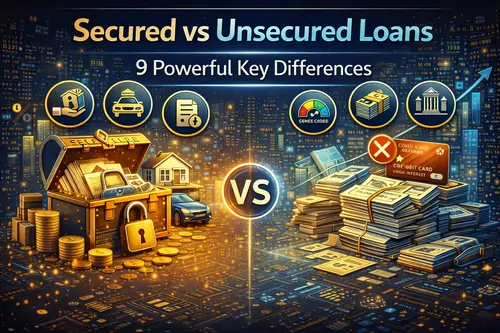
Understanding Secured vs Unsecured Loans in Modern Lending
Borrowing money plays a major role in personal finance, business growth, and economic development. Individuals and organizations often rely on loans to purchase property, manage financial emergencies, invest in education, consolidate debt, or expand operations.
While there are many types of credit products available in the financial marketplace, two major lending structures dominate most borrowing decisions: secured and unsecured loans.
Understanding Secured vs Unsecured Loans is essential for anyone considering borrowing money. These two loan structures differ significantly in terms of approval requirements, collateral obligations, interest rates, risk exposure, and borrowing limits.
Choosing the appropriate loan type can influence financial stability, repayment costs, and long-term financial health.
In 2026, lending systems continue evolving as digital banking platforms, fintech companies, and traditional financial institutions compete to offer more accessible and personalized credit products. As financial technology improves underwriting models and credit evaluation systems, borrowers now have more loan options than ever before.
Despite these innovations, the fundamental distinction between secured and unsecured borrowing remains central to the lending industry. Secured loans require borrowers to provide assets as collateral, giving lenders a form of protection if the borrower fails to repay the loan.
Unsecured loans, in contrast, do not require collateral but rely heavily on the borrower’s creditworthiness and financial history.
Because these loan types involve different risk structures, lenders apply different approval criteria, interest rates, and repayment conditions.
Understanding Secured vs Unsecured Loans helps borrowers make more informed financial decisions. It enables individuals to compare borrowing options, assess financial risk, and select credit products that align with their financial goals.
This comprehensive guide explores nine powerful differences between secured and unsecured borrowing. It also examines how these loan types work, their advantages and disadvantages, and how borrowers can determine which option best fits their financial needs.
Why Borrowers Must Understand Secured vs Unsecured Loans
Before applying for any form of credit, borrowers should understand how different loan structures influence financial obligations. The comparison between Secured vs Unsecured Loans highlights important differences in borrowing costs, risk exposure, and approval conditions.
Loan type influences several important financial factors, including:
Interest rate levels
Loan eligibility requirements
Borrowing limits
Collateral obligations
Repayment flexibility
Financial consequences in case of default
A borrower who selects the wrong loan structure may face higher interest costs, stricter approval conditions, or greater financial risk.
For instance, a borrower who owns valuable assets such as property or savings accounts may qualify for lower interest rates through secured borrowing. Meanwhile, borrowers without collateral may rely on unsecured credit products but face higher interest rates.
Understanding Secured vs Unsecured Loans allows individuals to evaluate their financial profile and borrowing capacity more carefully.
It also helps borrowers avoid unnecessary financial stress by ensuring that loan repayment obligations remain manageable over time.
How Secured Loans Work
Secured loans represent borrowing arrangements in which the borrower provides collateral as security for the loan. Collateral is an asset that the lender can claim if the borrower fails to repay the loan according to the agreed terms.
Because collateral provides a safety mechanism for lenders, secured loans often involve lower interest rates and higher borrowing limits.
Common examples of secured loans include:
Mortgage loans backed by real estate
Auto loans secured by vehicles
Home equity loans using property value as collateral
Secured personal loans backed by savings or investments
Business loans secured by equipment or inventory
When borrowers take secured loans, they agree that the lender may legally claim the pledged asset if loan payments stop.
This collateral structure reduces lender risk and allows financial institutions to extend larger loan amounts or more favorable repayment terms.
However, borrowers must carefully consider the potential consequences of default. Losing collateral can result in serious financial hardship, especially when the pledged asset is essential to daily life or financial stability.
Understanding Secured vs Unsecured Loans therefore requires evaluating both the benefits and risks associated with collateral-backed borrowing.
How Unsecured Loans Work
Unsecured loans differ from secured loans because they do not require borrowers to pledge assets as collateral. Instead, lenders rely on credit history, income stability, and overall financial behavior to determine whether a borrower qualifies for a loan.
Common examples of unsecured borrowing include:
Personal loans
Credit cards
Student loans
Medical financing
Some small business startup loans
Because lenders cannot claim assets if borrowers default, unsecured loans generally carry higher interest rates to compensate for increased lending risk.
Approval for unsecured borrowing depends heavily on factors such as:
Credit score
Income level
Debt-to-income ratio
Employment history
Repayment behavior
Borrowers with strong financial records are more likely to qualify for unsecured loans with favorable interest rates.
Understanding Secured vs Unsecured Loans helps borrowers evaluate whether their financial profile supports unsecured borrowing or whether collateral-backed loans may provide better financial outcomes.
9 Powerful Differences Between Secured vs Unsecured Loans
Collateral Requirements
One of the most important differences between Secured vs Unsecured Loans involves collateral.
Secured loans require borrowers to provide assets that serve as security for the loan. These assets may include property, vehicles, investment portfolios, or savings accounts.
If the borrower defaults on the loan, the lender may legally seize the collateral to recover the outstanding balance.
Unsecured loans do not require collateral. Instead, lenders evaluate borrower reliability through credit history and financial documentation.
Because no asset is pledged, unsecured borrowing relies entirely on borrower credibility.
This fundamental difference shapes how lenders assess risk and determine loan conditions.
Interest Rate Structure
Interest rates represent another key distinction between Secured vs Unsecured Loans.
Secured loans usually offer lower interest rates because collateral reduces the lender’s financial risk.
If repayment problems occur, lenders can recover losses by claiming the pledged asset.
Unsecured loans typically involve higher interest rates because lenders have no asset protection.
Borrowers with excellent credit scores may still qualify for competitive unsecured loan rates, but average borrowing costs remain higher than those associated with secured loans.
Loan Approval Requirements
Approval conditions differ significantly when comparing Secured vs Unsecured Loans.
Secured loans may be easier to obtain because collateral provides lenders with protection against borrower default.
Even individuals with moderate credit histories may qualify for secured loans if they pledge valuable assets.
Unsecured loans require stronger financial credentials. Lenders closely evaluate credit reports, income documentation, and debt levels before approving unsecured borrowing.
Borrowers with limited credit history or unstable income may struggle to obtain unsecured loans.
Borrowing Limits
Loan size also varies depending on the loan structure.
Secured loans typically allow larger borrowing limits because collateral increases lender confidence.
For example, mortgage loans allow borrowers to access substantial funds based on property value.
Unsecured loans usually involve lower borrowing limits because lenders rely solely on borrower financial reliability.
Loan limits depend on income level, credit profile, and lender policies.
Borrower Risk Exposure
Understanding Secured vs Unsecured Loans also requires examining borrower risk.
Secured loans expose borrowers to potential asset loss if repayment obligations are not met.
For example:
A homeowner may face foreclosure if mortgage payments stop
A borrower may lose a vehicle if auto loan payments are missed
Unsecured loans do not involve asset seizure, but lenders may still pursue legal action, including debt collection or credit damage.
Both loan types carry consequences if borrowers fail to repay borrowed funds.
Credit Score Impact
Credit scores influence both secured and unsecured borrowing, but their importance varies.
Unsecured loans depend heavily on credit scores when determining eligibility and interest rates.
Borrowers with strong credit profiles receive better terms and lower borrowing costs.
Secured loans may be more accessible to borrowers with weaker credit because collateral reduces lender risk.
However, credit history still influences interest rates and approval decisions.
Loan Processing Time
Processing speed represents another difference between Secured vs Unsecured Loans.
Secured loans often require additional steps such as asset valuation, property appraisal, or documentation verification.
These procedures may extend approval timelines.
Unsecured loans usually involve faster processing because lenders focus primarily on credit history and income verification.
Many online lenders offer rapid unsecured loan approvals.
Loan Usage Flexibility
Another distinction involves how borrowers can use loan funds.
Secured loans are often associated with specific purchases such as property or vehicles.
Examples include mortgage loans or auto financing.
Unsecured loans generally offer greater flexibility.
Borrowers may use funds for various purposes such as medical expenses, travel, education, or debt consolidation.
This flexibility makes unsecured borrowing attractive for many consumers.
Long-Term Financial Impact
Loan structure can significantly influence long-term financial planning.
Secured loans may provide lower borrowing costs but involve higher financial risk due to collateral obligations.
Unsecured loans reduce asset risk but may increase borrowing expenses through higher interest rates.
Borrowers must carefully evaluate financial stability, risk tolerance, and repayment capacity before choosing between Secured vs Unsecured Loans.
Advantages of Secured Loans
Secured borrowing provides several financial benefits for borrowers who possess valuable assets.
Lower interest rates compared with unsecured credit
Higher borrowing limits
Greater approval chances for borrowers with weaker credit
Potentially longer repayment terms
These advantages make secured loans particularly useful for large financial commitments such as property purchases or business investments.
However, borrowers must remain aware of collateral-related risks.
Advantages of Unsecured Loans
Unsecured borrowing also offers several benefits.
No collateral requirement
Reduced risk of asset loss
Faster approval processes
Flexible loan usage
Borrowers with strong credit profiles often prefer unsecured loans because they offer convenience and financial flexibility.
Choosing Between Secured vs Unsecured Loans
Selecting the right loan structure requires careful evaluation of personal financial circumstances.
Borrowers should consider:
Credit score strength
Availability of collateral
Loan purpose
Repayment capacity
Risk tolerance
Individuals seeking lower interest rates and larger loan amounts may prefer secured loans.
Borrowers who want to avoid asset risk may choose unsecured loans despite higher borrowing costs.
Understanding Secured vs Unsecured Loans enables borrowers to align financial decisions with long-term financial stability.
Key Takeaways (Secured vs Unsecured Loans)
Secured vs Unsecured Loans represent two major borrowing structures in modern lending.
Secured loans require collateral and often provide lower interest rates.
Unsecured loans rely on creditworthiness and do not require pledged assets.
Loan approval requirements vary significantly between the two loan types.
Secured borrowing may allow higher loan amounts.
Unsecured loans provide greater flexibility and faster approval.
Credit scores influence loan eligibility and interest rates.
Borrowers must evaluate financial risk before selecting loan types.
Responsible borrowing supports long-term financial stability.
Understanding loan structures helps borrowers make informed financial decisions.

Frequently Asked Questions
What are secured loans?
Secured loans are borrowing arrangements that require collateral such as property, vehicles, or financial assets.
What are unsecured loans?
Unsecured loans are loans that do not require collateral and rely on borrower creditworthiness.
Which loan type has lower interest rates?
Secured loans usually offer lower interest rates because lenders have collateral protection.
Are unsecured loans harder to obtain?
Yes, unsecured loans often require stronger credit profiles and stable income.
Can borrowers lose property with secured loans?
Yes, lenders may claim pledged assets if borrowers default on secured loans.
Are credit cards considered unsecured loans?
Yes, credit cards represent unsecured borrowing because they do not require collateral.
Can secured loans improve approval chances?
Providing collateral may increase loan approval chances for borrowers with weaker credit.
Which loan type allows higher borrowing amounts?
Secured loans generally allow higher borrowing limits.
How do secured loans affect credit scores?
Both secured and unsecured loans affect credit scores based on repayment behavior.
How can borrowers reduce loan costs?
Borrowers can improve credit scores, compare lenders, reduce debt levels, and choose shorter loan terms.
Conclusion
Understanding Secured vs Unsecured Loans is an essential step for anyone considering borrowing money. These two lending structures serve different financial purposes and involve unique advantages and risks.
Secured loans offer lower interest rates and larger borrowing limits because lenders receive collateral protection. These loans are particularly useful for major financial commitments such as purchasing homes, vehicles, or business assets.
However, the collateral requirement introduces significant financial risk. Borrowers who fail to meet repayment obligations may lose valuable property.
Unsecured loans, in contrast, provide greater convenience and flexibility because they do not require pledged assets. Borrowers can often receive funds quickly and use them for a wide range of purposes.
The trade-off for this flexibility is typically higher interest rates and stricter credit requirements.
Choosing between Secured vs Unsecured Loans requires careful analysis of financial goals, credit strength, risk tolerance, and repayment capacity.
Borrowers who fully understand these loan structures can make more informed decisions and avoid unnecessary financial stress.
Responsible borrowing involves selecting appropriate loan products, maintaining consistent repayment behavior, and ensuring that debt obligations remain manageable.
As lending technologies continue advancing, borrowers now have access to a wider range of credit options through banks, credit unions, and digital financial platforms.
While this increased access to credit can provide valuable financial opportunities, it also highlights the importance of financial literacy.
By understanding Secured vs Unsecured Loans and evaluating borrowing options carefully, individuals can choose loan solutions that support their financial well-being while minimizing long-term financial risks.

Mary Gay Apud is an SEO Strategist, Educator, and Research Consultant specializing in structured, data-driven organic growth systems. With a strong foundation in Mathematics, she applies analytical precision, research methodology, and strategic thinking to build scalable SEO frameworks that enhance search visibility and long-term authority.
Her expertise includes content optimization, keyword strategy, technical SEO, and topical authority development—aligning performance with measurable business outcomes. With experience in team leadership, statistical consulting, and government service, Mary Gay combines discipline, accuracy, and structured execution in every project. She believes sustainable digital success is built on research, clarity, and long-term strategic implementation—not short-term trends.