
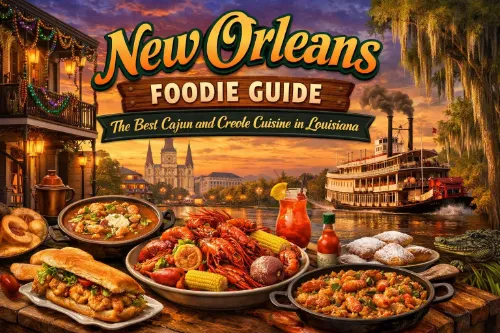
The Best Cajun and Creole Cuisine in Louisiana, where Cajun and Creole cuisine come together in one unforgettable destination. From rustic bayou country flavors to refined city Creole dishes, the city offers a deep dive into traditional New Orleans food, history, and culture.
This foodie guide will help you understand Cajun vs Creole, discover essential dishes like gumbo, jambalaya, and étouffée, and find the best places in New Orleans to taste authentic Louisiana cuisine.
What Makes New Orleans the Capital of Cajun and Creole Cuisine?
New Orleans has long been a crossroads of French, Spanish, African, Caribbean, and Native American influences, and that mix comes alive on every plate. The result is a unique food identity known as Louisiana Creole cuisine in the city and Cajun cuisine in the surrounding bayou and rural regions.
While you can find Cajun and Creole restaurants across the state, New Orleans concentrates some of the most iconic spots, from classic institutions to casual neighborhood joints.
For food travelers, this means you can explore both Cajun food and Creole food in a single trip. One moment you might be slurping rich shrimp Creole or red beans and rice in the French Quarter, and the next you are biting into a crispy fried seafood po’ boy in a small, family‑run café. New Orleans makes it easy to experience the full spectrum of Cajun and Creole flavors in just a few days.
Cajun vs. Creole: What’s the Difference?
Many visitors ask the same question: what is the difference between Cajun and Creole cuisine in Louisiana? A simple way to think about it is that Cajun food developed in the rural areas and bayou country, while Creole food is tied to urban New Orleans and its cosmopolitan past.
Cajun cuisine is often described as rustic and hearty. It grew out of the resourceful cooking of French‑speaking Acadians who settled in south Louisiana, shaped by Native American and African influences.
Cajun dishes tend to use what was available in the swamps and fields: local Gulf seafood, game, rice, and vegetables. Long‑simmered one‑pot meals like gumbo and jambalaya are classic examples of how Cajun cooks turned simple ingredients into bold, comforting meals.
Creole cuisine reflects New Orleans’ role as a vibrant port city. It blends French, Spanish, African, and Caribbean influences into more refined, often tomato‑based dishes.
Shrimp Creole and many versions of Creole gumbo showcase layered flavors, aromatic vegetables, and sauces that feel a bit more “city” than “country.” In practice, you’ll see overlap on menus, but understanding Cajun vs Creole helps you appreciate the nuance behind the names.
Essential Cajun and Creole Dishes to Try in New Orleans
To truly experience Louisiana cuisine, focus on a core list of traditional dishes. These staples appear on menus across New Orleans and represent the best of both Cajun and Creole food culture.
You can preview many of these in roundups like “15 New Orleans Must‑Try Foods” and TasteAtlas’s guide to foods in New Orleans.
Gumbo
Gumbo is the soul of Louisiana cooking and a must‑try in New Orleans. You’ll find both Cajun gumbo and Creole gumbo, and the differences are subtle but important.
Many Cajun versions use a dark roux and skip tomatoes, relying on deep, smoky flavors, while Creole gumbo may include tomatoes and a slightly lighter roux. Common variations feature chicken and andouille sausage, seafood, or a mix of both, often thickened with filé powder or okra.
If you want to see where locals send visitors, guides like “Where to Find New Orleans’s Most Iconic Dishes” and the Gumbo Shop in the French Quarter are useful starting points.
Jambalaya
Jambalaya is another iconic one‑pot dish built around rice, meat, and vegetables. In Cajun jambalaya, you typically see a brown, smoky rice cooked with sausage, sometimes chicken and local Gulf seafood.
Creole jambalaya often includes tomatoes, giving it a reddish color and a slightly different flavor profile. Either way, jambalaya captures the comfort and spice of Cajun and Creole cuisine in a single bowl.
Étouffée
Étouffée, especially crawfish étouffée, is a classic Louisiana dish you should not skip. The word means “smothered,” and that’s exactly what you get: seafood gently simmered in a rich, roux‑based sauce and served over rice.
Many versions have a silky texture, with the holy trinity of onion, celery, and bell pepper forming the aromatic base. In New Orleans, crawfish étouffée and shrimp étouffée appear on both Cajun and Creole restaurant menus.
Shrimp Creole
Shrimp Creole is a perfect example of city‑style Louisiana Creole cuisine. Plump Gulf shrimp are cooked in a tomato‑based sauce with the holy trinity, herbs, spices, and sometimes a little heat from Louisiana hot sauce.
Served over white rice, shrimp Creole balances bright acidity with deep savory notes. It’s a great introduction to Creole food for first‑time visitors.
Red Beans and Rice
Red beans and rice is a traditional Louisiana comfort food, famously served on Mondays in New Orleans. Historically, it was a way to use leftover pork bones, smoked sausage, or ham, simmered slowly with red beans and aromatics.
Today, you’ll find red beans and rice as a staple on diner menus, neighborhood joints, and even upscale spots that honor classic New Orleans food traditions.
Po’ Boys, Boudin, and Andouille
Po’ boy sandwiches are another New Orleans classic. These overstuffed sandwiches, often filled with fried shrimp, oysters, roast beef, or andouille sausage, are served on crisp‑outside, soft‑inside French bread. They’re perfect for a casual lunch while exploring the city.
Cajun sausage specialties like boudin and andouille are also worth seeking out. Boudin is a seasoned sausage typically made with pork and rice, sometimes served as boudin balls, while andouille is a smoky, heavily spiced sausage that shows up in gumbo, jambalaya, and po’ boy fillings. These sausages add depth and character to many Cajun and Creole dishes.
Beignets and New Orleans Desserts
No New Orleans foodie guide would be complete without beignets. These square, powdered‑sugar‑dusted pastries are a hallmark of the city and pair perfectly with strong coffee.
Beyond beignets, look for other local desserts and sweets inspired by Louisiana’s mix of cultures, from bread pudding with whiskey sauce to pralines, bananas Foster, and king cake in season.
Inside the Cajun and Creole Pantry: Ingredients and Flavors
Understanding the key ingredients and techniques will help you read menus and appreciate what makes Louisiana cuisine special. One of the most important concepts is the holy trinity: onion, celery, and bell pepper. This trio forms the flavor base of many Cajun and Creole dishes, much like mirepoix in French cooking.
Roux is another foundation of Cajun and Creole cooking. A dark roux, or Cajun roux, made by slowly cooking flour and fat until it turns deep brown, gives gumbo and other dishes their characteristic color and nutty flavor.
Creole recipes may use lighter roux or incorporate tomatoes for a different texture and taste. Filé powder, made from ground sassafras leaves, is sometimes added at the end of cooking to thicken and perfume the dish.
Local Gulf seafood plays a starring role throughout New Orleans, from shrimp and crawfish to oysters and crab.
Rice dishes are also central to Louisiana cuisine, and you’ll see rice under gumbo, étouffée, shrimp Creole, and many other meals. Seasonings like Creole seasoning and Cajun seasoning blends and Louisiana hot sauce add heat and complexity, but not every dish is extremely spicy. You can always ask servers about spice levels or request milder options if needed.
Where to Eat: Experiencing Cajun and Creole Food in New Orleans
In New Orleans, you can taste Cajun and Creole food at classic institutions, casual neighborhood spots, and modern restaurants that put creative twists on tradition. In the French Quarter and nearby areas, you’ll find historic dining rooms serving traditional Louisiana Creole cuisine alongside tourist‑friendly cafés offering gumbo, jambalaya, and beignets.
Outside the French Quarter, neighborhoods like the Garden District, Uptown, Mid‑City, and the Bywater host local favorites and more relaxed joints. Here you can try po’ boys, red beans and rice, plate lunches, and daily specials that reflect real New Orleans food culture.
Some restaurants lean more Cajun, highlighting rustic dishes from bayou country, while others focus on polished Creole menus.
For late‑night eats, bar food, and casual bites, New Orleans also has plenty of taverns and music venues where you can order gumbo, fried seafood baskets, or spicy sausage dishes while enjoying live music.
This combination of food and culture is part of what makes New Orleans one of the best places in Louisiana for a food‑focused trip.
Sample 2–3 Day Foodie Itinerary in New Orleans
Because New Orleans is compact and walkable in the central districts, you can plan a short itinerary that showcases the best of Cajun and Creole cuisine. Official trip planners like the Essential New Orleans Three‑Day Itinerary or this 3‑day New Orleans foodie itinerary are helpful references.
On your first day, stick to the French Quarter and surrounding areas. Start your morning with beignets and coffee, then move on to a lunch of po’ boys or a plate of jambalaya and red beans and rice. In the evening, book a table at a restaurant known for shrimp Creole, seafood gumbo, or other classic Louisiana dishes.
On the second day, explore the Garden District and Uptown. Brunch might feature eggs over grits with andouille sausage or a rich crawfish étouffée. Spend the afternoon walking tree‑lined streets, then head to dinner at a spot that highlights modern interpretations of Louisiana Creole cuisine.
Look for menus that feature Gulf seafood, seasonal produce, and nods to traditional dishes while still feeling contemporary.
If you have a third day, venture into less touristy neighborhoods like Mid‑City or the Bywater. This is a great opportunity to try more local favorites and possibly experience live music while you eat.
Wherever you go, let your curiosity guide you: if you see gumbo, boudin, maque choux, or other classic Louisiana dishes on a chalkboard menu, consider it an invitation to taste more of Cajun and Creole food culture.
Tips for First‑Time Foodies in New Orleans
For first‑time visitors, a few simple tips will help you get the most from your New Orleans food experience. Portions can be generous, so consider sharing appetizers and entrées so you can sample more dishes.
If you’re new to Cajun and Creole flavors, start with milder options and then work your way toward spicier dishes, and do not hesitate to ask about heat levels before you order.
Budget travelers can take advantage of lunch specials, happy hours, and neighborhood restaurants that offer authentic Louisiana cuisine at lower prices than high‑end tourist spots. Look for daily plate lunches, red beans and rice, or po’ boys for good value.
When it comes to dietary needs, many restaurants are used to accommodating pescatarian or vegetarian guests; dishes based around rice, beans, and Gulf seafood are often good choices, but always confirm ingredients if you have restrictions.
Finally, remember that New Orleans is a living city, not just a tourist destination. Be respectful in residential neighborhoods, tip your servers, and take basic safety precautions when out late at night. Approaching the city with curiosity and respect will make your Cajun and Creole food adventures even more memorable.
Bringing New Orleans Home: Cooking Cajun and Creole Dishes Yourself
After tasting Cajun and Creole cuisine in Louisiana, you may want to bring some of those flavors home. Before you leave New Orleans, consider picking up souvenirs like Creole seasoning and Cajun seasoning, Louisiana hot sauce, coffee, and locally produced cookbooks. These make it easier to recreate gumbo, jambalaya, étouffée, and other dishes in your own kitchen.
When you cook at home, start with the basics: build flavor with the holy trinity, take your time with the roux, and use good quality rice and seafood when possible.
Even if you live far from the Gulf, you can apply the principles of Louisiana cuisine—layered flavor, careful seasoning, and slow cooking—to your local ingredients. Over time, you’ll develop a feel for when a dish tastes “Cajun,” “Creole,” or somewhere in between, just like the diverse menus you experienced in New Orleans.
Frequently Asked Questions
What time of year is best to visit New Orleans for Cajun and Creole food?
The best time to visit for food is spring (February–April) and fall (October–November), when the weather is mild, crawfish season peaks, and many food and cultural festivals take place.
Are there good Cajun and Creole options near the New Orleans airport?
Yes, you’ll find casual spots and chain‑free restaurants within a short drive of Louis Armstrong New Orleans International Airport that serve gumbo, po’ boys, and other classic Cajun and Creole dishes, making it easy to grab an authentic meal before or after your flight.
Do New Orleans restaurants offer gluten‑free Cajun or Creole dishes?
Many restaurants can accommodate gluten‑free diets, especially with naturally gluten‑free options like seafood plates, grilled meats, salads, and some rice‑based dishes, but you should always inform your server and confirm how the roux and sauces are prepared.
Can I find halal or kosher versions of traditional Louisiana cuisine in New Orleans?
Halal and kosher options are more limited but do exist; some restaurants and food trucks offer halal meats or seafood‑focused menus, and a few kosher establishments serve Louisiana‑inspired dishes, so it’s best to research and call ahead to confirm current options.
Are reservations necessary for popular Cajun and Creole restaurants in New Orleans?
Reservations are strongly recommended for popular spots, especially on weekends, holidays, and during major events like Mardi Gras and Jazz Fest, while smaller neighborhood restaurants may accept walk‑ins but can still have wait times at peak hours.
Is tipping different at New Orleans restaurants compared to other U.S. cities?
Tipping customs are similar to the rest of the United States, with 15–20% of the pre‑tax bill standard for table service, and slightly higher tips appreciated for exceptional service or large groups.
Can I take home leftovers from New Orleans restaurants when portions are large?
Yes, most restaurants are happy to provide to‑go containers for leftovers, and taking home extra gumbo, jambalaya, or po’ boys is common due to generous portion sizes.
Are there food tours focused specifically on Cajun and Creole cuisine in New Orleans?
New Orleans offers multiple guided food tours that focus on Cajun and Creole cuisine, typically including tastings of gumbo, étouffée, red beans and rice, and other classics while guides share the history behind each dish and neighborhood.
How early do restaurants in New Orleans typically open for breakfast or brunch?
Many cafés and breakfast spots in the central areas open around 7–8 a.m. on weekdays, with popular brunch restaurants opening slightly later, often around 9–10 a.m., especially on weekends.
Is it safe to drink tap water in New Orleans when dining out?
Yes, tap water in New Orleans is generally safe to drink, and most restaurants serve it by default, though visitors who prefer bottled or filtered water can easily request it instead.

I’m John Michael Palmes, an SEO practitioner with over three years of hands-on experience in search engine optimization and digital marketing. I help websites improve visibility, build effective SEO content strategies, and rank better on Google using practical, data-driven approaches.
My focus is on on-page SEO, keyword research, and content optimization—the fundamentals that help both search engines and users understand a site clearly. I continuously test, analyze results, and refine strategies, sharing honest and actionable SEO insights as search algorithms evolve.