
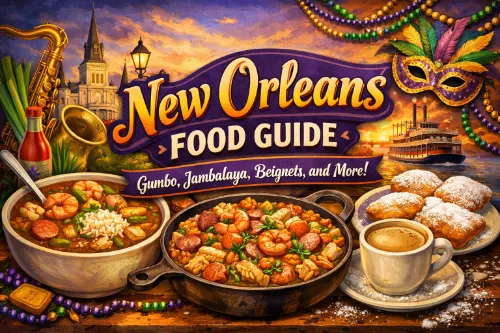
New Orleans isn’t just a city you visit—it’s a place you eat your way through, one bowl of gumbo, one plate of jambalaya, and one powdered sugar–covered beignet at a time.
This New Orleans food guide will walk you through gumbo, jambalaya, beignets, and more must-eat dishes, plus where, when, and how to enjoy them like a local, in simple language that’s friendly for search engines, AI overviews, and real people alike.
For a bigger picture of how New Orleans fits into the U.S. food scene, you can also explore this broader guide to American food cities and wine regions.
Quick New Orleans Food Guide Summary
- New Orleans cuisine blends Creole, Cajun, French, African, and Caribbean influences.
- Must-try dishes include gumbo, jambalaya, beignets, po’ boys, muffulettas, red beans and rice, étouffée, oysters, and pralines.
- Top areas to eat in New Orleans: French Quarter, Garden District, Uptown, Tremé, and Mid-City. For more location-specific tips, see this guide to the best neighborhoods in New Orleans for food.
- Best time to explore New Orleans food: year-round, with extra options during Mardi Gras and Jazz Fest.
- First-timers should try at least one bowl of gumbo, one plate of jambalaya, one beignet stop, and one seafood or po’ boy meal, using this New Orleans food guide as a starting point.
Introduction to New Orleans Cuisine
New Orleans food is deeply rooted in history, culture, and geography. The city sits at a global crossroads, blending French, Spanish, African, Caribbean, and Native American influences into one unforgettable culinary scene.
You’ll see this mix show up in iconic dishes like gumbo, jambalaya, and beignets, but also in everyday meals like red beans and rice or a simple shrimp po’ boy. If you want a structured overview before you go, check out this detailed New Orleans cuisine guide.
Two important words you’ll see everywhere are Creole and Cajun. Creole is often associated with New Orleans city cooking—rich, saucy dishes, tomatoes, and French-influenced techniques.
Cajun comes more from rural Louisiana—hearty, rustic, smoky, and often spicier, with lots of sausage and slow-simmered stews. In this New Orleans food guide, you’ll meet both sides on your plate.
For even more dish-by-dish inspiration, especially if you are building an eating itinerary, this list of the best foods to try in New Orleans is a helpful companion.
Gumbo: The Soul of New Orleans in a Bowl
Gumbo is the dish many locals will tell you to try first. Think of it as a rich, flavorful stew served over rice, thickened with a dark roux (flour and fat cooked together), okra, or filé powder, and loaded with meat or seafood. A good gumbo is layered, smoky, and comforting, the kind of food that feels like a warm hug.
Common styles of gumbo in New Orleans include:
- Seafood gumbo (shrimp, crab, oysters, and sometimes fish)
- Chicken and andouille sausage gumbo
- Gumbo z’herbes (a traditional greens-based gumbo, often tied to holidays)
Gumbo is more than just ingredients—it’s a story in a pot. French techniques (roux), West African ingredients (okra), and Native American touches (filé) all show up in one bowl. In many New Orleans restaurants, gumbo is the item that tells you how serious the kitchen is about flavor. If they do gumbo well, there is a good chance the rest of the menu will be worth your time.
For travelers using maps or voice search, try phrases like “best gumbo in New Orleans near French Quarter” or “seafood gumbo near me in New Orleans” to find top spots close by. For a curated list of restaurants to plug into your map, refer to this guide on where to eat in New Orleans.
Jambalaya: Creole and Cajun Comfort on One Plate
Jambalaya is another classic New Orleans food guide essential. It’s a one-pot rice dish loaded with meat, sausage, vegetables, and sometimes seafood. At first glance, it looks a bit like paella, but the flavors are distinctly Louisiana.
There are two main styles:
- Creole jambalaya (often called “red jambalaya”): Includes tomatoes, commonly found in New Orleans.
- Cajun jambalaya (often “brown jambalaya”): No tomatoes; the color comes from browning the meat and vegetables.
Typical ingredients in jambalaya include:
- Andouille sausage (smoked, spicy, deeply flavorful)
- Chicken or pork
- Shrimp and other seafood
- The “holy trinity” of onions, celery, and bell pepper
You’ll find jambalaya at casual diners, bars, and sit-down restaurants across the city. It’s a filling, budget-friendly dish perfect for lunch or dinner, especially if you’re walking all over New Orleans. For local-style search queries, you can try “Creole jambalaya near Bourbon Street” or “Cajun jambalaya Uptown New Orleans” and cross-check options using a broader New Orleans food guide to make sure you don’t miss the classics.
Beignets: The Sweet Icon of New Orleans
Beignets are square pieces of fried dough, served hot and buried under a mountain of powdered sugar. They are crispy on the outside, soft and fluffy inside, and usually enjoyed with a strong cup of café au lait or coffee. They’re one of the main reasons a New Orleans food guide is not complete without a dedicated beignet section.
Why beignets are a must:
- They’re a classic New Orleans breakfast or snack.
- They make for the perfect dessert after a seafood or gumbo-heavy meal.
- They are easy to share and very photogenic—your social media will thank you.
Popular times to eat beignets include early morning before crowds hit the French Quarter, mid-afternoon as a sugar break between sightseeing, or late at night after live jazz. Voice or local search examples: “beignets near Jackson Square,” “best beignets in New Orleans open late,” or “New Orleans café with beignets and live music.” You’ll see them mentioned again and again in any solid best foods to try in New Orleans list.
Expect to leave with powdered sugar on your clothes—and that’s part of the fun.
More Must-Try New Orleans Dishes
New Orleans food goes far beyond gumbo, jambalaya, and beignets. To make the most of your visit, use this listicle-style rundown of more classic dishes you should add to your itinerary, then pair it with this focused New Orleans cuisine guide for even more detail.
1. Po’ Boys
A po’ boy is a classic New Orleans sandwich, typically served on airy yet crisp French bread. It can be filled with fried shrimp, oysters, catfish, roast beef, or hot sausage.
Key tips:
- “Dressed” means lettuce, tomato, pickles, and mayo.
- Fried shrimp and roast beef po’ boys are two of the most loved versions.
- Ask locals where they get their favorite po’ boy; everyone has an opinion.
Search-friendly example phrases: “shrimp po’ boy New Orleans near me,” “best po’ boy in the French Quarter,” or “oyster po’ boy Uptown New Orleans,” then confirm options using this handy list of where to eat in New Orleans.
2. Muffuletta
The muffuletta is a massive, round sandwich built on a sesame loaf, stuffed with layers of Italian cold cuts, cheese, and a signature olive salad. It’s salty, tangy, and rich, and it’s often big enough to share.
Ordering tips:
- You can often order a half muffuletta if you’re solo or want to sample more dishes.
- This is a great grab-and-go picnic option along the Mississippi River or in a park.
If sandwiches are your thing, you’ll love combining this with other destination-specific guides like the what to eat in Chicago and what to eat in Philadelphia articles for a multi-city food trip.
3. Red Beans and Rice
Red beans and rice are traditional Monday food in New Orleans, originally tied to using leftover Sunday ham bones. Today, you’ll see it on menus all week, especially in neighborhood joints.
What to know:
- Often served with sausage or a pork chop.
- Comforting, simple, and usually very affordable.
- A great way to experience everyday New Orleans cooking beyond the tourist staples.
Search idea: “Monday red beans and rice New Orleans Mid-City” or “cheap red beans and rice near Canal Street,” then compare options with a full New Orleans food guide so you can prioritize your stops.
4. Étouffée and Shrimp Creole
Étouffée (usually crawfish or shrimp) is a dish where seafood is “smothered” in a rich, roux-based sauce and served over rice. Shrimp Creole is tomato-based and has more of a bright, spicy, Creole character.
Quick guide:
- Choose étouffée if you want something rich, buttery, and comforting.
- Choose Shrimp Creole if you enjoy tangy tomato sauces with a kick.
These dishes show up on many Creole restaurant menus throughout New Orleans, especially in the French Quarter and Garden District.
5. Oysters and Gulf Seafood
Being close to the Gulf of Mexico means New Orleans has a steady supply of fresh seafood. Oysters come:
- Raw on the half shell
- Chargrilled with butter, garlic, and cheese
- Fried and tucked into po’ boys
You’ll also find boiled crawfish (in season), fried catfish, shrimp platters, crab dishes, and seafood gumbo. To find what’s close, search “chargrilled oysters New Orleans near me” or “seafood restaurant Garden District,” or lean on this curated list of where to eat in New Orleans to choose from tried-and-tested spots.
6. Sweets and Treats Beyond Beignets
If you love dessert, New Orleans will keep you busy:
- Pralines: sugary, nutty candy, often made with pecans.
- King cake: a colorful, ring-shaped cake usually served during Carnival season.
- Bananas Foster: bananas flamed in butter, sugar, and rum, served over ice cream.
- Sno-balls: finely shaved ice drenched in flavored syrups, perfect for hot months.
Look up “praline shop in New Orleans,” “king cake bakery near me” (in season), or “sno-balls New Orleans summer” for local favorites, or scan through a broader best foods to try in New Orleans roundup to see which desserts fit your style.
Where to Eat in New Orleans: Neighborhood Highlights
New Orleans is compact enough to explore on foot or via short rides, and each neighborhood has its own food personality. This makes it easy for visitors, voice assistants, and maps to connect you with what you’re craving nearby. For a deep dive, see this dedicated piece on the best neighborhoods in New Orleans for food.
French Quarter
The French Quarter is where many visitors start their New Orleans food journey. You’ll find:
- Iconic cafés and beignet shops
- Classic Creole restaurants serving gumbo, jambalaya, oysters, and étouffée
- Casual spots for po’ boys, muffulettas, and cocktails
It can be touristy, but it’s also where some of the city’s most historic food institutions live, many of which appear in this roundup of where to eat in New Orleans.
Garden District and Uptown
These areas combine beautiful homes with a mix of neighborhood restaurants, modern bistros, and classic New Orleans eateries.
Expect:
- Refined takes on Southern and Creole cuisine
- Great brunch options
- Po’ boy shops and seafood restaurants along main avenues
Searching “Uptown New Orleans brunch,” “Garden District seafood restaurant,” or “jambalaya Uptown” works well in this part of town, especially when used alongside a trusted New Orleans food guide.
Tremé and Mid-City
These are excellent areas when you want to taste more local, everyday New Orleans food.
You’ll find:
- Soul food spots
- Great red beans and rice, fried chicken, and po’ boys
- Local bars and eateries with strong neighborhood followings
Search-friendly examples: “Mid-City po’ boy shop,” “Tremé soul food restaurant,” or “red beans and rice Mid-City New Orleans,” then double-check reviews and recommendations against a curated list of where to eat in New Orleans.
When to Visit for Food in New Orleans
New Orleans is a year-round food city. You can enjoy gumbo, jambalaya, and beignets almost any time of year. But some seasons and events amplify the experience:
- Mardi Gras season: More king cake, festive menus, and street food.
- Jazz Fest: Big crowds but lots of food stalls and regional specialties.
- Spring and fall: Comfortable weather for walking food tours and patio dining.
Crowds mean you may need restaurant reservations or a little patience in line, especially in the French Quarter and popular spots. If you love combining food with wine travel, you might also enjoy planning a side trip or future vacation using this Napa Valley wine guide or these tips for a Napa Valley wine trip on a budget.
Budget Tips and Ordering Like a Local
You don’t have to spend a fortune to eat well in New Orleans. Many must-try dishes are available at casual price points.
Money-saving and local-style tips:
- Eat big at lunch: Some classic restaurants have more affordable lunch menus.
- Split large portions: Muffulettas, seafood platters, and big po’ boys are easy to share.
- Ask about daily specials: Red beans and rice on Monday, gumbo or jambalaya specials on other days.
Local ordering language:
- “Dressed” po’ boy: with lettuce, tomato, pickles, and mayo.
- “Lagniappe”: a little something extra—sometimes used for small extras or freebies.
- Spice level: New Orleans food is flavorful but not always extremely hot; you can ask for mild or extra spicy if needed.
If you’re building a bigger American food itinerary, you can pair New Orleans with Chicago and Philadelphia using guides like this Chicago food guide, an overview of the best Chicago foods, and a detailed Philadelphia food guide.
Practical Tips for First-Time Foodies in New Orleans
To make the most of your New Orleans food experience, keep a few simple, traveler-friendly tips in mind.
- Spice and heat: Many dishes are more about flavor than pure heat. If you’re sensitive, just ask for mild. If you love heat, ask for hot sauce or extra spice.
- Dietary needs: If you avoid pork, shellfish, or gluten, let your server know. Many places can guide you toward safer options, such as grilled fish, salads, or certain chicken dishes.
- Dress codes: Casual is fine in most places, but some classic Creole restaurants lean business casual—no flip-flops or tank tops at night.
- Tipping: Standard U.S. tipping applies (usually 15–20% in restaurants).
- Hydrate and pace yourself: Between the humidity, cocktails, and rich food, pacing your meals and drinks will help you enjoy more dishes without crashing.
If you like using AI overview features or travel apps, try prompting them with specific, natural queries like “one-day New Orleans food itinerary,” “best gumbo and beignets in the French Quarter,” or “family-friendly New Orleans restaurants with seafood.” Then, when you’re ready for another city, dive into guides such as best restaurants in Chicago, best deep dish pizza in Chicago, or the best wineries to visit in Napa Valley.
Sample One-Day New Orleans Food Itinerary
Here’s a simple, AI- and traveler-friendly list you can adapt:
- Breakfast: Beignets and café au lait at a classic French Quarter café.
- Mid-morning snack: Pralines from a nearby candy shop.
- Lunch: Po’ boys (shrimp or roast beef) at a well-known po’ boy shop.
- Afternoon treat: Sno-ball or ice cream as you explore a new neighborhood.
- Dinner: Gumbo and jambalaya at a Creole or Cajun restaurant, plus oysters or seafood on the side.
- Dessert: Bananas Foster, another round of beignets, or a slice of pie with local flavors.
Frequently Asked Questions
1. Is New Orleans food always spicy?
No, New Orleans food is more about deep flavor than intense heat. You can always ask for dishes to be prepared mild and add hot sauce at the table if you want more spice.
2. Can vegetarians eat well in New Orleans?
Yes, but you’ll need to look a bit harder. Many restaurants now offer vegetarian versions of classics (like veggie po’ boys or meatless red beans and rice), and there are a few fully vegetarian or vegan spots in popular neighborhoods.
3. Is it easy to find gluten-free options in New Orleans?
Gluten-free options exist, especially in more modern and health-conscious restaurants. However, many traditional dishes use roux or breading, so you should tell your server about your dietary needs and ask for clearly labeled gluten-free choices.
4. Do I need restaurant reservations in New Orleans?
For popular spots—especially in the French Quarter, Garden District, and fine-dining Creole restaurants—reservations are highly recommended for dinner and weekends. Casual po’ boy shops and neighborhood joints usually accept walk-ins.
5. What time do New Orleans restaurants usually serve dinner?
Most restaurants start dinner service around 5–6 p.m. and run into the late evening. In busier areas, you can often find food options well into the night, especially around the French Quarter.
6. Are there good breakfast options besides beignets?
Yes. Many cafés and diners serve hearty breakfasts like omelets, biscuits, grits, and breakfast sandwiches. Brunch-focused restaurants also offer Southern-inspired dishes such as shrimp and grits or chicken and waffles.
7. How much should I budget per meal in New Orleans?
For casual spots and po’ boy shops, expect around $10–$20 per person without drinks. Mid-range restaurants often run $20–$40 per person, and classic fine-dining Creole places can be $40+ per person, especially with appetizers, desserts, or cocktails.
8. Can I do a New Orleans food trip on a tight budget?
Absolutely. Focus on po’ boys, red beans and rice, daily lunch specials, and neighborhood cafés. You can eat very well by mixing inexpensive local staples with just one or two “splurge” dinners.
9. Are New Orleans food tours worth it?
Food tours can be a great way to sample several dishes in a few hours while learning history and local stories. They’re especially useful for first-time visitors who don’t know where to start.
10. What is the best way to get around the city for food stops?
Walking works well in the French Quarter and nearby areas. For longer distances, use streetcars, rideshares, or taxis to hop between food neighborhoods like the Garden District, Uptown, Mid-City, and Tremé.
11. Is tipping different in New Orleans restaurants?
Tipping follows standard U.S. norms. Plan on 15–20% of the pre-tax bill for table service, and a dollar or two per drink at bars if you’re ordering cocktails separately.
12. Are kids welcome in most New Orleans restaurants?
Yes, many restaurants are family-friendly, especially at lunch and early dinner. Late-night spots, bars, and venues focused on live music may have age restrictions or a more adult atmosphere.
13. What local drinks should I try with my meals?
Classic choices include cocktails like the Sazerac, Hurricane, and Pimm’s Cup, as well as local beers and frozen daiquiris. If you don’t drink alcohol, iced coffee, sweet tea, and flavored sno-balls are popular alternatives.
14. Is street food common in New Orleans?
Street food exists, especially during festivals and busy weekends, but the city is more known for casual restaurants, po’ boy counters, and sit-down spots than for everyday food trucks.
15. How safe is it to walk to restaurants at night?
Many food areas are busy and walkable, but safety can vary block by block. Stick to well-lit, active streets, keep valuables out of sight, and use rideshares or taxis if you’re unsure about a particular route.
16. Are there late-night food options in New Orleans?
Yes. In and around the French Quarter and some nightlife districts, you’ll find late-night pizza, po’ boys, burgers, and sometimes beignets. Check opening hours in advance, as weekday closing times can be earlier.
17. Can I find halal or kosher food in New Orleans?
Options are limited but not impossible. A small number of restaurants offer halal-friendly dishes, and there are a few kosher-focused businesses. It’s best to research specific venues ahead of time if this is essential for you.
18. What should I pack to be comfortable on a food-focused trip?
Bring comfortable walking shoes, breathable clothing (it can be humid), a light jacket for air-conditioned restaurants, and maybe a stain-remover pen—dark sauces and powdered sugar are everywhere.
19. Are there good coffee shops in New Orleans beyond the famous cafés?
Yes. Independent coffee shops are scattered across neighborhoods like the Marigny, Bywater, Uptown, and the CBD, offering everything from classic drip coffee to specialty espresso drinks and pastries.
20. How many days do I need to experience New Orleans food properly?
Even 2–3 days will let you sample the essentials (gumbo, jambalaya, beignets, po’ boys, oysters, and a few desserts). With 4–5 days, you can slow down, explore more neighborhoods, and revisit your favorite spots.

I’m John Michael Palmes, an SEO practitioner with over three years of hands-on experience in search engine optimization and digital marketing. I help websites improve visibility, build effective SEO content strategies, and rank better on Google using practical, data-driven approaches.
My focus is on on-page SEO, keyword research, and content optimization—the fundamentals that help both search engines and users understand a site clearly. I continuously test, analyze results, and refine strategies, sharing honest and actionable SEO insights as search algorithms evolve.