Anxiety triggers are situations, thoughts, or habits that activate your stress response 😰.
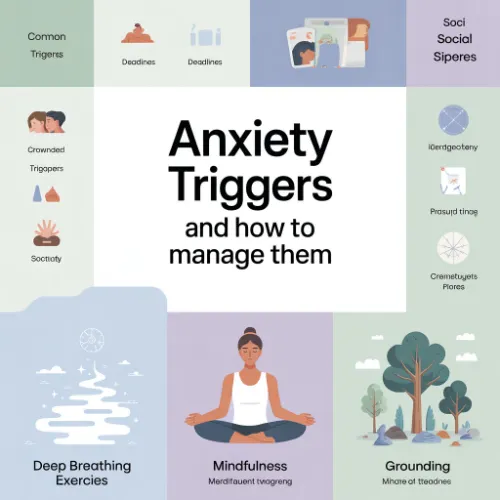
When you spot your triggers early, you can lower anxiety fast and feel more in control 🧘♀️.
What are anxiety triggers? 🤔
Anxiety triggers are internal or external factors that make your brain sense danger 🚨. Your body reacts even when you are not in real danger.
Anxiety triggers usually follow patterns. They are not random.
What are the most common anxiety triggers? ⚠️
The most common anxiety triggers include:
• Chronic stress and overload 🧾
• Lack of sleep 😴
• Caffeine and sugar spikes ☕🍫
• Social pressure or conflict 🗣️
• Uncertainty and lack of control 🎢
• Past negative experiences 🧠
• Constant notifications and news exposure 📱📰
These triggers overstimulate your nervous system. Over time, your body stays on high alert 🔥.
How does anxiety affect your body? 💓
Anxiety activates the fight-or-flight response 🏃♀️. This releases stress hormones like cortisol and adrenaline.
Cortisol is a stress hormone. It helps you respond to danger. When it stays high, it can disrupt sleep, focus, digestion, and energy ⚡.
Common physical effects include:
• Rapid heartbeat 💗
• Shallow breathing 🌬️
• Muscle tension 💪
• Stomach discomfort 🤢
• Fatigue 🪫
• Difficulty concentrating 🧩
Why do small triggers cause strong reactions? 🧠
Your brain learns patterns.
If a situation once felt overwhelming, your brain stores it as a threat. Small reminders can reactivate the same response 🔁.
Examples:
• Emails that remind you of past conflict 📩
• Crowded places after a panic episode 🧍♂️🧍♀️
• Silence after bad news 🤐
• Tight schedules after burnout 🗓️
This is a protective response. It is not weakness ✅.
How can you identify your personal anxiety triggers? 🔎
Awareness comes first.
Ask yourself:
• When does anxiety spike? ⬆️
• What happened right before it started? ⏱️
• What thoughts showed up? 💭
• How was your sleep and food that day? 😴🍽️
Tracking patterns for one week often shows clear triggers 📓.
You may notice anxiety increases:
• After poor sleep 😵💫
• During overstimulation 🔊
• When skipping meals 🥪
• When deadlines stack 📌
You can read more: Managing and treating anxiety
How can you manage anxiety triggers effectively? ✅
You manage anxiety by reducing trigger load and strengthening your response system 🛡️.
Try these practical strategies.
- Regulate your breathing 🌬️
Slow breathing tells your brain you are safe 🧘♀️.
Try this:
• Inhale through your nose for 4 seconds
• Hold for 2 seconds
• Exhale slowly for 6 seconds
• Repeat for 2 minutes ⏳
This can lower heart rate and reduce the stress response 📉.
- Improve sleep consistency 😴
Low sleep increases anxiety sensitivity.
Aim for:
• Same sleep and wake time daily ⏰
• No screens 60 minutes before bed 📵
• Dark, cool sleep space 🌙
Many people feel calmer within 2 weeks when sleep improves ✅.
- Limit stimulants ☕
Caffeine can raise heart rate and trigger anxious feelings.
If anxiety is frequent:
• Reduce coffee intake ☕⬇️
• Avoid energy drinks 🥤🚫
• Watch sugar spikes 🍬⬇️
Swap to water or herbal tea 💧🍵.
- Reduce information overload 📵
Constant alerts keep your brain in threat mode 🚨.
Simple fixes:
• Turn off non-essential notifications 🔕
• Avoid doomscrolling before bed 🌙📱🚫
• Schedule phone-free time 🧘♂️
Less noise helps your brain reset 🧠✨.
- Use grounding techniques 🪨
Grounding brings you back to the present moment.
Try the 5-4-3-2-1 method:
• 5 things you see 👀
• 4 things you feel ✋
• 3 things you hear 👂
• 2 things you smell 👃
• 1 thing you taste 👅
This interrupts spiraling thoughts fast ✅.
Can lifestyle changes really reduce anxiety? 🌿
Yes. Consistency matters more than intensity.
Small daily habits lower baseline anxiety. That makes triggers feel less powerful over time 📉.
Walking, light exercise, regular meals, and structured routines help your nervous system stay balanced 🚶♀️🍽️🗓️.
When should anxiety be taken seriously? 🚑
Some anxiety is normal.
Seek professional help if:
• Anxiety disrupts work or daily tasks 🧱
• Panic symptoms happen often 😨
• Sleep problems last for weeks 😴🚫
• Avoidance keeps getting worse 🚪🚫
Early support helps you recover faster ✅.
What mistakes make anxiety worse? ❌
Common mistakes include:
• Ignoring early signs 🙈
• Overusing caffeine ☕⬆️
• Isolating yourself 🧍♀️
• Avoiding everything instead of managing triggers 🏃♀️🚫
• Expecting instant results ⏱️
Progress comes from steady habits 📈.
How long does it take to manage anxiety triggers? ⏳
It varies.
Many people notice improvements within:
• 7 to 14 days with better sleep 😴✅
• 2 to 4 weeks with routine changes 🗓️✅
• Ongoing gains with practice 💪
Anxiety management is a skill. Skills improve with repetition 🔁.
Key takeaway 🧠✅
Anxiety triggers are learned responses, not personal flaws. When you identify your triggers and support your nervous system daily, anxiety loses intensity 😌.
Start with sleep, breathing, and less stimulation. Small changes can bring real relief 🌿.
Explore more Health and Wellness guides on FeedFrenzyPlus.

I’m Geraldine Villariza, an SEO Specialist with over 3 years of experience. I’m passionate about beauty, self-care, and helping others thrive. I’ll be discussing topics like lifestyle, beauty, health and wellness, life hacks, daily tips, mindset and motivation, productivity, relationships, and love — all to help you live a more balanced and fulfilling life.