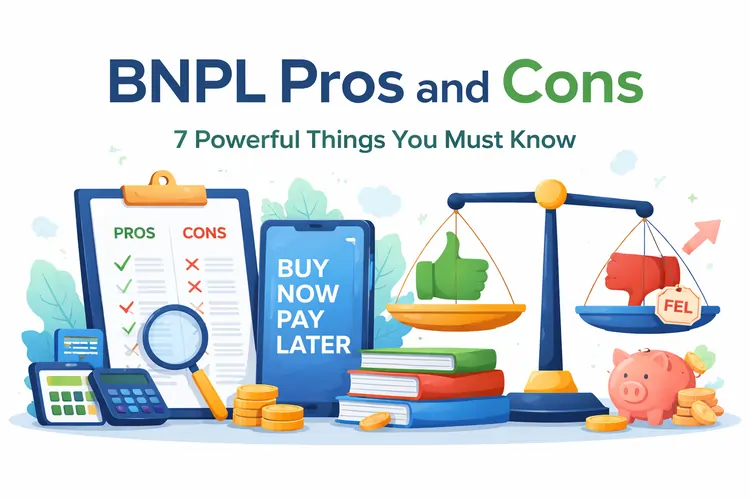
Understanding BNPL Pros and Cons
Buy Now, Pay Later (BNPL) has transformed the way consumers shop, borrow, and manage short-term cash flow. From online retail checkouts to in-store financing, BNPL services promise convenience, flexibility, and often zero interest.
But behind the appealing marketing lies a complex financial product that can either support smart budgeting—or quietly create debt traps.
Understanding the BNPL pros and cons is essential before clicking “Pay in 4” or choosing installment payments at checkout. While BNPL can be a powerful financial tool when used responsibly, it also carries risks that many users overlook.
This in-depth guide explores the BNPL pros and cons from a financial literacy perspective, backed by regulatory insights, consumer behavior trends, and practical budgeting principles.
Whether you’re a consumer, entrepreneur, or financial decision-maker, this article will help you make informed choices aligned with long-term financial health.
What Is Buy Now, Pay Later (BNPL)?
Buy Now, Pay Later is a short-term financing solution that allows consumers to purchase products immediately and split payments into smaller installments over weeks or months. Many BNPL providers advertise “interest-free” plans, typically structured as:
- Pay in 4 installments (every two weeks)
- Monthly installment plans (3–36 months)
- Deferred payments (no payment for 30–90 days)
Major providers include Klarna, Afterpay, Affirm, PayPal Pay in 4, and Zip. Retailers integrate these services directly into checkout systems, making access frictionless.
Because approval processes are often fast and require only soft credit checks (or none at all), BNPL has grown rapidly—especially among Gen Z and millennials.
To fully grasp the BNPL pros and cons, we must evaluate how these products work, who benefits most, and where risks emerge.
Why BNPL Has Become So Popular
Several structural factors explain BNPL’s explosive adoption:
- Rising credit card interest rates
- Increased eCommerce activity
- Consumer preference for predictable installments
- Psychological appeal of smaller payments
- Instant approval processes
BNPL appeals to shoppers who want flexibility without traditional credit cards. However, ease of use can blur the line between smart financing and impulsive spending.
This is where understanding the BNPL pros and cons becomes critical.
1. Pro: Interest-Free Installments (In Many Cases)
One of the most advertised benefits in the BNPL pros and cons discussion is zero-interest financing.
How It Works
Most “Pay in 4” models charge no interest if payments are made on time. Instead, providers earn revenue from merchant fees and late penalties.
Why This Matters
Compared to credit cards with APRs ranging from 18% to 29%, interest-free installments can reduce borrowing costs significantly.
When It’s Truly Beneficial
BNPL works well when:
- You have predictable income
- You already budgeted for the purchase
- You pay on time consistently
However, zero interest does not mean zero risk—an important nuance when weighing the BNPL pros and cons.
2. Pro: Easy Approval and Accessibility
Another major advantage in the BNPL pros and cons analysis is accessibility.
Minimal Credit Checks
Many providers conduct soft credit checks or use alternative underwriting methods. This allows:
- Young adults with limited credit history
- Consumers with lower credit scores
- International buyers without traditional banking profiles
Faster Checkout Experience
Approval often takes seconds, enhancing convenience.
While accessibility increases financial inclusion, it also increases exposure to debt for financially inexperienced users—highlighting a key tension in the BNPL pros and cons debate.
3. Pro: Improved Cash Flow Management
Used strategically, BNPL can enhance short-term liquidity.
Budget Flexibility
Instead of paying $400 upfront, you pay $100 over four pay cycles. This preserves emergency funds and stabilizes monthly expenses.
Business and Entrepreneur Use Cases
Small business owners sometimes use BNPL to:
- Purchase inventory
- Invest in equipment
- Manage short-term working capital
In this context, evaluating the BNPL pros and cons becomes less about consumption and more about financial planning.
4. Pro: No Compounding Interest (For Short Plans)
Unlike credit cards that compound interest daily, most short-term BNPL plans do not accrue interest if paid on time.
This structural difference often makes BNPL appear safer in comparisons.
However, when reviewing the BNPL pros and cons, it’s important to distinguish between short-term installment plans and longer financing options that may include interest rates comparable to credit cards.
5. Con: Encourages Impulse Spending
Among the most significant risks in the BNPL pros and cons conversation is behavioral psychology.
The Illusion of Affordability
Breaking $200 into four $50 payments makes purchases feel smaller and less financially significant.
Increased Basket Size
Retail data shows consumers often spend more when BNPL is offered at checkout.
The psychological framing of “small payments” reduces purchase resistance—turning convenience into overconsumption.
6. Con: Late Fees and Penalties
Although marketed as interest-free, BNPL providers generate revenue from penalties.
Common Fees
- Missed payment fees
- Account reactivation fees
- Collection costs
Some platforms cap late fees, while others may charge multiple penalties per installment.
When analyzing the BNPL pros and cons, it’s essential to read provider terms carefully.
7. Con: Potential Credit Score Impact
The relationship between BNPL and credit reporting is evolving.
Reporting Differences
Some providers:
- Do not report on-time payments
- Report only missed payments
- Report full installment data
This inconsistency complicates the credit impact discussion in the BNPL pros and cons debate.
Missed payments may:
- Lower credit scores
- Trigger collections
- Affect loan approvals
As regulatory oversight increases globally, reporting practices are becoming stricter.
Hidden Risks Most People Overlook
When discussing BNPL pros and cons, certain risks receive less attention.
Multiple Concurrent Plans
Consumers may open several BNPL accounts simultaneously, losing track of total obligations.
Automatic Withdrawals
Missed bank balances can trigger overdraft fees.
Lack of Consumer Protections
BNPL may not offer the same protections as credit cards, such as:
- Chargeback rights
- Fraud protection coverage
- Purchase insurance
Understanding these hidden dimensions strengthens your awareness of the BNPL pros and cons landscape.
BNPL vs Credit Cards: A Balanced Comparison
Interest Structure
- Credit cards: High APR, compounding interest
- BNPL: Typically zero interest short-term
Credit Reporting
- Credit cards: Fully reported
- BNPL: Mixed reporting
Consumer Protections
- Credit cards: Strong regulatory protections
- BNPL: Varies by jurisdiction
The BNPL pros and cons differ significantly depending on how you compare these products.
Regulatory Trends and Consumer Protection
Governments worldwide are increasing oversight.
Key Regulatory Concerns
- Transparent fee disclosure
- Responsible lending checks
- Consumer debt accumulation
Regulators aim to address risks identified in the broader BNPL pros and cons debate, particularly around transparency and affordability assessments.
Who Should Consider Using BNPL?
Evaluating the BNPL pros and cons depends heavily on personal financial discipline.
Ideal Users
- Budget-conscious planners
- Individuals with stable income
- Consumers avoiding high-interest debt
High-Risk Users
- Impulse shoppers
- Those with irregular income
- Individuals already managing debt
BNPL is a tool—not a solution to financial instability.
Strategic Ways to Use BNPL Responsibly
To maximize the advantages in the BNPL pros and cons equation:
Only Finance What You Can Already Afford
If you wouldn’t buy it outright, reconsider financing it.
Track All Installments
Use budgeting apps or calendar reminders.
Limit Active Plans
Avoid stacking multiple BNPL purchases.
Review Terms Carefully
Each provider has different policies.
Responsible usage transforms BNPL from risk to resource.
The Psychological Side of Installment Spending
Behavioral finance plays a central role in understanding BNPL pros and cons.
Reduced Pain of Paying
Smaller payments feel less impactful.
Delayed Consequences
Immediate gratification outweighs future obligation.
Recognizing these biases protects consumers from financial strain.
Long-Term Financial Implications
Short-term installment plans may appear harmless, but repeated use can:
- Normalize debt dependency
- Reduce savings growth
- Create payment fatigue
In evaluating the BNPL pros and cons, long-term habit formation matters more than short-term convenience.
How Businesses Benefit from BNPL
Retailers gain from:
- Higher average order value
- Increased conversion rates
- Reduced cart abandonment
For businesses, the BNPL pros and cons are largely favorable, as merchant fees are offset by higher sales volume.
The Future of BNPL
The BNPL sector is evolving through:
- Stricter regulation
- Credit bureau integration
- Expanded consumer protections
- Embedded finance models
As the industry matures, the BNPL pros and cons balance may shift toward greater accountability and transparency.
Final Verdict: Are BNPL Services Good or Bad?
The answer lies in behavior—not the product itself.
The BNPL pros and cons reveal a dual reality:
- Used responsibly, BNPL offers flexible, interest-free financing.
- Used impulsively, it accelerates debt accumulation.
Financial literacy, income stability, and disciplined budgeting determine whether BNPL becomes a strategic tool or a liability.
Before using BNPL, ask:
- Do I need this purchase?
- Can I afford all installments?
- Am I tracking all existing payment obligations?
A mindful approach ensures the benefits outweigh the risks.
Frequently Asked Questions
Is BNPL better than using a credit card?
It depends. Short-term BNPL plans with no interest may be cheaper than high-APR credit cards, but credit cards often offer stronger consumer protections.
Does BNPL affect your credit score?
Some providers report missed payments to credit bureaus. Policies vary, so missed payments can negatively impact your score.
Are there hidden fees in BNPL?
While many plans advertise zero interest, late fees and penalties can apply. Always review provider terms carefully.
Can BNPL lead to debt problems?
Yes. Multiple installment plans and missed payments can accumulate quickly, leading to financial strain.
Is BNPL safe to use?
BNPL is generally safe when used responsibly. However, it requires budgeting discipline and awareness of repayment terms.
Is BNPL considered a loan?
Yes, BNPL is a form of short-term financing. While it may not always look like a traditional loan, it is still a credit agreement where you borrow money and repay it over time. Understanding this is important when evaluating BNPL pros and cons, especially regarding legal obligations and repayment responsibility.
Why do retailers promote BNPL so heavily?
Retailers promote BNPL because it increases conversion rates and average order value. When customers see smaller installment payments instead of a full upfront cost, they are more likely to complete purchases. This commercial benefit is a key factor behind the rapid growth discussed in BNPL pros and cons analyses.
Can BNPL affect mortgage or loan approval?
Yes, in some cases. If BNPL payments are reported to credit bureaus or appear in bank statements, lenders may factor them into debt-to-income calculations. Multiple active installment plans could influence approval decisions. This financial impact is an often-overlooked element in the BNPL pros and cons conversation.
Are returns and refunds easy with BNPL purchases?
Refund policies depend on both the retailer and the BNPL provider. While many providers pause installment payments during return processing, delays can occur. Consumers should confirm refund timelines before using installment options, especially when reviewing BNPL pros and cons.
What types of purchases are best suited for BNPL?
BNPL is generally best suited for necessary, planned purchases such as appliances, electronics, or essential services—not impulse buys. When used for budgeted expenses with clear repayment ability, the advantages in the BNPL pros and cons balance are more likely to outweigh the risks.

Mary Gay Apud is an SEO Strategist, Educator, and Research Consultant specializing in structured, data-driven organic growth systems. With a strong foundation in Mathematics, she applies analytical precision, research methodology, and strategic thinking to build scalable SEO frameworks that enhance search visibility and long-term authority.
Her expertise includes content optimization, keyword strategy, technical SEO, and topical authority development—aligning performance with measurable business outcomes. With experience in team leadership, statistical consulting, and government service, Mary Gay combines discipline, accuracy, and structured execution in every project. She believes sustainable digital success is built on research, clarity, and long-term strategic implementation—not short-term trends.