
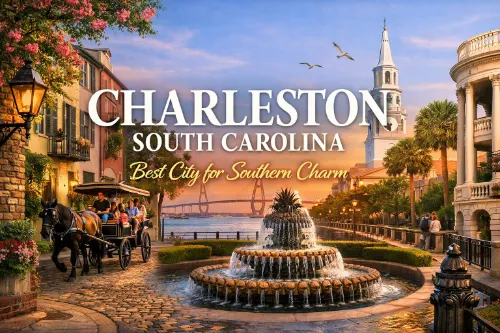
Charleston, South Carolina is the rare city that feels like a living postcard. Cobblestone streets, pastel homes, church steeples, and the smell of salt air all blend with genuine Southern hospitality to create that famous Southern charm.
If you are planning a trip to the South, this Charleston South Carolina travel guide gives you everything you need to plan the perfect visit.
This destination guide is written for first-timers, couples, families, and solo travelers. You will find practical tips, neighborhood breakdowns, a 1–3 day Charleston itinerary, and honest advice on when to visit, where to stay, what to eat, and how to experience the best things to do in Charleston SC without feeling overwhelmed.
Destination Guides: Why Charleston Belongs on Your List
If you are building a bucket list of US cities with strong culture, food, and character, Charleston belongs near the top. It regularly shows up in “best small city” and “most charming city in the South” lists for good reason. For an official overview of the city, you can also browse the city’s own tourism site at Charleston.com.
What makes Charleston stand out:
- A compact, walkable historic core full of preserved homes, courtyards, and leafy streets.
- A deep, complex history spanning colonial times, the Civil War, and the civil rights era, highlighted on the Discover South Carolina – Charleston page.
- A serious food scene built around Lowcountry cuisine, seafood, and modern Southern cooking.
- Easy access to Charleston beaches like Folly Beach, Isle of Palms, and Sullivan’s Island.
Think of Charleston as a charming coastal city where you can stroll historic downtown Charleston in the morning, eat shrimp and grits Charleston style for lunch, take a harbor cruise in the afternoon, and watch the sunset over church steeples and marshland.
If you like to plan visually and read reviews, the Charleston section on Tripadvisor is also a helpful resource for hotels, attractions, and restaurants.
Quick Travel Facts for Charleston, South Carolina
Where is Charleston and how do you get there?
Charleston sits on the coast of South Carolina, where the Ashley and Cooper Rivers meet the Atlantic Ocean. It is part of the Lowcountry South Carolina region, known for its marshes, barrier islands, and coastal wetlands.
Ways to arrive:
- By air: Fly into Charleston International Airport (CHS), about 20–25 minutes from the historic district by car or rideshare.
- By car: Many travelers pair Charleston with Savannah, Atlanta, or Charlotte on a road trip.
- Without a car: You can absolutely visit without driving; the core is walkable, and rideshares and tours cover longer distances.
The city’s official Visitors page and Visitor Center page are useful for maps, parking, and visitor services once you arrive.
Best time to visit Charleston SC
The best time to visit Charleston SC is usually:
- Spring (March–May): Blooming gardens, comfortable temperatures, and plenty of events.
- Fall (September–early November): Warm days, cooler nights, and fewer crowds than peak summer.
Summer brings strong heat and humidity, as well as higher hotel prices. Winter is mild and quieter, which can work well if you want a budget-friendly Charleston SC travel guide experience without beach time.
How many days do you need?
- 1 day: Enough for a fast “taste of Charleston” with a walking tour and a few key sights.
- 2–3 days: Ideal for most visitors; you can see historic Charleston, visit at least one plantation near Charleston, and add a beach or harbor day.
- 4+ days: Great if you want to slow down, eat your way through town, and explore more of Lowcountry South Carolina.
Where to Stay in Charleston (By Neighborhood)
Choosing where to stay in Charleston South Carolina has a huge impact on your trip. Here’s a simple guide to visiting Charleston SC neighborhoods and what each offers.
For more official trip-planning tools, including an online visitors guide, see the Charleston Area Convention & Visitors Bureau link under “Charleston Area Convention & Visitors Bureau.”
Historic District / French Quarter
Best for: first-timers, history lovers, non-drivers.
This is the classic base for a weekend in Charleston SC. You are surrounded by historic homes, cobblestone streets, and landmarks like Rainbow Row, Broad Street, and some of the city’s most photographed churches.
What to expect:
- Walkable access to Charleston City Market, Waterfront Park, and The Battery.
- Boutique inns and historic hotels with lots of character.
- Higher prices, especially in peak season.
King Street
Best for: shoppers, nightlife, and food-focused travelers.
King Street Charleston is one of the city’s liveliest streets, split into sections known for design, fashion, and dining/nightlife.
What to expect:
- Easy access to shops, bars, and restaurants.
- A more energetic scene in the evenings.
- Great if you like to walk out the door and be in the middle of things.
Mount Pleasant & Shem Creek
Best for: families, budget-conscious travelers, and those who want water views without downtown prices.
Across the bridge from historic downtown, Mount Pleasant and Shem Creek offer a mix of suburbs and scenic marsh views.
What to expect:
- Waterside restaurants and boardwalks at Shem Creek.
- Easier parking and often better hotel rates.
- Short drives into downtown Charleston for sightseeing.
Beach Towns: Folly Beach, Isle of Palms, Sullivan’s Island
Best for: beach-first travelers and relaxed, longer stays.
Charleston beaches make it easy to combine city and sea, and you can see them highlighted on Discover South Carolina – Charleston.
- Folly Beach: Surf vibes, casual cafes, and a fun, slightly bohemian feel.
- Isle of Palms: Resort-style, family friendly beaches and rentals.
- Sullivan’s Island: Quiet, upscale, more residential and low-key.
You can base yourself at the beach and day trip into Charleston, or split your time between downtown and the coast.
Top Things to Do in Charleston (Must-See Highlights)
This part of your Charleston South Carolina travel guide covers the essential experiences that define the city. For more inspiration, you can cross-check with Lonely Planet’s best things to do in Charleston.
Historic sights you should not miss
- Rainbow Row: A stretch of pastel Georgian row houses that has become one of the city’s most iconic images; see a detailed visitor overview at Rainbow Row – Old Town Trolley.
- The Battery & White Point Garden: A waterfront promenade lined with grand antebellum mansions and views of Charleston harbor and Fort Sumter, also covered in the same Rainbow Row guide.
- Waterfront Park & Pineapple Fountain: A lovely park on the Cooper River, famous for the Pineapple Fountain, a symbol of Southern hospitality; reviewed extensively on Tripadvisor – Charleston Waterfront Park.
- Charleston City Market: A historic market often listed among top attractions on Tripadvisor’s Charleston tourist spots.
These spots belong on almost every 3 day Charleston itinerary and are easy to link with a simple walking route through historic downtown Charleston.
Tours that bring the city to life
To move beyond pretty buildings and really understand Charleston, consider:
- Charleston walking tour: Many operators are listed on Tripadvisor’s “Tours & Activities in Charleston”.
- Charleston carriage tours: Classic horse-drawn tours that cover more ground while you sit back and listen.
- Charleston ghost tours: Evening walks through atmospheric streets and graveyards; search “ghost & vampire tours” in the same Tripadvisor section.
- Harbor cruise and Fort Sumter tours: Boat tours to Fort Sumter National Monument combine harbor views with Civil War history.
If you are traveling with kids, walking and harbor tours combine sightseeing with movement, which helps keep everyone engaged. Couples often enjoy ghost tours followed by drinks, while solo travelers might prefer a small walking tour group for a social yet low-pressure experience.
Plantations, History, and Context
Visiting plantations near Charleston is a big part of many guides, but it’s important to approach them thoughtfully. These sites are tied directly to the history of slavery and the exploitation of enslaved Africans and African Americans.
Some major options often recommended in a Charleston SC travel guide (check current info on their official sites before you go):
- Boone Hall Plantation: Known for its Avenue of Oaks, film locations, and exhibits on Gullah culture.
- Magnolia Plantation and Gardens: Famous for its romantic gardens, nature trails, and boat tours.
- Drayton Hall: A preserved 18th-century plantation house that emphasizes architectural history and context.
When you visit, look for tours or exhibits that speak openly about the realities of slavery, the Gullah Geechee community, and how this history still shapes Lowcountry South Carolina today. That perspective deepens your understanding beyond “pretty houses and gardens.”
Charleston Neighborhood Guide (At a Glance)
Here is a quick neighborhood snapshot you can build into your Destination Guides category.
- Historic Downtown & French Quarter: Postcard-perfect Charleston, with churches, galleries, museums, and landmarks around almost every corner.
- King Street Charleston: Shopping, brunch, rooftop bars, and nightlife in a compact, walkable corridor.
- Mount Pleasant & Shem Creek: Waterfront dining, family-friendly hotels, and boardwalks with marsh views.
- Charleston beaches (Folly Beach, Isle of Palms, Sullivan’s Island): Sand, surf, and laid-back coastal energy, all within easy reach of the city.
Use this neighborhood guide to visiting Charleston SC to match your base to your travel style. Want classic charm and no car? Pick the historic district. Want space, parking, and easy beach access? Go for Mount Pleasant or a beach town.
Charleston for Food Lovers (Lowcountry Cuisine)
Charleston is one of the best food cities in the United States. A true Charleston SC travel guide has to help you eat well. For a deep dive into the local food scene, you can read Condé Nast Traveler’s take on Lowcountry cuisine in Charleston or this detailed guide to Lowcountry cooking in Charleston.
What to eat (must-try dishes)
Look for these Lowcountry cuisine Charleston staples:
- Shrimp and grits Charleston style: Creamy, cheesy grits topped with local shrimp and a savory sauce.
- She-crab soup: A rich, creamy crab soup often served as a signature starter.
- Oysters: Raw, roasted, or fried, depending on the season.
- Fried chicken and biscuits: Classic Southern comfort food.
- Pimento cheese and fried green tomatoes: Beloved Southern small plates.
You will also find more modern, inventive Charleston Southern cuisine that blends traditional flavors with creative techniques; the Chili Pepper Madness article lists specific restaurants and dishes to try over a weekend.
Where to eat in Charleston SC (how to choose)
Instead of listing specific restaurants here (they change often), use these steps plus external food guides:
- Pick at least one classic Lowcountry restaurant for shrimp and grits and she-crab soup (see spots recommended in the Lowcountry cooking guide above).
- Add one seafood-focused spot, ideally near the water or on Shem Creek.
- Choose one brunch on King Street or in the historic district to experience Charleston brunch spots.
- Stop into local Charleston coffee shops and bakeries during your walking days for energy and atmosphere.
To go deeper, consider a food tour listed in the “Food & Drink” or “Tours” section of Tripadvisor – Charleston. You will hit several spots, learn about the roots of Lowcountry cuisine, and get curated recommendations for where to eat and drink during the rest of your stay.
Sample Itineraries: 1–3 Days in Charleston
1-Day “Taste of Charleston” Itinerary
If you are short on time, this quick plan covers many of the best things to do in Charleston SC; you can also compare with ideas from Lonely Planet’s 20 best things to do in Charleston.
Morning
- Join a Charleston walking tour through the historic downtown and French Quarter; browse options on Tripadvisor’s tours page.
- See Rainbow Row, The Battery, and some of the city’s most important churches and historic homes.
Lunch
- Have shrimp and grits Charleston style or another Lowcountry dish at a central restaurant recommended in local food guides.
Afternoon
- Explore Waterfront Park and the Pineapple Fountain; check Charleston Waterfront Park reviews for updated tips.
- Visit Charleston City Market for local crafts and sweetgrass baskets.
- Walk along King Street Charleston for shopping and coffee.
Evening
- Take a harbor cruise or Charleston ghost tour (see “Boat Tours” and “Ghost & Vampire Tours” on Tripadvisor).
- End with dinner and drinks on or near King Street or in the French Quarter.
2–3 Day Charleston South Carolina Travel Guide Itinerary
Day 1 – Historic Core & Harbor
- Morning: Stroll historic downtown Charleston and the French Quarter, focusing on Rainbow Row, The Battery, and Broad Street.
- Lunch: Lowcountry cuisine Charleston in or near the French Quarter.
- Afternoon: Visit a museum or historic home listed on the Discover Charleston page or Tripadvisor’s “Historic Sites” list.
- Evening: Harbor cruise or carriage tour, followed by rooftop drinks and dinner.
Day 2 – Plantations & Shem Creek
- Morning: Visit one of the plantations near Charleston (Boone Hall, Magnolia, or Drayton Hall) using the official websites linked above for tickets and hours.
- Lunch: Eat on-site or pack snacks.
- Afternoon: Head to Mount Pleasant or Shem Creek for a waterside walk and seafood; you can get ideas from Discover South Carolina’s entertainment and dining sections.
- Evening: Return to the city or stay in Mount Pleasant for a quieter night.
Day 3 – Beaches & Free Time
- Morning: Take a short trip to a Charleston beach such as Folly Beach, Isle of Palms, or Sullivan’s Island, highlighted on Discover South Carolina and Tripadvisor.
- Afternoon: Free time back in the city for shopping, coffee, or revisiting favorite spots.
- Evening: A final dinner focused on Charleston Southern cuisine, or one last ghost tour if you missed it earlier.
These itineraries can be customized for different types of travelers:
- Families: Focus on beaches, boat tours, and open-air attractions; look for family friendly things to do in Charleston on Tripadvisor’s “Family & Kids” filter.
- Couples: Add more slow walks, sunset viewpoints, and romantic dinners around the harbor.
- Solo travel to Charleston: Lean into small-group tours, coffee shops, and daytime exploring in busy areas, using Tripadvisor and Explore Charleston’s social channels like Explore Charleston on Facebook for current inspiration.
Practical Tips: Is Charleston Walkable, Safe, and Affordable?
Getting around Charleston
Is Charleston walkable? Yes, especially in the historic district. Many visitors spend entire days on foot. For longer distances:
- Use rideshares or taxis to reach Mount Pleasant, plantations near Charleston, or the beach.
- Join organized tours that include transportation (often listed on the Visitors Bureau and Tripadvisor).
- Consider a car rental if you want maximum flexibility for day trips.
Safety and etiquette
The central tourist areas are generally safe, but normal city awareness still applies; Tripadvisor’s travel tips section summarizes common advice from recent travelers.
- Stay in well-lit, busy areas at night.
- Keep valuables secure and avoid flashing expensive gear.
- Respect local etiquette by dressing modestly in churches and speaking politely to staff and guides.
Budget and costs
How expensive is Charleston compared to other US cities? It can feel mid-to-high, especially in peak seasons, but you can manage costs:
- Visit in shoulder seasons for better hotel and flight deals.
- Stay slightly outside the historic core, such as in Mount Pleasant or North Charleston (see Visit North Charleston).
- Mix paid tours with free or low-cost activities like self-guided walks and public parks.
Eating out every meal can add up, so consider balancing popular restaurants with casual spots and markets.
FAQs: Answering Common Questions About Charleston
Is Charleston worth visiting for first-timers to the South?
Yes. If you want a city that captures Southern charm, history, and food in one walkable package, Charleston is one of the best introductions to the region.
Is Charleston good for families, couples, and solo travelers?
Definitely. Families appreciate beaches, parks, and boat tours. Couples love the romantic streets, sunsets, and dining. Solo travel to Charleston works well because it is compact, social, and easy to navigate, with plenty of group tours and public spaces.
Is Charleston walkable and easy to get around?
Historic downtown Charleston and the French Quarter are very walkable. For plantations and Charleston beaches, you will rely on tours, rideshares, or a rental car.
How many days should I spend in Charleston?
A weekend in Charleston SC offers a solid overview, but a 3 day Charleston itinerary lets you explore the city, experience Lowcountry cuisine, visit a plantation, and still add time at the beach.
What should I not miss on a short trip?
For a first time in Charleston SC, prioritize Rainbow Row, The Battery, Waterfront Park with the Pineapple Fountain, a Charleston walking or carriage tour, at least one great Lowcountry meal, and an evening on King Street or the harbor, all of which you will see repeatedly in top attraction lists.
Final Thoughts: Making the Most of Charleston
As a cornerstone article in your Destination Guides category, this Charleston South Carolina travel guide gives readers both big-picture inspiration and detailed, actionable tips.
With clear GEO signals, natural use of semantic phrases like Charleston SC travel guide, best things to do in Charleston, and guide to visiting Charleston SC, plus trusted external resources, it is built to perform well in search while genuinely helping travelers.
From Rainbow Row to Charleston beaches, from shrimp and grits to ghost tours, this charming coastal city offers far more than a quick photo stop.
Whether you are planning a weekend in Charleston, a longer Lowcountry South Carolina trip, or a future road trip through the South, this guide – supported by official and expert resources like Charleston.com, the City of Charleston Visitors site, Discover South Carolina, and Tripadvisor’s Charleston hub – is designed to be the page travelers bookmark, save, and share before they go.

I’m John Michael Palmes, an SEO practitioner with over three years of hands-on experience in search engine optimization and digital marketing. I help websites improve visibility, build effective SEO content strategies, and rank better on Google using practical, data-driven approaches.
My focus is on on-page SEO, keyword research, and content optimization—the fundamentals that help both search engines and users understand a site clearly. I continuously test, analyze results, and refine strategies, sharing honest and actionable SEO insights as search algorithms evolve.