
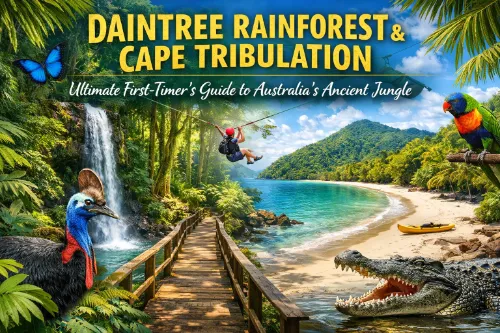
Why Daintree & Cape Tribulation Belong on Your Bucket List
On a remote stretch of Queensland’s northeastern coast, the Daintree National Park and Cape Tribulation create one of the most unique landscapes on Earth, where tropical rainforest meets the Great Barrier Reef in a single breathtaking view.
This corner of Far North Queensland is part of a World Heritage listed rainforest and reef, blending wild beaches, dense jungle, rich wildlife, and deep cultural stories in one compact region.
For first-time visitors to Tropical North Queensland, a Daintree Rainforest travel guide and Cape Tribulation travel guide are essential, because the area feels more remote and untamed than Cairns or Port Douglas.
There are fewer services, narrower roads, and more environmental sensitivities to respect—but the reward is stepping into Australia’s ancient jungle and experiencing a landscape that feels truly primeval.
This ultimate first-timer’s guide will walk you through everything you need to know: when to visit, how to get from Cairns to Daintree and Cape Tribulation, how many days to spend, things to do in Daintree Rainforest and things to do in Cape Tribulation, where to stay, what it costs, how to stay safe, and what to pack.
By the end, you’ll have a clear, realistic plan for your own Far North Queensland road trip or guided adventure.
Essential Facts About Australia’s Ancient Jungle
The Daintree Rainforest is often described as “Australia’s ancient jungle” because parts of it are estimated to be over 135–180 million years old, making it one of the oldest continuously surviving tropical rainforests on the planet.
This ancient rainforest shelters an incredible range of tropical rainforest flora and fauna, including rare plants, unique animals, and evolutionary lineages that go back to prehistoric times.
Most first-time visitors experience the Daintree within Daintree National Park (CYPAL), which has two main sections:
- Mossman Gorge section: Close to Port Douglas, with sealed roads, easy boardwalks, and freshwater swimming holes.
- Cape Tribulation section: North of the Daintree River, running along the coast all the way to Cape Tribulation and beyond.
Geographically, you’re in Tropical North Queensland, within the broader Cairns & Great Barrier Reef tourism region. Many travellers combine this area with time in Cairns and Port Douglas, plus side trips like the Atherton Tablelands, as part of a larger Queensland itinerary.
The climate is tropical:
- Wetter months: Warmer, more humid, with heavier rainfall and occasional road or trail disruptions.
- Drier months: Cooler, less humid, and generally more comfortable for walking and driving.
For a first visit, most travellers aim for 1–3 days in the Daintree and Cape Tribulation area, depending on whether they want a quick taste or a deeper immersion in the rainforest.
When Is the Best Time to Visit Daintree Rainforest & Cape Tribulation?
The best time to visit Daintree Rainforest and Cape Tribulation is usually during the cooler, drier part of the year, when conditions are more stable for driving, walking, and boat trips. That said, both wetter and drier months have distinct advantages.
Drier, cooler months (roughly May–September):
- Lower humidity and more pleasant daytime temperatures for rainforest boardwalks and walking trails.
- Fewer heavy downpours, making it easier to drive narrow, winding roads and enjoy clear views from lookouts like Alexandra Lookout.
- More predictable conditions for activities like Great Barrier Reef day trips from Cape Tribulation and Daintree River crocodile cruises.
Wetter, hotter months (roughly December–April):
- The rainforest is at its most lush and vibrant, with intense greens and flowing creeks.
- You may encounter fewer visitors at certain times, which can mean quieter beaches and boardwalks.
- Heavy rain is possible, with higher humidity and occasional localised flooding or temporary closures.
If you’re crowd-averse, try to avoid peak Australian school holiday periods, when Mossman Gorge, the Daintree River ferry, and Cape Tribulation Beach can feel busy. Shoulder periods around the main peak often provide a good balance of pleasant weather and manageable visitor numbers.
How to Get from Cairns or Port Douglas to Daintree & Cape Tribulation
Most journeys begin in Cairns or Port Douglas, two key hubs for Tropical North Queensland and the Great Barrier Reef.
Approximate driving times:
- Cairns to Port Douglas: Around 1 hour along the scenic Captain Cook Highway.
- Port Douglas to the Daintree River ferry: Roughly 45–60 minutes by car.
- Daintree River ferry to Cape Tribulation: Around 45–60 minutes again, depending on traffic and stops.
You have two main options:
1. Self-Drive Far North Queensland Road Trip
Self-driving gives you maximum flexibility to stop at viewpoints, beaches, Daintree Village, and various boardwalks.
- You’ll drive the coastal route from Cairns to Port Douglas, then continue north through sugar cane fields and small communities.
- Beyond the Daintree River, the road becomes narrower and more winding as you enter the Cape Tribulation section of Daintree National Park.
2. Guided Tours
If you’d rather not drive:
- Join a day trip to Daintree and Cape Tribulation from Cairns or Port Douglas with reputable operators you’ll find via the official Queensland tourism site.
- Book multi-day Daintree Rainforest and Cape Tribulation tour packages that include transport, guides, and some activities and meals.
Crossing the Daintree River Ferry
The Daintree River ferry is a key part of the journey:
- You pay a fee per vehicle to cross.
- The ferry runs regularly throughout the day, but you may encounter queues in peak times.
- Always factor in a buffer if you have a booked tour or check-in north of the river.
Guided tours remove the stress of handling the ferry, narrow roads, and wildlife on the roadside, which can be appealing for first-timers.
How Many Days Do You Need in Daintree & Cape Tribulation?
Most first-time visitors should plan at least 1 full day for highlights and 2–3 days for a relaxed, immersive experience.
1-Day Express Itinerary (Highlights Only)
Best if you’re based in Port Douglas or Cairns and have limited time:
- Morning:
- Drive to Mossman Gorge and explore its rainforest boardwalks and suspension bridge.
- If allowed and safe, cool off in the freshwater swimming holes.
- Midday:
- Head to the Daintree River and join a Daintree River crocodile cruise.
- Cross the Daintree River ferry afterwards.
- Afternoon:
- Walk a short boardwalk such as Jindalba or the Dubuji Boardwalk and Madja Botanical Walk.
- Finish at Cape Tribulation Beach or Myall Beach, where the rainforest meets the reef.
- Evening:
- Drive back to Port Douglas or Cairns.
2-Day First-Timer Itinerary
Day 1: Cairns/Port Douglas → Mossman Gorge → Daintree River → Rainforest North of the River
- Explore Mossman Gorge and, if you like, join Aboriginal Dreamtime walks for cultural insight.
- Take a Daintree River crocodile cruise.
- Cross on the Daintree River ferry.
- Stop at the Daintree Discovery Centre canopy tower and walkways.
- Overnight in a rainforest lodge or cabin near Cow Bay or Cape Tribulation.
Day 2: Beaches & Reef at Cape Tribulation
- Start with Cape Tribulation Beach, Myall Beach, or Cow Bay for a quiet walk.
- Join an Ocean Safari snorkelling tour from Cape Tribulation.
- If staying an extra night, consider guided night walks in the rainforest with local operators based around Cape Tribulation.
3-Day Immersive Itinerary
With three days, you can:
- Spread out Mossman Gorge, Daintree Village, river cruises, and multiple boardwalks.
- Add Kuku Yalanji Indigenous cultural tours and more time at lookouts such as Alexandra Lookout.
- Mix adventure (zipline, reef trips, night walks) with slower mornings, beach time, and café stops.
Top Things To Do in Daintree Rainforest
There are many things to do in Daintree Rainforest, but these stand out for first-time visitors.
Mossman Gorge
Mossman Gorge is one of the most accessible windows into the Daintree:
- Well-maintained rainforest boardwalks and walking trails suitable for most visitors.
- A suspension bridge, river viewpoints, and interpretation panels about local flora and fauna.
- Beautiful freshwater swimming holes, when conditions and rules allow.
- Aboriginal Dreamtime walks led by Kuku Yalanji guides, sharing stories, bush foods, and cultural practices.
You can find official visitor information through the Mossman Gorge Centre.
Daintree River & Daintree Village
The Daintree River is a hotspot for wildlife and scenery:
- Daintree River crocodile cruise experiences that focus on spotting crocodiles, birds, and mangrove ecosystems.
- Daintree Village with small cafés, galleries, and riverfront views.
See cruise options and village info via Visit Daintree.
Daintree Discovery Centre & Rainforest Boardwalks
The Daintree Discovery Centre canopy tower and walkways provide a structured introduction to the ancient rainforest:
- Elevated platforms take you up into the canopy, offering new angles on the forest.
- Self-guided audio and displays explain the age, evolution, and conservation of this ecosystem.
Nearby, you’ll find additional boardwalks and walking trails like:
- Jindalba Boardwalk.
- The Dubuji Boardwalk and Madja Botanical Walk.
Top Things To Do in Cape Tribulation
Cape Tribulation is where rainforest meets reef, and it’s packed with memorable experiences.
Beaches: Cape Tribulation Beach, Myall Beach, Cow Bay
- Cape Tribulation Beach: The most iconic, with sweeping views of headlands, rainforest, and the Coral Sea.
- Myall Beach: Great for peaceful walks and photography, especially at sunrise or sunset.
- Cow Bay: Often quieter, with a wild, unspoiled feel and classic Tropical North Queensland scenery.
Learn more about the beaches and local walks via Destination Daintree’s Cape Tribulation guide.
Great Barrier Reef from Cape Tribulation
A Great Barrier Reef day trip from Cape Tribulation is a highlight if you want reef and rainforest in a single stay:
- Operators like Ocean Safari run small-group snorkelling tours from Cape Tribulation.
- Short boat rides mean more time in the water and less transit time.
For more reef-trip inspiration, check Tourism Australia’s Guide to the Daintree Rainforest.
Adventure & Night Experiences
Cape Tribulation suits adventurous travellers and families who enjoy active experiences:
- Jungle surfing zipline tours through the rainforest canopy (search local operators listed on Visit Daintree).
- Guided night walks in the rainforest, revealing nocturnal animals and unique fungi.
- Kayaking and guided coastal walks with local adventure companies.
Wildlife, Nature, and Indigenous Culture
Wildlife and nature are huge drawcards for the Daintree Rainforest and Cape Tribulation.
- Cassowaries: These large, prehistoric-looking birds are a symbol of the region, often highlighted by Queensland tourism.
- Other wildlife: Expect to see a variety of birds, frogs, lizards, butterflies, and other creatures, especially on guided walks or cruises.
- Flora: Ferns, palms, vines, and towering trees showcase just how old and complex this ecosystem is.
This land is the traditional country of the Eastern Kuku Yalanji people, recognised on the Queensland Parks Daintree National Park page.
- Kuku Yalanji Indigenous cultural tours and Dreamtime walks at Mossman Gorge help you understand local stories, bush foods, medicine plants, and cultural traditions.
- Tourism Australia also highlights these experiences in its Daintree Rainforest guide.
Where to Stay: Best Areas & Accommodation Types
Where you stay will shape your experience of Daintree Rainforest and Cape Tribulation.
North of the Daintree River (Cow Bay to Cape Tribulation)
Best for travellers who want to be surrounded by rainforest:
- Accommodation: Daintree Rainforest accommodation and ecolodges, small cabins, treehouse-style stays, and boutique retreats.
- Vibe: Remote, peaceful, with dark skies at night and the sounds of the jungle around you.
Browse options via the Visit Daintree accommodation listings.
Port Douglas
Port Douglas is a popular base that balances comfort and convenience, with many reef and rainforest tours. You’ll find plenty of hotel and apartment options listed on the main Queensland tourism site.
Cairns
Cairns works well if you’re planning a broader Tropical North Queensland itinerary including islands, Kuranda, and Atherton Tablelands. It’s also covered in Tourism Australia’s Cairns & surrounds guides.
If your schedule allows, consider splitting your trip: a few nights in Cairns or Port Douglas, plus at least one or two nights in rainforest ecolodges north of the Daintree River.
How Much Does a Trip to Daintree & Cape Tribulation Cost?
Costs vary by travel style, but here’s a simple framework.
Core Trip Costs
- Daintree River ferry: Expect a moderate fee per vehicle return; current rates are listed on Visit Daintree.
- Fuel and parking: Factor in distances from Cairns or Port Douglas and any parking fees at major sites.
- Food: Cafés and restaurants in remote areas can be slightly pricier than in larger towns.
Accommodation Bands
- Budget: Hostels, basic cabins, or camping-style options listed in budget sections of Visit Daintree or similar sites.
- Mid-range: Comfortable eco-lodges and guesthouses.
- Higher-end: Boutique rainforest retreats and luxury lodges promoted by Queensland tourism.
Activity Costs
Check individual operator sites such as:
- Daintree Discovery Centre for entry prices.
- Ocean Safari for reef trip rates.
- Daintree River cruise operators and tour packages listed on Visit Daintree.
Safety, Road Conditions, and Responsible Travel
Is it safe to visit Daintree Rainforest and Cape Tribulation? Yes, provided you pay attention to local conditions and follow basic safety guidelines.
Roads and Driving
The Queensland Parks “Visiting safely” page for Daintree explains key points:
- Roads north of the Daintree River can be narrow, winding, and steep in places.
- Drive slowly, especially in wet conditions or low light.
- Watch for wildlife, particularly cassowaries, wallabies, and other animals crossing the road.
Water Safety
- Swimming in ocean beaches is often not recommended due to crocodiles and seasonal marine stingers; always follow local signage.
- Only swim where it is clearly permitted and considered safe, such as certain freshwater swimming holes at Mossman Gorge when conditions allow.
- Reef and river operators provide safety briefings; follow their guidance closely.
Responsible Travel and Environmental Care
The Daintree National Park discovery guide (PDF) outlines responsible visitor behaviour:
- Stay on marked trails to protect sensitive plants and soils.
- Take all rubbish out with you and minimise single-use plastics.
- Use reef-safe sunscreen to reduce impact on marine ecosystems.
- Respect cultural protocols on Eastern Kuku Yalanji country and follow guidance from local guides.
What to Pack for Daintree Rainforest & Cape Tribulation
Packing smartly can make your trip far more comfortable.
For a more detailed look at what to bring, you can cross-check with guides like Tourism Australia’s Daintree Rainforest packing and planning tips.
- Lightweight, breathable, quick-dry clothing.
- Light rain jacket or poncho.
- Sturdy walking shoes or trail runners.
- Insect repellent and reef-safe sunscreen.
- Reusable water bottle and a small daypack or dry bag.
- Binoculars for wildlife, torch/headlamp for night walks, and motion sickness tablets if needed.
FAQ: First-Timer Questions About Daintree & Cape Tribulation
For more official answers, you can also browse the Daintree FAQ and visitor information.
How many days do you need in Daintree Rainforest and Cape Tribulation?
Plan at least 1 full day for highlights and 2–3 days if you want to cover Mossman Gorge, Daintree River, multiple boardwalks, beaches, and a reef trip at a relaxed pace.
Do you need a 4WD to get to Cape Tribulation?
To reach Cape Tribulation via the main road, a standard vehicle is usually sufficient, as the road is sealed; more remote tracks beyond Cape Tribulation may require a suitable vehicle and experience.
Can you visit Daintree & Cape Tribulation without a car?
Yes. You can join organized day trips from Cairns or Port Douglas, or book multi-day packages that include transport, as listed on Queensland tourism and Visit Daintree.
Is it safe to visit during the wetter months?
It can be safe if you stay flexible and informed; check the Queensland Parks alerts for current conditions.
Can you swim at Cape Tribulation Beach or other beaches?
Swimming is often not recommended because of crocodiles and, at certain times of year, marine stingers; see local advice via Queensland tourism’s Cape Tribulation page.
Is Daintree Rainforest and Cape Tribulation suitable for kids and older travellers?
Yes, with age-appropriate activities like boardwalks, Mossman Gorge, river cruises, and some cultural tours, which are highlighted in both Tourism Australia and Queensland tourism guides.
What Next? Plan Your Own Daintree & Cape Tribulation Adventure
You now have a clear overview of how to reach the Daintree Rainforest and Cape Tribulation, when to go, what to do, where to stay, how much to budget, and how to stay safe and respectful in this extraordinary environment.
From here, you can:
- Build a detailed Cairns to Cape Tribulation road trip itinerary using the official Queensland 4‑day Daintree itinerary as inspiration.
- Deep‑dive into specific topics with resources like Tourism Australia’s Guide to the Daintree Rainforest and Visit Daintree.
- Shortlist tours and ecolodges using Visit Daintree, Destination Daintree, and Queensland tourism to match your budget, comfort level, and interest in wildlife and Indigenous culture.
Use this destination guide as your base, then layer in your dates, budget, and interests to create a Daintree and Cape Tribulation trip that feels truly unforgettable.

I’m John Michael Palmes, an SEO practitioner with over three years of hands-on experience in search engine optimization and digital marketing. I help websites improve visibility, build effective SEO content strategies, and rank better on Google using practical, data-driven approaches.
My focus is on on-page SEO, keyword research, and content optimization—the fundamentals that help both search engines and users understand a site clearly. I continuously test, analyze results, and refine strategies, sharing honest and actionable SEO insights as search algorithms evolve.