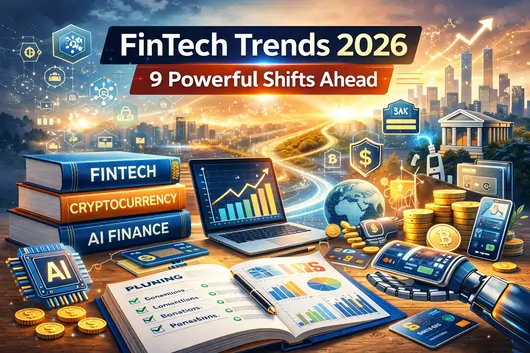
Why FinTech Trends 2026 Matter Now
The global financial ecosystem is undergoing one of the most profound transformations in modern history. Banking, investing, payments, lending, insurance, and digital assets are being reshaped by automation, artificial intelligence, blockchain infrastructure, embedded finance, and regulatory evolution.
Understanding FinTech Trends 2026 is no longer optional for executives, investors, entrepreneurs, and policymakers. It is a strategic necessity. Financial technology has moved far beyond startup disruption narratives.
In 2026, it represents core infrastructure powering global commerce, decentralized networks, institutional capital flows, and consumer digital experiences.
The acceleration of innovation is being driven by several converging forces:
- Rapid AI deployment in financial systems
- Blockchain integration and tokenized assets
- Regulatory modernization
- Cybersecurity escalation
- Open banking frameworks
- Real-time global payments
- Embedded finance across digital platforms
- Central bank digital currency experimentation
- Data-driven personalization
This comprehensive guide explores FinTech Trends 2026 through nine powerful shifts transforming digital banking, AI finance, crypto ecosystems, global payments, compliance automation, and financial inclusion strategies.
The Evolution of Financial Technology
Before analyzing FinTech Trends 2026, it is essential to understand how financial innovation evolved over the past decade.
From Disruption to Infrastructure
Early fintech companies focused on disrupting traditional banks through:
- Mobile-first banking apps
- Peer-to-peer lending platforms
- Digital wallets
- Robo-advisors
In 2026, fintech has matured. It now operates as foundational infrastructure integrated into enterprise banking systems, multinational corporations, e-commerce ecosystems, and decentralized networks.
Institutional Participation
Major banks now partner with fintech firms instead of competing against them. Venture capital continues flowing into financial innovation, but institutional adoption has become the defining driver behind FinTech Trends 2026.
1. AI-Driven Financial Intelligence
Artificial intelligence is one of the most dominant drivers within FinTech Trends 2026.
Predictive Risk Modeling
AI systems now evaluate:
- Creditworthiness
- Fraud probability
- Market volatility
- Liquidity risk
- Portfolio exposure
Machine learning models analyze vast datasets faster than traditional underwriting teams, improving decision accuracy and reducing default rates.
Personalized Financial Products
AI enables hyper-personalized banking experiences. Instead of generic product offerings, financial institutions now deliver:
- Custom loan rates
- Dynamic insurance premiums
- AI-curated investment portfolios
- Real-time budgeting insights
This personalization increases customer retention and improves financial literacy.
Fraud Detection and Prevention
AI-driven monitoring systems analyze transaction patterns in milliseconds, flagging suspicious activity before fraud escalates. As cybercrime grows more sophisticated, AI remains central to FinTech Trends 2026 in protecting consumer assets.
2. Embedded Finance Expansion
Embedded finance is transforming how consumers interact with financial services.
What Is Embedded Finance?
Embedded finance integrates financial services directly into non-financial platforms. Examples include:
- E-commerce checkout financing
- In-app lending
- Ride-sharing driver insurance
- Marketplace seller credit lines
Instead of visiting a bank, consumers access financial tools within digital ecosystems they already use.
Revenue Model Shift
Companies offering embedded financial services benefit from:
- Transaction fee revenue
- Interchange income
- Lending spreads
- Cross-selling opportunities
Embedded systems represent one of the most scalable FinTech Trends 2026.
3. Real-Time Global Payments Infrastructure
Cross-border payments are being redesigned.
Instant Settlement Systems
Governments and private networks are implementing real-time payment rails. Features include:
- 24/7 transaction availability
- Near-instant fund transfers
- Lower settlement risk
- Reduced operational costs
Blockchain-Assisted Transfers
Distributed ledger systems reduce intermediary dependency, enhancing speed and transparency. Real-time settlement reduces friction in international commerce.
Real-time infrastructure remains central among FinTech Trends 2026 due to its impact on global trade.
4. Tokenization of Real-World Assets
Asset tokenization has moved beyond experimental pilots.
What Is Tokenization?
Tokenization converts real-world assets into digital tokens on blockchain networks. These assets include:
- Real estate
- Bonds
- Equity
- Commodities
- Art
- Carbon credits
Benefits of Tokenization
- Increased liquidity
- Fractional ownership
- Transparent ownership records
- Lower transaction costs
Tokenization democratizes access to previously illiquid investments and is a defining component of FinTech Trends 2026.
5. Open Banking and Data Portability
Open banking frameworks empower consumers to control financial data.
API-Based Data Sharing
Banks now provide secure APIs allowing third-party fintech platforms to:
- Access transaction data
- Offer personalized services
- Analyze spending behavior
- Recommend savings optimization
Consumer Empowerment
Data portability enhances competition and transparency. Customers can switch providers more easily, driving innovation across the industry.
Open banking continues shaping FinTech Trends 2026 by fostering collaborative ecosystems.
6. Regulatory Technology (RegTech) Automation
Compliance has become more complex in 2026.
Automated Compliance Systems
RegTech solutions automate:
- Anti-money laundering monitoring
- Know Your Customer verification
- Transaction reporting
- Risk scoring
AI-enhanced compliance reduces operational costs while improving regulatory adherence.
Real-Time Reporting
Regulators increasingly demand immediate transparency. Fintech firms integrate compliance systems directly into operational platforms.
RegTech remains one of the fastest-growing sectors within FinTech Trends 2026.
7. Central Bank Digital Currencies (CBDCs)
Central banks are exploring digital currency issuance.
CBDC Development
CBDCs aim to:
- Modernize payment systems
- Enhance financial inclusion
- Improve monetary policy tools
- Reduce cash dependency
Private Sector Collaboration
Fintech firms assist governments in developing infrastructure for digital currency wallets and transaction systems.
CBDCs represent a structural shift within FinTech Trends 2026.
8. Cybersecurity Innovation in Finance
Financial systems face constant attack threats.
Multi-Layered Security
Modern security frameworks include:
- Biometric authentication
- Multi-factor verification
- AI anomaly detection
- Hardware key encryption
Zero-Trust Architecture
Financial institutions are implementing zero-trust models where no internal or external access is automatically trusted.
Cybersecurity innovation remains inseparable from FinTech Trends 2026.
9. Financial Inclusion Through Digital Infrastructure
Financial inclusion is expanding globally.
Mobile Banking Penetration
Smartphone adoption allows unbanked populations to access:
- Digital wallets
- Microloans
- Remittance platforms
- Insurance products
Alternative Credit Scoring
AI-driven models evaluate creditworthiness using alternative data sources such as:
- Utility payments
- E-commerce activity
- Mobile usage patterns
Inclusion efforts define the humanitarian side of FinTech Trends 2026.
Strategic Implications for Businesses
Understanding FinTech Trends 2026 is not enough; businesses must adapt strategically.
Invest in Infrastructure
Legacy systems struggle to integrate AI, blockchain, and open APIs. Modernization is essential.
Strengthen Cybersecurity
As financial digitization increases, cyber resilience becomes non-negotiable.
Embrace Partnerships
Collaboration between banks, fintech startups, regulators, and enterprises drives innovation.
Prioritize Customer Trust
Transparency and ethical AI usage build long-term credibility.
Risks and Challenges
While promising, FinTech Trends 2026 also introduce risks.
- Regulatory uncertainty
- Data privacy concerns
- AI bias
- Market volatility
- Systemic cyber threats
- Infrastructure scalability
Balancing innovation with governance remains critical.
Long-Term Outlook Beyond 2026
Future developments may include:
- Fully tokenized securities exchanges
- AI-powered autonomous investment platforms
- Cross-border CBDC interoperability
- Decentralized identity verification networks
- Quantum-resistant financial encryption
The pace of innovation suggests continued transformation beyond FinTech Trends 2026.
Key Takeaways
- FinTech Trends 2026 reflect structural transformation across global finance.
- AI-driven risk modeling enhances financial decision-making.
- Embedded finance integrates banking into everyday platforms.
- Real-time payments reshape international trade.
- Asset tokenization democratizes investment access.
- Open banking increases competition and transparency.
- RegTech automates compliance and reduces risk.
- CBDCs modernize national payment systems.
- Cybersecurity innovation protects digital assets.
- Financial inclusion expands access globally.

Frequently Asked Questions
What are FinTech Trends 2026?
FinTech Trends 2026 refer to emerging innovations transforming financial technology, including AI finance, embedded banking, digital currencies, tokenization, and regulatory automation.
Why are FinTech Trends 2026 important?
They shape global banking infrastructure, investment systems, compliance frameworks, and consumer financial experiences.
How does AI influence FinTech Trends 2026?
AI improves fraud detection, risk modeling, personalization, and compliance monitoring.
Is blockchain central to FinTech Trends 2026?
Yes. Blockchain enables tokenization, secure payments, and decentralized financial infrastructure.
What role do CBDCs play in FinTech Trends 2026?
CBDCs modernize payment systems and enhance monetary policy tools.
Are FinTech Trends 2026 beneficial for small businesses?
Yes. Embedded finance and real-time payments reduce friction and improve access to capital.
How do FinTech Trends 2026 impact consumers?
Consumers benefit from faster payments, personalized services, and improved security.
What risks accompany FinTech Trends 2026?
Risks include cybersecurity threats, regulatory complexity, AI bias, and systemic market volatility.
How can companies prepare for FinTech Trends 2026?
By investing in technology infrastructure, strengthening compliance, and embracing partnerships.
Will FinTech Trends 2026 continue evolving?
Yes. Financial innovation will likely accelerate with further AI, blockchain, and regulatory integration.

Mary Gay Apud is an SEO Strategist, Educator, and Research Consultant specializing in structured, data-driven organic growth systems. With a strong foundation in Mathematics, she applies analytical precision, research methodology, and strategic thinking to build scalable SEO frameworks that enhance search visibility and long-term authority.
Her expertise includes content optimization, keyword strategy, technical SEO, and topical authority development—aligning performance with measurable business outcomes. With experience in team leadership, statistical consulting, and government service, Mary Gay combines discipline, accuracy, and structured execution in every project. She believes sustainable digital success is built on research, clarity, and long-term strategic implementation—not short-term trends.