The Acceleration of Digital Insurance Innovation
The global insurance industry is undergoing one of the most profound transformations in its history. Traditional underwriting models, manual claims processing, paper-based documentation, and legacy IT systems are rapidly being replaced by artificial intelligence, automation, blockchain infrastructure, predictive analytics, and customer-centric digital platforms.
Understanding InsurTech Trends in 2026 is no longer optional for insurers, investors, regulators, entrepreneurs, or consumers. It is a strategic necessity. As digital ecosystems mature, insurance technology is not merely enhancing efficiency—it is redefining how risk is assessed, priced, transferred, and managed.
In previous decades, insurance companies were known for slow processes and conservative innovation cycles. Today, InsurTech Trends reveal an entirely different narrative. Agile startups collaborate with legacy carriers.
AI systems analyze real-time behavioral data. Claims are processed in minutes instead of weeks. Embedded insurance appears seamlessly within digital platforms.
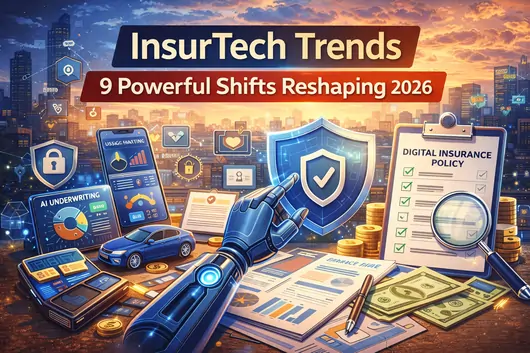
This comprehensive guide explores nine powerful shifts shaping the next phase of digital insurance transformation. From AI-driven underwriting to usage-based pricing and blockchain-enabled claims automation, these InsurTech Trends are reshaping risk protection globally.
The Evolution from Traditional Insurance to InsurTech
Before diving into the most significant InsurTech Trends, it is essential to understand how the industry evolved.
From Manual Risk Assessment to Data Intelligence
Historically, underwriting relied on:
- Static demographic data
- Credit history
- Medical exams
- Agent-based assessments
- Historical actuarial tables
While effective for decades, these models lacked personalization and real-time responsiveness.
Modern InsurTech Trends integrate:
- Machine learning algorithms
- Big data analytics
- IoT sensor inputs
- Behavioral monitoring
- Cloud-based infrastructure
This shift moves the industry from reactive claims reimbursement to proactive risk prevention.
The Rise of Customer-Centric Models
Digital-native consumers expect:
- Instant quotes
- Transparent pricing
- Mobile-first applications
- Automated claim approvals
- Personalized policy recommendations
InsurTech Trends reflect a shift toward customer empowerment and digital accessibility.
1. AI-Powered Underwriting and Risk Modeling
Artificial intelligence is at the core of modern InsurTech Trends.
Real-Time Risk Assessment
AI systems analyze vast datasets, including:
- Driving behavior
- Health metrics
- Business financials
- Climate risk exposure
- Fraud patterns
Unlike traditional underwriting, AI models adjust risk assessments dynamically.
Benefits of AI Underwriting
AI-driven underwriting enables:
- Faster policy approvals
- More accurate pricing
- Reduced human bias (when monitored properly)
- Improved fraud detection
These advancements are central to current InsurTech Trends, especially in health, auto, and commercial insurance.
Challenges and Ethical Oversight
While powerful, AI introduces concerns:
- Algorithmic bias
- Data privacy risks
- Regulatory compliance
- Explainability of decisions
Responsible governance is essential as InsurTech Trends accelerate AI adoption.
2. Embedded Insurance Ecosystems
Embedded insurance is one of the fastest-growing InsurTech Trends in 2026.
What Is Embedded Insurance?
Embedded insurance integrates coverage directly into non-insurance platforms such as:
- E-commerce checkouts
- Travel booking sites
- Ride-sharing apps
- Fintech platforms
- Real estate marketplaces
Customers purchase insurance seamlessly without leaving the platform.
Why It Is Transformative
Embedded systems:
- Reduce friction
- Increase conversion rates
- Offer contextual coverage
- Enhance convenience
For insurers, embedded partnerships unlock scalable distribution models.
This evolution is redefining distribution channels under modern InsurTech Trends.
3. Usage-Based and Pay-Per-Use Models
Traditional insurance relied on fixed annual premiums. New InsurTech emphasize flexibility.
Telematics in Auto Insurance
Usage-based insurance leverages telematics devices to monitor:
- Driving speed
- Braking patterns
- Mileage
- Time of day usage
Premiums adjust based on actual behavior rather than assumptions.
On-Demand Insurance
Consumers can activate coverage for:
- Single-day travel
- Short-term equipment rental
- Gig work hours
- Temporary property use
This dynamic pricing model reflects broader InsurTech Trends toward personalization.
4. Blockchain for Claims Automation
Blockchain technology is increasingly integrated into InsurTech Trends.
Smart Contracts in Claims Processing
Smart contracts automate payouts when predefined conditions are met.
For example:
- Flight delay insurance triggers automatic compensation.
- Crop insurance pays farmers when satellite data confirms drought.
This reduces disputes and administrative overhead.
Fraud Reduction
Immutable blockchain records enhance:
- Transparency
- Verification
- Audit trails
Fraud prevention remains a key driver behind blockchain adoption within InsurTech Trends.
5. Digital Claims Processing and Automation
Claims processing has historically been time-consuming. New InsurTech Trends focus on speed and efficiency.
Automated Claims Systems
AI-powered systems now:
- Analyze damage images
- Estimate repair costs
- Validate documentation
- Detect suspicious claims
This reduces processing time dramatically.
Customer Experience Enhancement
Modern claims systems offer:
- Real-time claim tracking
- Mobile uploads
- Chatbot assistance
- Instant status updates
Customer satisfaction improves significantly under digital-first InsurTech Trends.
6. Predictive Analytics and Risk Prevention
Insurance is shifting from reimbursement to prevention.
IoT Integration
Devices such as:
- Smart home sensors
- Wearable health trackers
- Fleet telematics
- Industrial equipment monitors
Provide real-time data that insurers analyze to reduce claims likelihood.
Proactive Risk Alerts
Customers may receive notifications about:
- Fire hazards
- Health anomalies
- Unsafe driving
- Equipment malfunction
Risk mitigation is becoming a cornerstone of evolving InsurTech Trends.
7. Climate Risk Modeling and ESG Integration
Climate volatility is influencing global risk exposure.
Advanced Climate Analytics
AI models analyze:
- Flood risk
- Wildfire patterns
- Coastal erosion
- Temperature anomalies
Insurers integrate environmental data into underwriting decisions.
ESG-Driven Insurance Products
Environmental, social, and governance factors now shape:
- Green insurance incentives
- Renewable energy coverage
- Sustainable investment portfolios
Climate adaptation strategies are deeply embedded in modern InsurTech Trends.
8. Regulatory Technology (RegTech) Integration
Compliance complexity is rising globally.
Automated Compliance Monitoring
RegTech systems track:
- Policy disclosures
- Anti-money laundering requirements
- Data protection laws
- Licensing updates
Automation reduces regulatory risk.
Real-Time Reporting
Regulators increasingly demand immediate transparency. Modern InsurTech Trends integrate compliance into digital workflows.
9. Customer Data Personalization and Behavioral Pricing
Personalization defines many leading InsurTech Trends.
Behavioral Data Integration
Insurers analyze:
- Lifestyle choices
- Purchase history
- Digital engagement
- Health habits
Personalized pricing replaces standardized risk pools.
Privacy and Consent Considerations
Data-driven personalization must balance:
- Transparency
- Consumer consent
- Secure storage
- Regulatory adherence
Ethical data governance remains essential.
Strategic Implications for Insurers and Investors
Understanding InsurTech Trends is only the first step. Strategic adaptation is critical.
For Insurers
- Modernize legacy systems
- Invest in cloud infrastructure
- Strengthen cybersecurity frameworks
- Develop AI governance policies
- Build fintech partnerships
For Investors
- Evaluate scalability of technology platforms
- Assess regulatory exposure
- Monitor AI explainability frameworks
- Analyze embedded distribution models
Strategic positioning ensures long-term competitiveness amid accelerating InsurTech Trends.
Risks and Challenges in InsurTech Innovation
Despite opportunity, risks persist.
Data Privacy Concerns
Sensitive customer data must be safeguarded.
Algorithmic Bias
AI systems require oversight to prevent discrimination.
Cybersecurity Threats
Digital infrastructure increases exposure to cyber attacks.
Regulatory Fragmentation
Global compliance frameworks vary widely.
Managing these risks responsibly is crucial as InsurTech Trends evolve.
Long-Term Outlook Beyond 2026
Looking ahead, emerging possibilities include:
- Fully automated underwriting ecosystems
- AI-powered decentralized insurance pools
- Climate-resilient parametric insurance models
- Cross-border digital policy standardization
- Quantum-resistant encryption systems
Innovation will likely accelerate, deepening the influence of InsurTech Trends across global markets.
Key Takeaways
- InsurTech Trends are transforming traditional insurance models.
- AI-driven underwriting enhances risk accuracy and efficiency.
- Embedded insurance expands digital distribution channels.
- Usage-based pricing increases personalization.
- Blockchain improves claims automation and fraud prevention.
- Predictive analytics shifts insurance toward prevention.
- Climate modeling influences underwriting decisions.
- RegTech automates compliance and transparency.
- Data personalization enhances customer engagement.
- Ethical governance remains essential as innovation accelerates.

Frequently Asked Questions
What are InsurTech Trends?
InsurTech Trends refer to technological innovations transforming the insurance industry, including AI underwriting, blockchain claims processing, embedded insurance, and predictive analytics.
Why are InsurTech Trends important in 2026?
They redefine risk assessment, pricing, claims processing, and customer experience in an increasingly digital economy.
How does AI impact InsurTech Trends?
AI enhances underwriting accuracy, fraud detection, customer personalization, and predictive risk modeling.
What is embedded insurance?
Embedded insurance integrates coverage directly into digital platforms like e-commerce or fintech applications.
Are InsurTech Trends reducing insurance costs?
In many cases, automation and data-driven pricing improve efficiency and may lower operational costs.
How does blockchain improve insurance?
Blockchain enables transparent, automated claims processing and reduces fraud.
What role does IoT play in InsurTech Trends?
IoT devices provide real-time data that helps insurers predict and prevent losses.
Are there risks in InsurTech innovation?
Yes, including data privacy concerns, cybersecurity threats, and algorithmic bias.
How should insurers adapt to InsurTech Trends?
By investing in digital infrastructure, AI governance, cybersecurity, and embedded partnerships.
Will InsurTech Trends continue evolving?
Yes. Technological innovation and regulatory modernization will likely drive ongoing transformation beyond 2026.

Mary Gay Apud is an SEO Strategist, Educator, and Research Consultant specializing in structured, data-driven organic growth systems. With a strong foundation in Mathematics, she applies analytical precision, research methodology, and strategic thinking to build scalable SEO frameworks that enhance search visibility and long-term authority.
Her expertise includes content optimization, keyword strategy, technical SEO, and topical authority development—aligning performance with measurable business outcomes. With experience in team leadership, statistical consulting, and government service, Mary Gay combines discipline, accuracy, and structured execution in every project. She believes sustainable digital success is built on research, clarity, and long-term strategic implementation—not short-term trends.