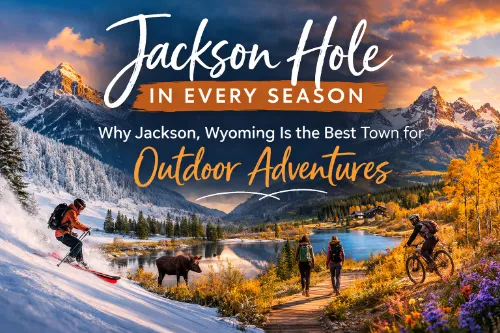
Jackson Hole in Every Season is the kind of place that makes you stare out the airplane window the whole way down. Ringed by the jagged Teton Range and framed by wide‑open valleys, Jackson Hole feels like a natural amphitheater built for adventure in every season.
As the gateway to two iconic U.S. national parks—Grand Teton National Park and Yellowstone National Park—this small western town offers year‑round access to towering peaks, winding rivers, rich wildlife, and endless trails.
What makes Jackson Hole special is not just that it has great skiing in winter or scenic hiking in summer. It is that you can come almost any month of the year and find a different version of the same place—snow‑covered and quiet, bright and green, golden and crisp, or waking up from winter.
The official Visit Jackson Hole site even highlights that “anytime is a good time” in the valley, thanks to its distinct seasonal personalities. This guide walks you through what Jackson Hole is like in every season and why, no matter when you go, it may just be the best town in Wyoming for outdoor adventures.
Where Exactly Is Jackson Hole?
When people say “Jackson Hole,” they usually mean the whole valley. Jackson is the main town, with Teton Village at the base of Jackson Hole Mountain Resort and smaller communities scattered around. The valley sits in northwest Wyoming, bordered by the Tetons to the west and close to both Grand Teton and Yellowstone.
This location is important for travelers. It means you can:
- Use Jackson as a base for day trips into Grand Teton National Park
- Take longer drives into Yellowstone National Park
- Mix mountain adventures, river days, wildlife tours, and small‑town nights in one trip
Because of this setup, Jackson Hole works well as a flexible hub for year‑round travel. You don’t have to choose between a skiing destination or a national park vacation; you can often get both in one place, depending on the season.
Why Jackson Hole in Every Season Is a True Outdoor Adventure Capital
Jackson Hole stands out for three simple reasons: landscapes, variety of activities, and access in all four seasons. The Jackson Hole Chamber of Commerce describes the area as a dream for outdoor enthusiasts, with everything from wildlife tours to world‑class skiing and snowboarding.
- Landscapes: High mountains, wide valleys, glacial lakes, and the Snake River all come together here.
- Variety: You can ski, hike, raft, bike, ride horses, snowshoe, and watch wildlife—all without traveling far.
- Access: With a regional airport, clear seasonal patterns, and a town that caters to travelers, it’s easier to plan a trip here than many other mountain destinations.
Instead of being a destination that only shines in winter or only in summer, Jackson Hole works as a year‑round adventure base. Your experience changes with the season, but the core ingredients—mountains, wildlife, and outdoor fun—stay the same.
Understanding Jackson Hole’s Seasons
To decide when to visit, it helps to break the year into four clear seasons. Each one comes with different weather, crowds, prices, and outdoor options, something the official Visit Jackson Hole seasonal info underscores for trip planners.
- Winter (roughly December–March): Deep snow, cold temperatures, and world‑class skiing.
- Spring (April–May): Transition season when snow melts, wildlife becomes more active, and some roads and trails start to open.
- Summer (June–early September): Warm days, cool nights, and prime hiking, rafting, and national park access.
- Fall (mid‑September–October): Crisp air, bright foliage, and great wildlife viewing with fewer crowds.
There are also “shoulder” periods—especially late April, early May, and parts of November—when some services close or run on limited schedules, but prices can drop, and you see a quieter side of Jackson.
Winter in Jackson Hole: Skiing, Snow, and Mountain Town Magic
In winter, Jackson Hole turns into a snow‑covered playground. This is the time to visit if you love snow sports, cozy lodges, and dramatic white mountain views.
Snow and Skiing
Jackson Hole Mountain Resort is famous for steep terrain and deep powder, drawing skiers and snowboarders from around the world. Snow King Mountain, highlighted by the Town of Jackson’s visitor info, offers night skiing and a more local feel right on the edge of town. The region can see significant snowfall, so you get reliable winter coverage across most of the season.
Popular winter activities include:
- Downhill skiing and snowboarding at Jackson Hole Mountain Resort and Snow King
- Backcountry skiing and guided tours for experienced riders
- Cross‑country skiing on groomed trails around the valley
Beyond the Slopes
Even if you’re not into downhill skiing, winter here still offers plenty:
- Snowshoeing through quiet forests and open meadows
- Snowmobiling tours to hot springs or scenic overlooks
- Dog sledding adventures through snowy valleys
- Sleigh rides in the National Elk Refuge, an experience often highlighted in local visitor guides like Jackson Hole Traveler
This is a great time for hot springs and spa visits too. After a cold day outside, warming up in hot water while surrounded by snow‑covered peaks is an experience in itself.
Winter Tips
- Pack proper winter layers, waterproof boots, and warm accessories.
- If you plan to rent a car, consider a vehicle with good winter tires or four‑wheel drive.
- Book lodging and lift tickets early, especially around holidays and peak ski weeks; Jackson Hole Resort Reservations can simplify bundling lodging, lifts, and travel.
Spring in Jackson Hole: Quiet, Melting, and Full of Wildlife
Spring in Jackson Hole is a transition season. Locals sometimes call parts of it “mud season” because snow is melting, trails are thawing, and conditions change day by day. But for the right traveler, spring can be one of the most rewarding times to visit.
What Spring Feels Like
Spring brings:
- Patchy snow at lower elevations and lingering snow higher up
- Rising temperatures and longer days
- Rivers starting to swell with snowmelt
Some businesses may close briefly between ski season and summer, but you often benefit from lower lodging rates and fewer visitors.
Best Spring Activities
Even when some trails are still muddy or snow‑covered, spring can be excellent for:
- Wildlife watching: Animals are more active, and you stand a good chance of seeing elk, moose, bison, and sometimes bears from safe distances in and around Grand Teton and Yellowstone.
- Scenic drives: Many roads open before high‑elevation trails, letting you enjoy mountain views even if hiking is limited.
- Photography: Snow on the peaks, bare ground in the valley, and dramatic skies create striking contrasts.
As spring progresses, you may also catch early wildflowers and some lower‑elevation hikes starting to dry out.
Spring Tips
- Plan flexible activities because conditions can shift quickly.
- Bring waterproof shoes or boots and clothing you can layer.
- Check seasonal openings for park roads, visitor centers, and tours on the Grand Teton NPS and Yellowstone NPS websites before you go.
Summer in Jackson Hole: Hiking, Rafting, and National Parks
Summer is when Jackson Hole fully opens up. Days are long, temperatures are comfortable, and almost every type of outdoor activity is on the menu. If you want to hike, paddle, and explore the national parks, this is the season for you.
Weather and Conditions
Summer typically brings:
- Warm days and cooler nights
- Dry, sunny conditions more often than not
- Snow melted from most low and mid‑elevation trails by mid‑season
This is also peak visitor season, especially in July and August, so expect more people in town and in the parks.
Top Summer Adventures
You can fill a summer itinerary around Jackson Hole with:
- Hiking: Trails range from easy lake walks to full‑day summit hikes, with plenty of options in Grand Teton National Park and the surrounding forests.
- Mountain biking: There are trails for both beginners and experienced riders, including lift‑served biking at Jackson Hole Mountain Resort.
- Water activities: Whitewater rafting on the Snake River, scenic float trips, kayaking, and paddleboarding on nearby lakes.
- Horseback riding: Guided rides put you into classic western scenery without having to cover long distances on foot.
Families will find plenty of shorter hikes, kid‑friendly rafting options, and easy access to viewpoints and picnic spots, making summer a strong choice for multi‑generational trips.
Using Jackson as a Summer Base
From Jackson, you can:
- Spend several days exploring Grand Teton National Park—hiking, boating, and taking in the views.
- Plan long day trips into Yellowstone, visiting geysers, hot springs, waterfalls, and wildlife areas using planning tools from YellowstoneNationalPark.com.
- Mix active days with downtime in town, enjoying restaurants, galleries, and evening walks under the mountains, as suggested in the Jackson town visitor info.
Because summer is busy, booking lodging, park passes, and popular tours ahead of time is wise.
Fall in Jackson Hole: Golden Leaves and Crisp Air
Fall is a favorite season for many repeat visitors to Jackson Hole. It offers a blend of summer’s outdoor access with fewer crowds and a strong dose of autumn color, which local guides like Jackson Hole Hideout point out as a prime reason to visit in shoulder seasons.
Autumn Atmosphere
In fall you can expect:
- Cooler temperatures and clear, crisp air
- Changing leaves, especially in the valley and along rivers
- A slower pace than mid‑summer
Some services start to wind down toward late October, but early to mid‑fall can be ideal for hikers and photographers.
Best Fall Experiences
In this season, consider:
- Scenic drives through the valley and into Grand Teton for foliage and mountain views.
- Day hikes in cooler weather, often with fewer people on the trails.
- Wildlife viewing, including elk rut activity and animals preparing for winter, highlighted by many fall trip guides.
Fall can also bring dramatic morning fog or light snow on higher peaks while the valley remains walkable—a striking visual mix.
Fall Tips
- Pack layers, including a warm jacket, hat, and gloves for mornings and evenings.
- Be prepared for variable conditions; sunny at midday can turn chilly and windy by late afternoon.
- Check closing dates for park facilities, shuttles, and seasonal tours via the NPS seasonal pages.
Year‑Round Fun: What to Do, No Matter the Season
Jackson Hole is best known for its outdoor adventures, but you can balance them with experiences that work in any weather.
Cultural and Indoor Activities
No matter when you visit, you can:
- Explore local museums and galleries that showcase western art and regional history, many of which are listed on Visit Jackson Hole’s things to do page.
- Wander the wooden sidewalks around the historic town square, stopping into shops, cafes, and bars recommended by the Jackson Hole Chamber of Commerce.
- Enjoy a growing food scene with everything from casual diners to upscale restaurants.
These options are especially helpful on rest days between big adventures or when the weather doesn’t cooperate with your original plan.
Relaxation and Wellness
After a day in the mountains or on the river, many visitors:
- Book spa treatments or massages to recover from activity
- Visit nearby hot springs or soak in hot tubs with mountain views
- Spend quiet evenings in cabins, lodges, or hotels, watching alpenglow on the peaks, a common highlight in many Jackson Hole visitor stories.
These experiences give Jackson Hole a well‑rounded feel that makes longer stays appealing throughout the year.
Where to Stay in Jackson Hole by Season
Your base in Jackson Hole can shape your trip. The main options are:
- In town (Jackson): Walkable access to restaurants, bars, and shops, plus easier year‑round services, explained on the Town’s Visiting Jackson page.
- Teton Village: At the base of Jackson Hole Mountain Resort, ideal for ski‑focused winter trips and summer visitors who want to be close to lifts and trails.
- Outlying areas: Cabins, lodges, and vacation rentals offer more space and a quieter feel, often featured in the Jackson Hole Traveler visitor guide.
In winter, staying closer to the slopes might save time and effort if skiing is your main priority. In summer and fall, staying in town can make it easier to mix national park days with evenings out.
Because Jackson Hole is popular year‑round, lodging prices and availability swing with the seasons. Peak winter holidays and high summer usually see the highest rates, while shoulder seasons can offer better deals.
Planning Your Trip: How Long to Stay and How to Get Around
The best trip length depends on your main interests:
- Winter ski trip: 3–7 days works well for skiing, snow adventures, and a rest day or two.
- Summer national park trip: 4–7 days gives you time for hiking, rafting, and day trips to both Grand Teton and parts of Yellowstone.
- Spring or fall getaway: 3–5 days is enough to enjoy scenic drives, wildlife viewing, and relaxed exploring.
Jackson Hole has its own airport (Jackson Hole Airport), and both Visit Jackson Hole and the Town of Jackson provide up‑to‑date information on getting here and around. Many visitors rent a car to have flexibility with trailheads, scenic drives, and park access. In winter, consider vehicles suited to snow and ice; in summer and fall, starting your days early helps avoid peak traffic around popular spots.
Essential Outdoor Safety and Respect for the Land
No matter when you visit Jackson Hole, you’re stepping into real wilderness. To keep yourself safe and help protect the area:
- Be prepared for changing weather. Mountain conditions shift quickly in all seasons, as the NPS weather pages emphasize.
- Learn the basics of wildlife safety, including keeping distance from animals and storing food properly.
- Stay on marked trails where possible to avoid damaging fragile environments.
- Follow Leave No Trace principles, a message echoed strongly by Visit Jackson Hole’s “Stay Wild” stewardship campaigns.
Simple steps like checking the forecast, carrying enough water, and letting someone know your plan make outdoor adventures safer and more enjoyable.
Is Jackson Hole Worth Visiting in Every Season?
If you like the idea of a trip that changes character with the weather but keeps the same dramatic backdrop, Jackson Hole is hard to beat. Winter delivers snow‑covered peaks and world‑class skiing at Jackson Hole Mountain Resort. Spring gives you wildlife and quieter days in and around the national parks. Summer opens up trails, rivers, and road access across Grand Teton and Yellowstone. Fall wraps everything in golden light and cooler air, with fewer crowds and excellent wildlife viewing.
The “best” season comes down to your travel style:
- Choose winter if you want skiing, snow, and cozy mountain vibes.
- Choose summer if you want hiking, rafting, and national park road trips.
- Choose fall or spring if you prefer calmer shoulder seasons, unique light, and the feeling of catching a place between its extremes.
No matter when you go, using Jackson, Wyoming as your base—and leaning on resources like Visit Jackson Hole, the Jackson Hole Chamber of Commerce, and the official NPS park pages—means you’re never far from your next outdoor adventure.
Frequently Asked Questions (FAQs)
1. What is the best way to see wildlife safely in Jackson Hole?
The best way is to join a guided wildlife tour with a licensed local operator who understands animal behavior and safe viewing distances. Always stay in your vehicle when advised, use binoculars or a zoom lens instead of approaching animals, and follow park and refuge rules to protect both you and the wildlife.
2. Do I need a 4×4 vehicle to visit Jackson Hole in winter?
You don’t always need a 4×4, but it’s highly recommended in winter for added traction on snow‑packed or icy roads. If you’re staying in town and using shuttles to the ski areas you may manage with a regular car, but a 4×4 or AWD with good winter tires will make driving safer and less stressful.
3. Are there budget‑friendly ways to experience Jackson Hole’s outdoor adventures?
Yes, you can keep costs down by visiting in shoulder season, staying in motels or vacation rentals slightly outside the busiest areas, and focusing on low‑cost activities like hiking, scenic drives, and DIY wildlife viewing. Packing some of your own meals and using free ranger programs in the nearby national parks can also help stretch your budget.
4. Can I visit Jackson Hole without renting a car?
It’s possible, especially if you stay in town or Teton Village and rely on hotel shuttles, local transit, and tour companies that include transportation. However, renting a car offers much more flexibility for sunrise drives, trailhead access, and spontaneous detours, so it’s usually the better option if your budget allows.
5. What are some lesser‑known viewpoints or hidden gems around Jackson Hole?
Beyond the classic overlooks, you can look for quieter turnout areas along secondary roads, smaller lakes, or trailheads recommended by local visitor centers. Asking rangers, guides, or hotel staff for their personal favorite short hikes and viewpoints often leads to less crowded spots with equally stunning scenery.
6. Are guided tours worth it for first‑time visitors to Jackson Hole?
Guided tours are very helpful for first‑timers because local guides handle logistics, driving, and safety while sharing context about geology, history, and wildlife. They’re especially worthwhile for winter activities, wildlife safaris, and first visits to Yellowstone or Grand Teton when you’re still learning the area.
7. How early should I book accommodations for peak ski season in Jackson Hole?
For prime winter dates—especially holidays and mid‑season powder weeks—it’s smart to book lodging three to six months in advance. If you want ski‑in/ski‑out access or specific properties in Teton Village, locking things in even earlier gives you more choice and often better rates.
8. Is Jackson Hole suitable for beginner hikers and skiers?
Yes, despite its adventurous reputation, Jackson Hole offers beginner‑friendly hiking trails and ski terrain alongside more advanced options. Look for green slopes, ski schools, and guided beginner lessons in winter, and in summer choose short, low‑elevation hikes or lakeside walks recommended by local visitor centers.
9. What should I pack for a shoulder‑season trip to Jackson Hole (spring or fall)?
For spring or fall, think layers: a moisture‑wicking base, a warm mid‑layer, and a waterproof or windproof outer shell. Add a warm hat, gloves, sturdy waterproof shoes or boots, and a small daypack for water, snacks, and an extra layer, since temperatures can swing quickly between morning and afternoon.
10. Are there any annual festivals or events worth planning a trip around in Jackson Hole?
Jackson Hole hosts a variety of events throughout the year, including art fairs, music festivals, rodeos, fall arts celebrations, and winter ski or film events. If you enjoy combining outdoor adventures with local culture, it can be worth checking the events calendar and timing your visit to coincide with a festival that matches your interests.

I’m John Michael Palmes, an SEO practitioner with over three years of hands-on experience in search engine optimization and digital marketing. I help websites improve visibility, build effective SEO content strategies, and rank better on Google using practical, data-driven approaches.
My focus is on on-page SEO, keyword research, and content optimization—the fundamentals that help both search engines and users understand a site clearly. I continuously test, analyze results, and refine strategies, sharing honest and actionable SEO insights as search algorithms evolve.