
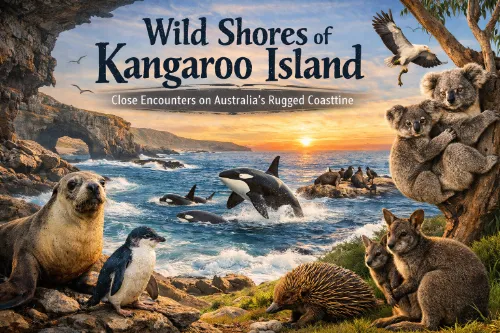
Kangaroo Island (often shortened to KI) sits just off the coast of South Australia and feels like a mix of open farmland, bushland, and wild coastline in one compact island. You will find national parks, nature reserves, surf‑pounded cliffs, and wildlife such as kangaroos, koalas, echidnas, sea lions, and fur seals living in their natural habitats.
Instead of feeling like a theme park, the island feels real and lived in, with small towns, local producers, and long stretches of coast where you might not see another person.
This destination guide shows you where to go for the best rugged coastline views, how to plan a Kangaroo Island itinerary and road trip, and how to enjoy honest wildlife encounters without harming the island’s fragile ecosystems.
For a quick official overview, you can also check the Kangaroo Island travel guide by Tourism Australia.
Kangaroo Island at a glance
- Location: Off the south coast of South Australia, about 13 km from the mainland and easily reached from Adelaide.
- Best for: Wildlife lovers, nature‑based travellers, photographers, road trippers, and eco‑conscious visitors.
- Trip length: Ideal 3–4 days for a first visit; longer if you enjoy slow travel, hiking, or food and wine.
- Highlights: Flinders Chase National Park, Remarkable Rocks, Admirals Arch, Seal Bay Conservation Park, wild beaches, and close wildlife encounters.
- Best time to visit: Autumn and spring for mild weather and reliable wildlife sightings; winter for dramatic seas and rugged coastline views; summer for long days and beach time.
Kangaroo Island FAQs
Is Kangaroo Island worth visiting?
Yes. Kangaroo Island is one of South Australia’s top nature‑based destinations, with national parks, a strong nature reserve feel, and some of the best wildlife encounters and rugged coastline scenery in Australia.
How many days do you need on Kangaroo Island?
A minimum of 3 days is ideal for a first Kangaroo Island itinerary. This gives you time to explore Flinders Chase National Park, Seal Bay Conservation Park, a few beaches, and some local food and wine without rushing.
Do you need a car on Kangaroo Island?
Having a car or joining guided Kangaroo Island tours is highly recommended. Distances between attractions like Flinders Chase, Seal Bay, and local towns are significant, and public transport is very limited.
When is the best time to visit Kangaroo Island for wildlife?
Autumn and spring offer a good balance of comfortable weather and active wildlife, including kangaroos, koalas, echidnas, sea lions, and fur seals. Winter can be excellent for coastal drama but is cooler, wetter, and windier.
How do you get to Kangaroo Island from Adelaide?
Most visitors either drive from Adelaide to Cape Jervis and take the ferry to Penneshaw, or fly from Adelaide to Kingscote. Bringing a car on the ferry is ideal for a flexible Kangaroo Island road trip.
If you are starting in the city, you might also like to plan with the official Getting to Kangaroo Island info from Tourism Australia.
Where is Kangaroo Island and how to get there
Kangaroo Island lies in the Great Australian Bight, off the south coast of Australia, and forms part of South Australia’s “Adelaide and surrounds” region.
The island sits about 13 kilometres across the water from Cape Jervis and is ringed by rugged coastline, long sandy beaches, and sheltered coves.
Most travellers begin their journey in Adelaide, then either drive to Cape Jervis for the ferry to Penneshaw or take a short regional flight to Kingscote Airport on the island.
The ferry allows you to bring your own vehicle, which makes it easy to design a flexible Kangaroo Island road trip and stop at coastal lookouts, beaches, and national parks at your own pace.
Flights are faster and suit visitors who prefer to join Kangaroo Island tours or wildlife tours that include transport and guiding.
Having your own vehicle, however, gives you more freedom to reach remote nature reserves, scenic coastal tracks, and local producers spread across the island.
The best time to visit for rugged coastlines and wildlife encounters is generally autumn and spring, when the weather is mild, seas are dramatic but not usually extreme, and wildlife such as kangaroos, koalas, echidnas, and sea lions are active.
Winter brings powerful swell and wild seas along the clifftops, which can make the rugged coastline even more impressive, but you will need warm, windproof layers and a flexible plan in case weather temporarily closes some lookouts or walking tracks.
Summer offers long days, good beach weather, and easier driving conditions, but some wildlife may be less active in the heat.
For more detail on seasons, you can complement this article with the seasonal tips in the Tourism Australia Kangaroo Island guide.
First impressions: wild coastlines and nature reserve feel
From your first drive away from Penneshaw or Kingscote, Kangaroo Island feels like a giant nature reserve. Open farmland gives way to eucalyptus forests, low coastal heath, and patches of native bush, with frequent signs warning you to watch for wildlife on the roads.
The further you drive, the more often you will see the land suddenly drop away into the sea, revealing high cliffs, offshore rock stacks, and bays carved by the Southern Ocean.
This is classic Kangaroo Island rugged coastline: sea cliffs, wind‑sculpted rock formations, and hidden coves framed by limestone and sandstone that have been shaped over thousands of years.
Even short drives between towns like Penneshaw, Kingscote, and American River can turn into wildlife‑spotting sessions, as you may see Kangaroo Island kangaroos, tammar wallabies, or echidnas near the roadside, along with seabirds and occasionally dolphins close to shore.
In parts of the island, especially around Flinders Chase National Park, you will notice blackened tree trunks and regrowth as the landscape continues to recover from past bushfires. New green shoots, flowering shrubs, and returning birdlife are visible signs of how quickly nature can respond when protected in national parks and nature reserves.
Travelling slowly and giving yourself time to stop at lookouts, short walking tracks, and roadside pull‑offs is the best way to appreciate this mix of wild shores and living landscapes.
Flinders Chase National Park: clifftops and iconic rocks
Flinders Chase National Park on the western tip of Kangaroo Island is a must‑see area if you love rugged coastline views and dramatic rock formations. The park brings together clifftop vistas, windswept heathland, and two of the island’s most famous attractions: Remarkable Rocks and Admirals Arch.
Remarkable Rocks is a cluster of huge granite boulders perched on a domed rock platform high above the sea. Covered in orange lichen and carved into strange shapes by wind and rain, these rocks look almost sculpted on purpose.
A well‑maintained boardwalk and viewing areas make access simple, but it is important to stay within designated zones because the rock surface can be steep, smooth, and extremely windy. From the viewing platforms, you can enjoy panoramic Southern Ocean views and a sense of how powerful the sea is below.
A short drive away, Admirals Arch offers another iconic Kangaroo Island scene. A raised boardwalk follows the cliff edge and then descends towards a natural rock arch that frames crashing waves and sea spray. Under and around the arch, long‑nosed fur seals and New Zealand fur seals rest and play on the rocks.
Watching them from the viewing platforms is a highlight for many visitors, and the combination of roaring surf, sea birds, and seals is a strong reminder that this coastline is truly wild.
Flinders Chase National Park also includes several shorter coastal walking tracks and lookouts that show off additional views and habitats. Even if you are not a serious bushwalker, you can choose easy boardwalks and brief trails to sample clifftops, heathland, and forest without committing to a full‑day hike.
Always check local information for any temporary track closures or weather warnings before you go, as conditions on the western end of the island can change quickly.
You can browse more highlights via this list of Kangaroo Island attractions from South Australia tourism.
Seal Bay Conservation Park and the southern shores
On the south coast of Kangaroo Island, Seal Bay Conservation Park is one of the island’s signature attractions and an essential stop for wildlife lovers.
The wide bay, backed by dunes and rugged cliffs, is home to a large colony of endangered Australian sea lions. Here you can see these animals in a natural setting, not in a zoo, while still following strict guidelines that protect them.
The experience begins at the visitor centre, where displays explain the history of sealing in Australia, the sea lion life cycle, and the conservation efforts now in place. From there, you can choose between two main options: self‑guided boardwalks or a guided beach tour such as the Seal Bay Beach Experience.
The elevated boardwalks lead to several lookouts where you can observe sea lions resting on the sand, pups playing near the water, and adults moving between the ocean and the dunes. A guided beach experience, led by rangers, brings you closer to the animals while maintaining safe distances and calm behaviour.
Seal Bay demonstrates how nature‑based tourism can support conservation when done well. Visitors learn why they should never touch, feed, or approach wildlife and why it is important to keep noise low and stay within marked areas. This approach allows you to enjoy close encounters without disturbing the colony.
Beyond Seal Bay, the southern shores of Kangaroo Island feature more wild beaches, coastal dunes, and lookouts. Many travellers combine Seal Bay with nearby spots like Little Sahara, where you can walk or sandboard on high dunes, or with other coastal viewpoints that reveal dramatic cliffs and open ocean.
Spending a full day along this coastline makes it easy to understand why Kangaroo Island is often described as having wild shores.
Top coastal walks on Kangaroo Island
To help you choose suitable walks, here is a simple overview of some accessible options:
| Walk / Area | Distance / Time (approx.) | What you see |
|---|---|---|
| Flinders Chase short lookouts | 30–60 minutes | Rugged coastline, cliffs, heathland views |
| Remarkable Rocks boardwalk | 20–40 minutes | Granite boulders, Southern Ocean panoramas |
| Admirals Arch boardwalk | 20–40 minutes | Natural rock arch, fur seals, wild seas |
| Seal Bay boardwalks | 30–60 minutes | Australian sea lions, dunes, wide sandy bay |
| Local coastal trails near towns | 30–90 minutes | Beaches, coves, coastal vegetation, birdlife |
Many of these trails are suitable for most fitness levels, but good footwear and a windproof layer make them much more comfortable.
Wildlife encounters beyond the beach
Kangaroo Island wildlife is one of the main reasons people visit, and you do not have to go far to see it. Kangaroo Island kangaroos often graze in open paddocks and bush edges, especially at dawn and dusk.
Koalas rest high in eucalyptus trees and can sometimes be seen in or near townships, along river corridors, or in older tree plantings.
Echidnas are slower but can appear on road verges and quiet bush tracks, while shy tammar wallabies prefer forest edges and quiet clearings.
For structured experiences, consider booking Kangaroo Island wildlife tours with local guides. These tours can include night drives to look for nocturnal animals, or day trips that combine wildlife spots with key attractions like Flinders Chase and Seal Bay.
A visit to Kangaroo Island Wildlife Park can also be useful if you have limited time but still want to learn about native species and conservation.
Driving safely is critical. Animals are often most active at dawn and dusk, and many roads have limited lighting. Slow down during these times, keep your eyes scanning both sides of the road, and allow extra travel time so you do not feel pressured to speed.
This approach protects wildlife and reduces stress for you as a driver.
Key wildlife and where to see them
| Species | Best places to look | Best time of day |
|---|---|---|
| Kangaroo Island kangaroos | Open paddocks, bush edges, road verges | Dawn and dusk |
| Koalas | Eucalyptus trees near towns and reserves | Daytime, especially mid‑day |
| Echidnas | Road verges, quiet bush tracks | Daytime, warm afternoons |
| Tammar wallabies | Forest edges, quiet clearings | Early morning, evening |
| Australian sea lions | Seal Bay Conservation Park | Any time; check tide times |
| New Zealand / long‑nosed fur seals | Admirals Arch, western coast rocks | Cooler parts of the day |
| Dolphins and marine life | Boat tours near American River and coastlines | Often mornings, varies |
Adventures on the edge: hiking, sea life, and rugged views
Beyond short walks and scenic drives, Kangaroo Island is ideal for travellers who enjoy more active adventures.
Bushwalking and coastal walks range from brief strolls to longer tracks that cross heathland, forest, and clifftops. Many of these tracks sit inside national parks or conservation parks and offer regular views of wild coastline along the way.
Out on the water, boat tours depart from various points around the island, including areas near American River and the Dudley Peninsula. These tours may focus on wild dolphins, seals, seabirds, and sometimes whales in season.
Some operators also offer snorkeling or scuba diving experiences, where advanced divers can look for the leafy seadragon in local waters. As always, check safety advice, weather forecasts, and minimum experience requirements for any water‑based activities, as currents and surf can be strong.
Because this is a remote environment with limited facilities in some areas, pack water, sun protection, snacks, and a basic first‑aid kit for longer outings. An offline map or downloaded navigation app is useful when mobile coverage is weak, especially in more isolated nature reserves.
Where to stay: bases for a wild shores trip
Kangaroo Island accommodation is varied, with options ranging from simple campgrounds and cabins to eco‑lodges and luxury retreats. Choosing the right base helps you reduce driving time and match your stay to your travel style.
Many visitors choose to stay near Kingscote, Penneshaw, or American River. These areas provide easier access to services like supermarkets, fuel, and restaurants, while still offering short drives to local beaches and viewpoints.
They are good bases if you prefer shorter day trips and a more central location.
Staying in the west brings you closer to Flinders Chase National Park, Remarkable Rocks, and Admirals Arch. This can significantly cut travel time to and from major sights, especially if you plan to visit at sunrise or sunset.
However, you should prepare for fewer services, more driving for supplies, and a stronger sense of remoteness.
The eastern end of the island, including the Dudley Peninsula, combines clifftop views, beaches, and access back to the ferry at Penneshaw. Here you can find everything from basic cabins to higher‑end stays, some with ocean views that bring the wild shores theme right to your doorstep.
Because Kangaroo Island is popular in peak seasons and on long weekends, book accommodation and key Kangaroo Island tours or wildlife tours well in advance, particularly if you want certain room types or specialized eco lodges.
Local flavours by the sea
A Kangaroo Island trip is also a chance to taste local produce that reflects South Australia’s coastal climate and farming traditions.
Food and wine experiences are spread across the island, often tucked into side roads between beaches and clifftops, so it is easy to weave them into your road trip.
Kangaroo Island wineries and vineyards produce cool‑climate wines, including whites and lighter reds that pair well with seafood and cheese. Many have cellar doors where you can sample wines, enjoy a casual meal, or simply sit and enjoy coastal or rural views.
There are also breweries, distilleries, and small eateries that showcase local ingredients.
Signature products include Kangaroo Island Ligurian honey, created by bees often described as some of the purest Ligurian stock in the world, and eucalyptus oil from local distilleries that maintain traditional production methods.
Local seafood—such as fresh fish and, in some seasons, crayfish—features on many menus, along with lamb, artisan cheeses, and produce from farm gates.
If you want inspiration for specific stops, you can cross‑reference ideas with this curated list of Kangaroo Island attractions and experiences.
Practical tips for a low‑impact, high‑reward trip
Because much of Kangaroo Island feels remote, planning ahead helps you enjoy the rugged coastline and wildlife without stress.
Fuel stations and supermarkets are mostly located in larger towns, so fill up and stock up before heading into more isolated areas like Flinders Chase or the far west. Opening hours can be shorter than in big cities, especially on weekends or public holidays.
Mobile coverage can be patchy in national parks and along some parts of the coast. Download offline maps and save key information—like booking confirmations and emergency numbers—before you leave town. Carry a paper map as a backup if you prefer.
Pack layers to handle changeable weather: windproof jackets, warm layers for evenings, sun protection for daytime, and sturdy walking shoes for clifftop and bush tracks. A reusable water bottle, small day pack, and basic first‑aid items will make most excursions more comfortable.
When it comes to responsible travel, follow simple leave‑no‑trace principles. Stay on marked tracks, keep a respectful distance from wildlife, never feed animals, and always take rubbish with you.
These small actions help protect national parks, nature reserves, and local communities, and ensure that Kangaroo Island remains a leading eco tourism and nature‑based destination.
Sample 3‑day “Wild Shores” Kangaroo Island itinerary
Use this 3‑day itinerary as a base and adjust it to suit your pace.
Day 1: Arrival, first coastal lookouts, and local flavours
Arrive via ferry at Penneshaw or fly into Kingscote and pick up your vehicle. Drive to your chosen accommodation in Kingscote, Penneshaw, American River, or a coastal eco lodge, checking in and settling into island time.
In the afternoon, explore nearby Kangaroo Island attractions such as local beaches, short coastal walks, and perhaps a nearby winery, brewery, or farm gate. As evening approaches, head to a coastal lookout for sunset, watching for kangaroos and wallabies along the roadside as you return to your base.
Day 2: Flinders Chase National Park and the wild west coast
Leave early for Flinders Chase National Park, allowing a full day to explore. Visit Remarkable Rocks in the morning, when the light is gentle and crowds are smaller, walking the boardwalk and viewing the granite boulders against the Southern Ocean.
Next, drive to Admirals Arch to walk the boardwalk and watch fur seals on the rocks below the natural arch. After lunch at a picnic area or nearby café, add another short clifftop walk or lookout.
On the drive back, keep an eye out for koalas, echidnas, and kangaroos, and consider joining an evening wildlife tour or guided night drive if you want more structured wildlife encounters.
Day 3: Seal Bay and southern shores
On your final day, make your way to Seal Bay Conservation Park. Spend time at the visitor centre, then explore the boardwalks and lookouts, and, if you wish, join a guided beach experience to see Australian sea lions more closely under ranger supervision.
After Seal Bay, add a stop at Little Sahara for dune views or sandboarding, or visit another southern coastal lookout to enjoy wide‑open views of cliffs, waves, and wild beaches.
Before heading back to Penneshaw or Kingscote for your ferry or flight, make one last stop at a local café, winery, or farm gate to pick up Kangaroo Island produce as a reminder of your trip.
Final thoughts: why Kangaroo Island’s wild shores stay with you
Kangaroo Island is the kind of place that stays with you long after you leave: wild shores, real wildlife, and quiet moments on clifftops where you can hear nothing but wind and waves.
It combines rugged coastline scenery with close encounters with animals in their natural habitats, backed by a strong nature reserve and national park network.
Use this destination guide as your base, then shape it around your own pace—whether that means a quick 3‑day Kangaroo Island itinerary or a slow, week‑long road trip along South Australia’s rugged coastline, tasting local food, meeting local producers, and discovering your own favourite corners of this wild island.

I’m John Michael Palmes, an SEO practitioner with over three years of hands-on experience in search engine optimization and digital marketing. I help websites improve visibility, build effective SEO content strategies, and rank better on Google using practical, data-driven approaches.
My focus is on on-page SEO, keyword research, and content optimization—the fundamentals that help both search engines and users understand a site clearly. I continuously test, analyze results, and refine strategies, sharing honest and actionable SEO insights as search algorithms evolve.