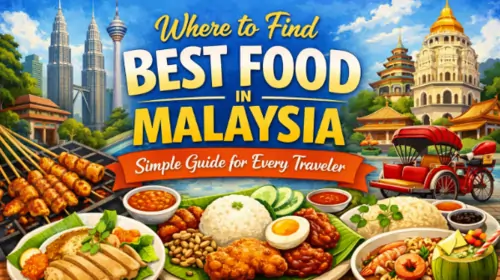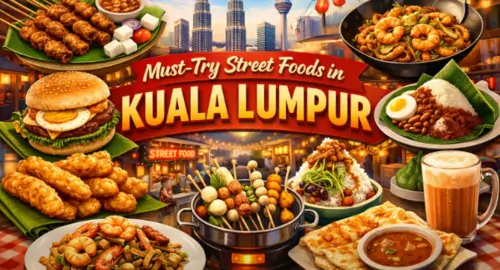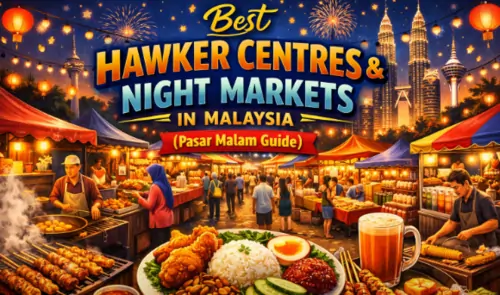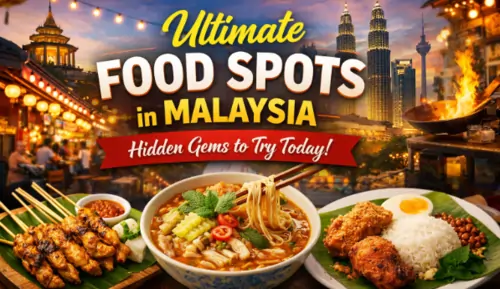
Kuala Lumpur is a multicultural food paradise where Malay, Chinese, Indian, and international flavors all share the same streets.
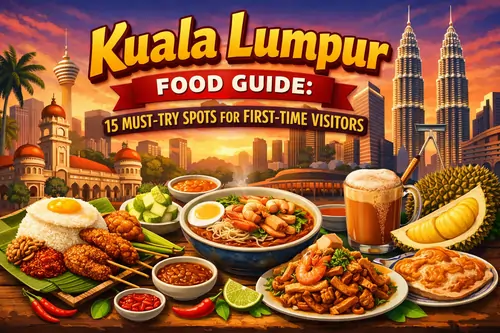
This Kuala Lumpur food guide is designed for first-time visitors who want to know what to eat in Kuala Lumpur, where to find the best food in Kuala Lumpur, and how to plan a simple, stress-free food trip around the city.
You’ll discover classic street food, local restaurants, night markets, cafés, and a sample 2‑day itinerary you can follow step by step.
Why Kuala Lumpur Is Perfect for Food Lovers
Kuala Lumpur is one of Southeast Asia’s most exciting cities for food lovers because you can taste several cultures in a single day.

Start your morning with nasi lemak, enjoy roti canai and teh tarik by late morning, slurp Chinese noodles for lunch, then end your day with satay, curry laksa, and desserts at a busy night market.
This mix of Malay, Chinese, and Indian influences, plus modern cafés and rooftop spots, makes the city ideal for a first Kuala Lumpur food trip.
If you’re new to Malaysia, think of this as a practical Kuala Lumpur food lovers guide: everything here is easy to reach, beginner-friendly, and popular with both locals and travelers.
Once you’ve tried these core areas, you can branch out into less touristy neighborhoods and more hidden Kuala Lumpur food spots on your next visit.
Essential Malaysian Dishes to Know
Before you dive into specific places, it helps to recognize a few staple Malaysian dishes you’ll see again and again in any Kuala Lumpur food guide or travel article.
- Nasi lemak – Coconut rice served with sambal, fried anchovies, peanuts, egg, and often fried chicken or beef rendang. Many people consider it Malaysia’s national dish and a must-try for breakfast or brunch.
- Roti canai – Flaky, pan-fried flatbread served with dhal or curry, usually found in Indian Muslim (mamak) eateries. It’s cheap, filling, and perfect for any time of day.
- Satay – Skewered, marinated meat grilled over charcoal and served with peanut sauce, cucumber, and onions. You’ll see it everywhere from night markets to family restaurants.
- Char kway teow – Stir-fried flat rice noodles with soy sauce, bean sprouts, egg, and sometimes prawns or Chinese sausage. A classic comfort food in Chinese eateries and hawker centers.
- Curry laksa – Noodles in a rich, spicy coconut-based broth, often topped with tofu puffs, seafood, or chicken. It’s hearty, spicy, and incredibly satisfying.
If you want a deeper breakdown of what to eat in Kuala Lumpur, including more dishes and restaurant suggestions, you can check this helpful overview:
Spot 1: Jalan Alor – The Classic Food Street
Jalan Alor in Bukit Bintang is the most famous food street in Kuala Lumpur and one of the easiest places for first-time visitors to start.
In the evening, it turns into a lively stretch full of open-air restaurants, grills, and stalls serving seafood, noodles, satay, barbecued wings, and fresh fruit juices.
It’s busy, bright, and slightly touristy, but still a fun introduction to Kuala Lumpur street food if you’ve just arrived.
Here you can try char kway teow, grilled stingray, chicken wings, and simple desserts like ice cream or shaved ice. Prices are higher than neighborhood spots, but you’re paying for convenience and atmosphere.
Aim to go after sunset when the lights are on and all stalls are open. For a detailed walk-through of the street, you can read this full Jalan Alor food street guide.
Spot 2: Petaling Street (Chinatown) – Chinese Favorites in the City Center
Petaling Street in the heart of Chinatown is ideal if you want to taste Chinese food in Kuala Lumpur while also browsing markets and side streets.
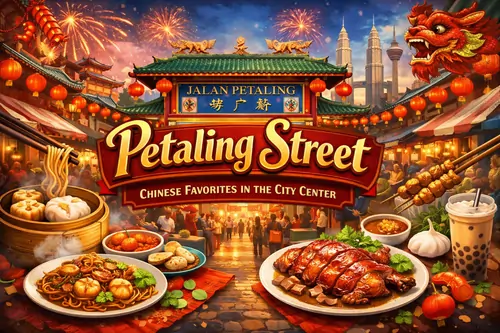
You’ll find noodle shops, kopitiams (coffee shops), dessert stalls, and small restaurants hidden behind busy storefronts. Look out for wantan mee, Hainanese coffee, claypot rice, roast meats, and herbal teas.
This area is perfect for building your own DIY Kuala Lumpur food tour on foot. Start with breakfast or brunch at a traditional coffee shop, move to a noodle stall for lunch, then snack on Chinese pastries or desserts in the afternoon.
A useful resource with suggested routes and stops is this DIY food tour of Kuala Lumpur.
Spot 3: Brickfields (Little India) – Banana Leaf Rice & Roti Canai
Brickfields, near KL Sentral, is known as Little India and is the place to go for banana leaf rice and classic Indian meals.
Restaurants here serve rice on banana leaves with a variety of curries, vegetables, pickles, and papadums. It’s a fun, interactive way to eat, and staff will usually guide you on how to order and what to try.
You’ll also find roti canai, dosa, vadai, and sweets like ladoo and jalebi. Many places in this neighborhood are halal, making it a comfortable stop if you’re looking for halal-friendly food.
Try scheduling Brickfields for lunch on a day when you’re already passing through KL Sentral so you don’t have to travel out of your way just to eat. You can see how Brickfields fits into a wider trip in this 5 days in Kuala Lumpur guide.
Spot 4: Kampung Baru – Traditional Malay Food Near the Skyscrapers
Kampung Baru is a unique traditional Malay village surrounded by the city’s modern skyline. It’s one of the best places to taste homestyle Malay cooking in a relaxed environment. In the evening, the streets come alive with grills, nasi campur (mixed rice) stalls, and dessert tables.
Here you can enjoy nasi lemak, ikan bakar (grilled fish), satay, and kuih (traditional sweets). It’s a great area if you want to experience local food culture with fewer tourists than Bukit Bintang.
Many eateries are halal, so it’s also a strong choice for Muslim travelers. For a broader look at Kampung Baru and other local areas, see this excellent Kuala Lumpur travel guide for food lovers.
Spot 5: Taman Connaught Night Market – A Long Night of Snacking
Taman Connaught Night Market is one of the longest night markets in Kuala Lumpur, stretching for almost two kilometers on certain nights of the week.
It’s popular with locals and students and offers a huge variety of snacks and street dishes: ramly burgers, fried chicken, oyster omelette, bubble tea, and many more.
Because it’s a bit outside the central core, this spot is better if you have at least two or three nights in the city and want to go beyond the main tourist areas. Go early to avoid the thickest crowds, and bring cash, comfortable shoes, and an appetite.
If you only have time for one night market, Jalan Alor is easier, but Taman Connaught feels more local and has more variety.
Spots 6–10: Easy Local Restaurants to Try
Once you’re comfortable with street food, it’s worth adding a few sit-down restaurants to your Kuala Lumpur food itinerary. These don’t need to be expensive; many are casual, family-run places that are popular with locals.
Ideas you can plug in (choose real places you know and trust):
- A Malay restaurant near Kampung Baru or around the city center that serves nasi lemak, rendang, and ayam goreng (fried chicken).
- A Chinese “tai chow” or seafood place where you can order shared plates like butter prawns, stir-fried greens, and tofu dishes.
- A Nyonya (Peranakan) restaurant with dishes like ayam pongteh, otak-otak, and laksa.
- An Indian banana leaf restaurant in Brickfields if you want to repeat that experience in a more comfortable setting.
- A popular nasi kandar or mixed rice restaurant, where you choose several dishes over rice from a display counter.
For inspiration and concrete examples, check:
Spots 11–13: Cafés, Dessert Bars, and Modern Spots
Kuala Lumpur has a growing café culture, and it’s worth including a few modern spots in your plans. These are perfect if you need Wi‑Fi, air‑conditioning, or a place to relax between sightseeing and street food.
Look for:
- Third‑wave cafés in Bukit Bintang, Chinatown, or Bangsar serving specialty coffee and brunch dishes.
- Dessert bars offering cakes, shaved ice, or modern twists on Malaysian flavors like pandan, gula melaka, and cendol.
- A rooftop bar or restaurant with city views if you want one “special night” meal that feels different from the hawker and night market scene.
If you’re planning your days around both food and attractions, this itinerary-style post is helpful:
Spots 14–15: Malls and Food Courts
Malls are a big part of daily life in Kuala Lumpur, and their food courts are surprisingly good. They offer everything from local hawker-style stalls to Japanese, Korean, and Western chains, which makes them perfect if you’re traveling with picky eaters or just need something fast.
Food courts in places like Pavilion, Suria KLCC, and Mid Valley Megamall are ideal when it’s too hot or raining and you still want variety. You’ll often find stalls selling nasi lemak, chicken rice, noodles, and snacks at reasonable prices.
This is also where you can easily mix Malaysian food with other Asian cuisines in one meal. For more ideas on where to eat across the city, you can read:
Halal, Vegetarian, and Budget Tips
Because Malaysia is a Muslim-majority country, halal food is widely available, especially in Malay restaurants, many mamak eateries, and mall food courts. Look for halal certification signs or ask staff if you’re unsure.

Areas like Kampung Baru and many parts of the city center are packed with halal options.
Vegetarians will find good choices in Indian restaurants, especially in Brickfields, and in some Chinese and mixed-rice spots that offer tofu and vegetable dishes.
To keep your budget in check, rely on hawker centers, night markets, and kopitiams for most meals and save more expensive restaurants and rooftop venues for one or two evenings.
If you run a restaurant or café and want to attract more diners, it’s worth learning about local search optimization, as explained here:
2-Day Kuala Lumpur Food Itinerary for First-Timers
Use this simple plan to turn your Kuala Lumpur food guide into an easy itinerary.
Day 1 – Bukit Bintang & KLCC
- Breakfast: Visit a kopitiam or mall food court near Bukit Bintang for nasi lemak or kaya toast with coffee.
- Lunch: Eat at a mall food court such as Pavilion’s food hall where you can sample local dishes in air‑conditioning.
- Afternoon: Coffee and cake at a nearby café to experience the city’s modern café scene.
- Dinner: Walk to Jalan Alor and enjoy an evening of grilled seafood, satay, and noodles under the lights.
Day 2 – Chinatown, Brickfields & Kampung Baru
- Breakfast: Head to Petaling Street for Chinese breakfast dishes like noodles, porridge, or buns plus strong coffee or tea.
- Lunch: Go to Brickfields (Little India) for banana leaf rice or roti canai and explore the area around KL Sentral.
- Afternoon: Sightseeing around the city center or KLCC, with a snack or coffee stop as needed.
- Dinner: End your day in Kampung Baru with Malay dishes like ikan bakar, nasi lemak, and traditional desserts.
If you have an extra evening, you can add Taman Connaught Night Market for a deeper dive into night‑market snacking.
FAQ: Quick Answers for First-Time Visitors
1. Is street food safe in Kuala Lumpur?
In most busy areas, street food is generally safe, especially where there’s high turnover and constant cooking. Choose stalls with a lot of local customers and food that is cooked fresh in front of you.
2. How much does a meal cost in Kuala Lumpur?
Simple meals at hawker stalls or food courts can be very affordable, while restaurant dishes will be higher depending on location and style. Night markets and kopitiams are usually the best value.
3. Where should I stay for easy access to food?
Bukit Bintang and the areas around KLCC and Chinatown are ideal for first-timers. You’ll be close to malls, cafés, and several of the main food streets and markets in this guide.
4. Do I need to tip?
Tipping is not mandatory in Malaysia. Some restaurants include a service charge, and for others it’s fine to just round up the bill if you’re happy with the service.
Making the Most of This Guide
To get the best experience from your Kuala Lumpur food trip, combine famous spots like Jalan Alor with more local areas like Kampung Baru and Brickfields.
Try at least one street food area, one traditional restaurant, and one modern café or rooftop venue so you can see the full range of what the city offers.
If you want even more ideas, you can explore these additional resources:
- Where to Find the Best Food in Kuala Lumpur, Malaysia
- A Kuala Lumpur Travel Guide for Food Lovers
- Mintel City Food Guide: What to Eat in Kuala Lumpur

I’m John Michael Palmes, an SEO practitioner with over three years of hands-on experience in search engine optimization and digital marketing. I help websites improve visibility, build effective SEO content strategies, and rank better on Google using practical, data-driven approaches.
My focus is on on-page SEO, keyword research, and content optimization—the fundamentals that help both search engines and users understand a site clearly. I continuously test, analyze results, and refine strategies, sharing honest and actionable SEO insights as search algorithms evolve.