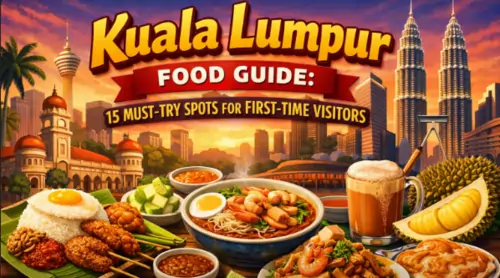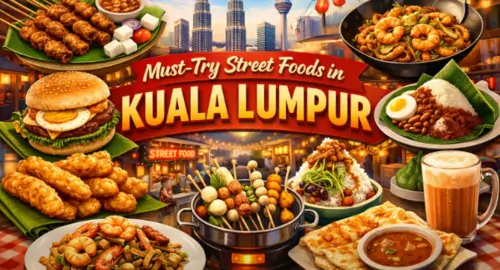

Malaysian cuisine is a rich mix of Malay, Chinese, Indian, and other regional influences that reflects the country’s multi‑ethnic population. Across Kuala Lumpur, Penang, Melaka, Ipoh, and many smaller towns, traditional Malaysian food is served at hawker centers, mamak restaurants, night markets, and modern cafés.
This guide focuses on five famous Malaysian dishes—nasi lemak, char kway teow, laksa, roti canai, and satay—that are ideal if you are just starting to explore Malaysian cuisine.
For a structured overview of ingredients, cooking traditions, and regional styles, you can also read the Malaysian cuisine article on Wikipedia alongside this guide.
Malaysian Cuisine and Food Culture
Traditional Malaysian food is built on rice and noodles, coconut milk, chili, shrimp paste, herbs like lemongrass and pandan, and a balance of sweet, sour, salty, and spicy flavors.
Malay cuisine, Chinese Malaysian cuisine, and Indian Malaysian cuisine are the three main pillars, and each group brings its own cooking methods and ingredients to the shared table.
Peranakan, indigenous, and regional cuisines add even more variety, so you often see many styles of dishes in the same food court or street.
When people talk about Malaysian street food or Malaysian hawker food, they usually mean casual stalls and kopitiams (traditional coffee shops) where you sit at shared tables and order several small plates.
It is common to mix Malay dishes like nasi lemak and rendang with Chinese‑inspired noodles such as char kway teow or Hokkien mee and Indian‑influenced foods like roti canai and mee goreng mamak during one meal.
If you want a narrative introduction to Malaysian food culture across different cities, the Malaysia Food and Travel Guide offers detailed examples and city‑by‑city suggestions.
1. Nasi Lemak – Malaysia’s National Dish
Among all famous Malaysian dishes, nasi lemak is often called the national dish of Malaysia. The name can be translated as “rich” or “creamy rice,” and the core of the dish is rice cooked in coconut milk and pandan leaves until it becomes fragrant and slightly oily.
A classic nasi lemak plate includes spicy sambal (chili paste, usually with shrimp paste), crispy fried anchovies (ikan bilis), roasted peanuts, sliced cucumber, and a hard‑boiled or fried egg.
In Kuala Lumpur, Johor Bahru, and most major towns, nasi lemak is sold from early morning and eaten throughout the day, making it a true everyday Malaysian street food.
Simple roadside versions are often wrapped in banana leaf and paper as nasi lemak bungkus, while restaurant versions add fried chicken, squid sambal, or beef rendang for a more substantial meal.
Because it is so widely available, nasi lemak is usually the first traditional Malaysian food recommended to visitors.
Nasi lemak also fits well into halal Malaysian food culture, because it uses ingredients that easily meet Muslim dietary requirements and is commonly sold at halal stalls.
The combination of creamy coconut rice, fiery sambal, salty anchovies, crunchy peanuts, and cool cucumber shows how Malaysian cuisine layers texture and flavor in a single dish.
If you want more detail on history and variations, the Nasi lemak article on Wikipedia and recipes like the National Dish of Malaysia – Nasi Lemak are useful references.
2. Char Kway Teow – Stir‑Fried Noodle Favorite
Char kway teow (char koay teow or char kuey teow) is one of the most iconic dishes in Chinese Malaysian cuisine and a highlight of Malaysian hawker food.
The name means “stir‑fried flat rice noodles,” and a standard plate includes flat rice noodles, prawns, sliced Chinese sausage, eggs, bean sprouts, and chives, all fried in a very hot wok with a mix of light and dark soy sauce, and sometimes chili or shrimp paste.
What sets char kway teow apart from other popular Malaysian dishes is the prized wok hei, or “breath of the wok.” Skilled hawkers cook small batches of noodles over intense heat so they pick up a smoky, slightly charred aroma that is difficult to reproduce at home.
In busy stalls you will often see long lines of customers waiting for this particular flavor, even when other noodle dishes are available more quickly.
Penang, especially George Town, is widely regarded as the home of char kway teow in Malaysia and is often mentioned in travel guides as a top destination for this dish.
Visitors who focus on Malaysian street food in Penang will find char kway teow at many hawker centers, and some stalls have become famous in their own right.
Food writers regularly include char kway teow in lists of best Malaysian food to try because of its deep, savory character and its connection to Penang’s identity.
By default, some versions of char kway teow are not halal because they use pork lard or pork sausage, but halal Malaysian food versions replace lard with vegetable oil and omit non‑halal ingredients.
If you are looking for halal char kway teow, you can ask vendors about the oil they use and check for halal certification signs. For a closer look at how this dish is prepared and why it is such a big deal in Penang, see Char Koay Teow – The Soul of Penang’s Street Food.
3. Laksa – Spicy and Tangy Noodle Soup
Laksa is another core component of Malaysian cuisine and appears in almost every Malaysian food guide. It is a noodle soup that comes in several regional styles, but two main types are especially prominent: asam laksa and curry laksa.
Asam laksa, strongly associated with Penang, features a sour‑spicy fish broth built with tamarind, chilies, and flaked mackerel.
Thick rice noodles are added, then topped with shredded cucumber, onion, herbs, and often pineapple or lettuce, creating a sharp, aromatic mix of flavors.
This version is repeatedly listed among top Malaysian dishes in international food rankings because its tangy taste is different from most other soups in the region.
Curry laksa, more common in Kuala Lumpur and coastal areas on the west coast, uses a coconut milk and curry‑spiced broth, which makes it richer and creamier.
The bowl usually includes noodles, tofu puffs, fish cakes, prawns, cockles, bean sprouts, and fresh herbs, reflecting influences from Malay cuisine and Indian Malaysian cuisine where coconut and spices are central.
Some stalls call this style simply “laksa,” so you may need to ask if the broth is sour (asam) or creamy (curry).
Because laksa is filling and served as a one‑bowl meal, it is a convenient choice for travelers who want to experience Malaysian street food but prefer something easy to order.
Guides like the Malaysian Food Guide – The Main Typical Dishes of Malaysia and Traditional Malaysian Dishes: 12 Mouth‑Watering Foods both highlight laksa as essential.
4. Roti Canai – Flaky Flatbread with Curry
Roti canai is a flaky, layered flatbread that has become one of the most loved items from Indian Malaysian cuisine and an all‑day favorite in Malaysian street food.
The dough is stretched, spun, and folded until very thin, then folded into a packet and fried on a hot griddle until crisp and golden on the outside but soft and slightly chewy inside.
Most Malaysians eat roti canai with dhal (lentil curry), chicken or fish curry, and sometimes a spoonful of sambal for extra heat. Sweet versions—topped with condensed milk, sugar, or banana and chocolate—are popular for breakfast or late‑night snacks.
Because you tear off small pieces and dip them into the curry, it is an easy dish to share and a fun introduction to traditional Malaysian food for newcomers.
Roti canai is also an excellent choice if you are worried about spice levels, because you can control how much curry or sambal you use.
It is widely available at mamak restaurants (Indian Muslim eateries) across Kuala Lumpur, Penang, Johor Bahru, and smaller towns, which makes it a reliable option when you are exploring Malaysia tourist spots and want something familiar yet local.
If you want to try making it yourself, collections of Malaysian recipes at Asian Inspirations – Malaysian Food Recipes include roti canai and related dishes that you can prepare at home.
5. Satay – Skewered Grilled Meat with Peanut Sauce
Satay (or sate) is one of the most recognized traditional Malaysian dishes worldwide and is often served at night markets, open‑air food courts, and family events.
It consists of marinated pieces of meat—usually chicken or beef, sometimes lamb or other meats—threaded onto bamboo skewers and grilled over charcoal.
What makes satay a staple among famous Malaysian dishes is the pairing of smoky grilled meat with a thick, slightly sweet and spicy peanut sauce.
Plates of satay usually include small cubes of compressed rice (ketupat or nasi impit), slices of cucumber, and raw onion to cut through the richness of the sauce. This combination makes satay both comforting and deeply flavorful.
Satay is strongly associated with Malay cuisine and is commonly served during festivals, open houses, and special occasions.
Because chicken and beef satay can be prepared according to halal rules, it is a popular choice for halal Malaysian food at large gatherings. International lists, such as CNN’s feature on Malaysia’s top 40 foods, almost always include satay alongside nasi lemak and laksa.
More Must‑Try Malaysian Dishes
While this article focuses on five dishes, many other popular Malaysian dishes appear in food lists and travel blogs.
Names like mee goreng, nasi goreng, Hokkien mee, nasi kandar, ikan bakar, and beef rendang show up repeatedly whenever people talk about the best Malaysian food to try.
- Mee goreng and nasi goreng are flexible fried noodle and fried rice dishes with toppings such as egg, chicken, prawns, or vegetables, often cooked quickly at hawker stalls.
- Hokkien mee can mean a dark, thick soy‑based noodle dish in Kuala Lumpur or a prawn broth version in Penang, showing how regional variations shape Malaysian cuisine.
- Nasi kandar, originally from Penang, pairs steamed rice with assorted curries and side dishes and shows the influence of Indian Muslim traders on Malaysian street food.
- Ikan bakar, or “grilled fish,” is marinated seafood grilled over charcoal, commonly served in coastal towns and city night markets, often with sambal.
- Beef rendang, a slow‑cooked, dry curry, is often prepared for festive occasions and is sometimes served alongside nasi lemak or plain rice.
Lists such as Food in Malaysia – 40 Must‑Try Malaysian Food Dishes and 15 Must Try Malaysian Dishes: Defining the Country’s Cuisine are helpful if you want to go beyond these five classics.
How to Experience Malaysian Food Like a Local
Hawker Centers and Night Markets
Hawker centers and kopitiams are among the best places to taste Malaysian street food and Malaysian hawker food like nasi lemak, char kway teow, laksa, roti canai, and satay.
In Kuala Lumpur, areas around Petaling Street and large food courts in malls host many stalls under one roof, making it easy to try multiple dishes at once.
In Penang’s George Town, hawker centers and roadside stalls are key parts of the city’s appeal and are often included in travel itineraries.
Night markets (pasar malam) play a major role in food culture, especially in Penang and Melaka, where roads transform into rows of food and drink stalls in the evening.
Guides like Essential Eating: Best Malaysian Food Guide and Top 10 Foods to Try in Malaysia offer suggestions on which markets and stalls to prioritize.
Ordering, Spice Levels, and Halal Options
If you are new to Malaysian cuisine, you can start with dishes that let you control how spicy they are, such as roti canai with dhal or nasi lemak where you add sambal to taste. You can also ask vendors to make dishes “less spicy” or choose milder options like some noodle soups.
Because Malaysia has a large Muslim population, halal Malaysian food is widely available in cities and towns.
Many restaurants and chains are fully certified, and even in mixed food courts you will often see halal signs to indicate that specific stalls meet Islamic dietary standards.
Dishes such as nasi lemak, satay, many forms of laksa, and roti canai are commonly prepared in halal versions, while Chinese Malaysian dishes like char kway teow may use pork or lard unless specifically adapted.
For city‑specific suggestions, articles like 10 Mouthwatering Malaysian Foods To Try in KL and the Malaysia Food and Travel Guide highlight good places to explore in Kuala Lumpur, Penang, and other hubs.
Where to Eat These 5 Famous Malaysian Dishes
- Kuala Lumpur: Look for nasi lemak and roti canai at busy mamak restaurants, and char kway teow or curry laksa at food courts and hawker centers in areas like Bukit Bintang and Petaling Street. Satay is easy to find at night markets and open‑air food courts across the city.
- Penang (George Town): Focus on char kway teow, asam laksa, Hokkien mee, and nasi kandar at famous hawker centers and roadside stalls; Penang is regarded as one of the best places for Malaysian street food.
- Melaka: Combine bowls of laksa, satay, and ikan bakar with a stroll through Jonker Street night market and the riverside food area in the historic center.
- Ipoh: Visit kopitiams and small eateries in Ipoh Old Town for white coffee, noodle dishes, and Malaysian hawker food that mixes Chinese and Malay influences.
These cities give you a strong mix of traditional Malaysian food and modern interpretations in a compact, easy‑to‑explore setting.
FAQs About Malaysian Cuisine
Is Malaysian food very spicy?
Malaysian cuisine can be spicy, especially dishes with sambal and certain curries, but you can often ask for milder versions or choose gentler options like roti canai with dhal and some noodle soups.
Is Malaysian food halal?
Many Malaysian dishes, such as nasi lemak, satay, laksa, and roti canai, are widely available as halal food, though some Chinese Malaysian dishes like char kway teow may use pork or lard, so it is wise to check ingredients or look for halal signage.
What is the most famous Malaysian dish?
Nasi lemak is frequently described as the most famous Malaysian dish and is recognized as a national dish of Malaysia, eaten at any time of day in cities and villages.
Where can I find the best Malaysian street food?
Some of the best Malaysian street food can be found at hawker centers and night markets in Kuala Lumpur, Penang (especially George Town), Melaka, and Ipoh, where many stalls specialize in just one or two dishes.
What Malaysian dishes should I try first?
If you are new to Malaysian food, start with nasi lemak, char kway teow, curry laksa or asam laksa, roti canai, and satay, then move on to other popular Malaysian dishes like mee goreng, beef rendang, Hokkien mee, nasi kandar, and ikan bakar.
Practical Resources for Malaysian Cuisine
To deepen your knowledge of Malaysian cuisine and plan food‑focused travel, these resources are useful starting points:
- Malaysian cuisine – Wikipedia for an overview of Malay cuisine, Chinese Malaysian cuisine, and Indian Malaysian cuisine, plus key ingredients and regional dishes.
- Malaysia Food and Travel Guide for detailed descriptions of Malaysian street food and hawker centers in different cities.
- Malaysian Food Guide – The Main Typical Dishes of Malaysia for explanations of must‑try Malaysian dishes like nasi lemak, laksa, and rendang.
- Traditional Malaysian Dishes: 12 Mouth‑Watering Foods for a clear, photo‑rich list of traditional Malaysian food.
- Malaysian Food Recipes – Asian Inspirations for Malaysian recipes including roti canai, satay, and curry laksa.
Final Thoughts
Malaysian cuisine is best understood through the dishes that locals enjoy every day, and these five—nasi lemak, char kway teow, laksa, roti canai, and satay—form a powerful introduction to that world.
Each dish reflects a different strand of Malaysian food culture, from Malay coconut rice and Chinese‑style stir‑fried noodles to Indian‑influenced flatbreads and charcoal‑grilled meats.
When you add other popular Malaysian dishes like mee goreng, Hokkien mee, nasi kandar, ikan bakar, and beef rendang, traditional Malaysian food and Malaysian street food together create one of Southeast Asia’s most diverse and satisfying culinary scenes.

I’m John Michael Palmes, an SEO practitioner with over three years of hands-on experience in search engine optimization and digital marketing. I help websites improve visibility, build effective SEO content strategies, and rank better on Google using practical, data-driven approaches.
My focus is on on-page SEO, keyword research, and content optimization—the fundamentals that help both search engines and users understand a site clearly. I continuously test, analyze results, and refine strategies, sharing honest and actionable SEO insights as search algorithms evolve.