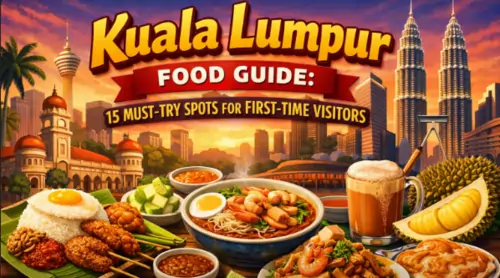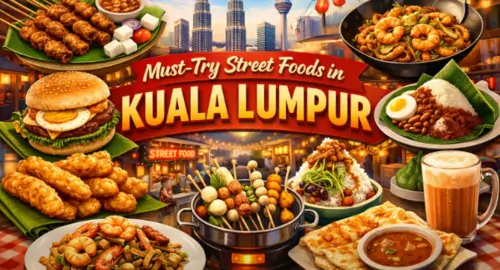
Malaysia is one of Southeast Asia’s most exciting places to eat. The country’s Malaysian cuisine is shaped by Malay, Chinese, Indian, and Peranakan communities—so you don’t just get “one” flavor profile.
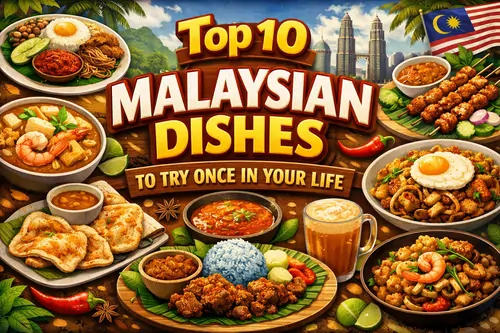
You get smoky stir-fries, rich coconut gravies, tangy soups, grilled skewers, and ice-cold desserts in one food trip.
For Filipino travelers (or anyone who loves rice meals), Malaysian dishes feel both familiar and new: you’ll recognize the comfort of Malaysian rice dishes, grilled meats, and coconut-based sauces, but you’ll also discover bold aromatics, layered spice blends, and that unforgettable street-food “char” taste.
This Malaysian dishes list is designed for first-timers and food lovers asking: what to eat in Malaysia—and it’s built around dishes you can actually find in most major cities.
If you want an official starting point, Tourism Malaysia has a helpful overview of famous foods: Tourism Malaysia’s Malaysian food picks.
What Makes Malaysian Food Unique?
Malaysian food stands out because it’s multicultural by default. You’ll see:
- Malay food / traditional Malay dishes: coconut milk dishes, sambal-based flavors, grilled and slow-cooked classics
- Chinese Malaysian dishes: noodle dishes, stir-fries, herbal soups, roast meats
- Indian Malaysian food / mamak food: flaky flatbreads, curry gravies, strong spices
- Peranakan food / Nyonya cuisine: Chinese techniques combined with Malay herbs and spice pastes
You’ll also taste signature aromatics: lemongrass, galangal, and makrut lime leaves, plus fermented flavors like belacan (shrimp paste).
Many authentic Malaysian dishes have a sweet-savoury balance—heat from chili, richness from coconut milk, and sweetness from palm sugar in sauces and gula Melaka desserts.
And the best part? You don’t need fine dining to eat well. Malaysia is famous for Malaysian street food, hawker food Malaysia, kopitiams (local coffee shops), and Malaysian night market food—also known as pasar malam food.
Top 10 Malaysian Dishes to Try Once in Your Life
Below are ten must-try Malaysian dishes—iconic, widely available, and deeply loved by locals. For each dish, you’ll get what it is, what it tastes like, where to find it, and what to pair it with.
1) Nasi Lemak
If you only try one dish, make it nasi lemak—often called Malaysia’s national dish and the most famous Malaysian food for good reason.
What it is: Coconut milk rice served with sambal, fried anchovies, peanuts, cucumber, and egg. Popular add-ons include fried chicken, squid sambal, or rendang.
Taste: Creamy coconut rice + spicy-sweet sambal + salty crunch.
Where to find it: Everywhere—especially breakfast stalls, kopitiams, and hawker centers. It’s a superstar of Malaysian breakfast foods in Kuala Lumpur food areas and beyond.
Pro tip: If you love saucy meals, ask for extra sambal. If you prefer mild, start with a smaller sambal portion.
Want the classic breakdown and technique? Serious Eats on nasi lemak is a solid reference.
2) Char Kway Teow
Char kway teow is one of the best Malaysian dishes for noodle lovers—and a legend in Penang food culture.
What it is: Flat rice noodles stir-fried on high heat with eggs, prawns, chives, bean sprouts, and sometimes cockles and Chinese sausage.
Taste: Smoky, savory, slightly sweet—powered by “wok hei” (that charred aroma).
Where to find it: Hawker centers and street stalls, especially in Penang, but also across Kuala Lumpur food courts.
Pro tip: If you want more heat, ask for “pedas” (spicy). If you want richer flavor, look for stalls that cook over strong flame.
For a quick “why it matters” overview of Malaysian classics, see: Chowhound’s Malaysian dishes to try.
3) Laksa (Asam Laksa, Curry Laksa, Sarawak Laksa)
Laksa is not one dish—it’s a whole universe. If you’re building a Malaysian food guide, laksa is essential because it showcases regional identity.
Asam Laksa (Penang)
Taste: Sour-spicy fish-based broth with noodles—many Filipinos compare the tang to sinigang-level sour, but with chili heat.
Where: Best known in Penang (so yes, huge in Penang food trips).
Curry Laksa
Taste: Creamy coconut milk soup with chili—comforting, rich, and spicy.
Where: Common in KL and across Malaysia.
Sarawak Laksa (Sarawak)
Taste: Deeply spiced broth with coconut milk, prawns, chicken—complex and aromatic.
Where: A must if you’re exploring Sarawak food.
If you want a traveler-friendly overview of must-eat dishes including laksa, try: Travel + Leisure Asia’s must-try Malaysian dishes.
4) Satay with Peanut Sauce
Satay is Malaysia’s crowd-pleasing grilled snack—one of the most popular Malaysian dishes among visitors, and very easy to love if you enjoy barbecue.
What it is: Marinated meat skewers (chicken, beef, lamb) grilled over charcoal, served with peanut sauce, cucumber, onions, and ketupat (rice cakes).
Taste: Smoky, sweet-savoury, nutty, lightly spiced.
Where to find it: Night markets, hawker centers, and dedicated satay spots—Kajang (near KL) is famously associated with satay culture.
Pro tip: Order a mix of skewers and eat with ketupat to balance the sauce.
For cultural context on Southeast Asia’s favorite skewers, see: BBC Travel on satay.
5) Roti Canai (Mamak-Style)
If you’re exploring Indian Malaysian food or mamak food, roti canai is the gateway dish—flaky, crispy, and addictive.
What it is: Hand-stretched flatbread folded and pan-fried until layered, served with dhal or curry gravy.
Taste: Buttery, crispy edges, soft inside—perfect for dipping.
Where to find it: Mamak stalls (often open late), especially in KL and major cities—this is prime Malaysian street food and a classic late-night choice.
Pro tip: Try it “banjir” (flooded with curry) if you like saucy meals.
A good technique overview: Serious Eats on roti canai.
6) Nasi Kandar
If you want the ultimate “choose-your-curry” experience, nasi kandar is one of the most classic Malaysian dishes you can eat.
What it is: White rice topped with multiple curries and sides—fried chicken, squid, okra, beef, eggs—often mixed together.
Taste: Bold, spicy, rich, and intensely savory.
Where to find it: Strongly associated with northern Malaysia and Penang (so it’s a major Penang food highlight), but available in many cities.
Pro tip: Ask for a mix of gravies (some stalls do a signature “combo”). If you love spice, go heavier on the darker curries.
7) Hainanese Chicken Rice (Malaysian Style)
For a mild, comforting meal, Hainanese chicken rice is a reliable favorite and widely available across Malaysia.
What it is: Poached or roasted chicken served with fragrant rice, chili sauce, ginger paste, and soy-based sauce.
Taste: Clean, savory, aromatic—simple but satisfying.
Where to find it: Kopitiams, food courts, and Chinese restaurants, especially in urban areas like KL. This fits perfectly into local Malaysian food you can eat any day.
Pro tip: Try roasted chicken if you want richer flavor; poached if you prefer softer texture.
For background and regional context: Saveur on chicken rice in the region.
8) Bak Kut Teh
Bak kut teh is one of the most loved Chinese Malaysian dishes—a comforting pork rib soup with a loyal following.
What it is: Pork ribs simmered with garlic, pepper, and (in many versions) Chinese herbs.
Taste: Peppery and warming, sometimes herbal and aromatic depending on style.
Where to find it: Klang (Selangor) is famously linked to bak kut teh, but you’ll find it in KL and many towns.
Pro tip: Eat with rice and youtiao (fried dough). Many locals drink strong tea alongside it.
A regional deep dive: SCMP on bak kut teh.
9) Rendang (Malaysian Rendang)
Rendang is a slow-cooked meat dish that feels like a Southeast Asian celebration on a plate. It’s often tied to festive meals, but you can also find it year-round.
What it is: Beef (or chicken) cooked slowly in coconut milk and spices until rich and tender.
Taste: Deeply savory, aromatic, spicy, and slightly sweet—one of the best examples of coconut milk dishes done right.
Where to find it: Nasi lemak stalls, Malay restaurants, and festival spreads. You’ll also see rendang variations across different regions.
Pro tip: Try it with rice (or nasi lemak) so you can enjoy the sauce fully.
For cultural context: BBC Travel on rendang.
10) Cendol
To finish your food crawl, go for cendol—an iconic dessert and one of the most beloved Malaysian dishes and desserts experiences.
What it is: Shaved ice with coconut milk, palm sugar syrup, red beans, and green jelly strands.
Taste: Creamy, caramel-like sweetness with refreshing ice—perfect in tropical heat.
Where to find it: Dessert stalls, hawker centers, and popular tourist areas—especially in hot afternoons.
Pro tip: If you like halo-halo, this is a must. The coconut + palm sugar combo is unforgettable.
For a fun history angle: VICE on cendol.
Bonus “Also Try” Mentions (Great for Longer Trips)
Even though this is a Top 10, these dishes are commonly searched and help round out a real-world Malaysian food to try checklist:
- Hokkien Mee (KL vs Penang): Same name, different dishes. KL style is thick, dark, and saucy; Penang style is more soup-based and seafood-forward—both are standout Malaysian noodles.
- Mee Rebus: Yellow noodles in a thick, slightly sweet-savory gravy—comfort food that many first-timers enjoy.
- Kuih-muih: A colorful world of Malaysian snacks and kuih—bite-sized sweets and cakes made with coconut, pandan, rice flour, and gula Melaka.
- Ais Kacang (ABC): Another shaved-ice dessert—great if you want variety beyond cendol.
- Teh Tarik: The signature among Malaysian drinks—pulled milk tea with a frothy top, especially popular at mamak stalls.
Quick “What to Order” Guide for First-Timers
If you’re building your own “must eat in Malaysia” checklist, here’s a simple way to choose:
- If you love spicy: nasi lemak, laksa, nasi kandar, rendang
- If you want mild comfort: chicken rice, bak kut teh
- If you’re a noodle fan: char kway teow, laksa, hokkien mee
- If you want street-food sharing plates: satay, roti canai
- If you need dessert breaks: cendol, ais kacang, kuih-muih
- If you’re starting a day of sightseeing: nasi lemak + teh tarik (a true Malaysian breakfast foods combo)
Where to Find These Malaysian Dishes
Malaysia is one of the best countries in Asia for food accessibility. You’ll find these dishes in:
- Hawker centers / food courts (perfect for variety)
- Kopitiams (local café culture; great for breakfasts and comfort meals)
- Mamak stalls (late-night hub for roti canai, teh tarik, and quick meals)
- Pasar malam (night markets for skewers, snacks, desserts, and Malaysian night market food)
If your trip includes multiple states, you can also “taste-map” Malaysia through regions:
- Penang food for hawker legends and noodles
- Kuala Lumpur food for diversity and mamak culture
- Melaka (Malacca) food for Peranakan influences
- Sarawak food and Sabah food for Borneo specialties
- Kelantan food and Terengganu food for east-coast flavors and snacks
Frequently Asked Questions About Malaysian Dishes
What is the national dish of Malaysia?
Malaysia’s national dish is widely considered to be nasi lemak, made with coconut rice, sambal, anchovies, peanuts, egg, and cucumber. It’s one of the most traditional Malaysian dishes and can be eaten any time of day.
Is Malaysian food very spicy?
Some Malaysian dishes are spicy, especially those with sambal and chili-based gravies. However, many dishes are mild or customizable. Comforting, less-spicy options include chicken rice and some versions of bak kut teh.
What Malaysian dishes should first-time visitors try?
For first-timers, start with nasi lemak, char kway teow, laksa, roti canai, and satay. These are widely available, represent different cultural roots, and are among the most famous Malaysian food picks in any Malaysian food guide.
What’s the difference between asam laksa, curry laksa, and Sarawak laksa?
Asam laksa is sour-spicy and fish-based, curry laksa is creamy-spicy with coconut milk, and Sarawak laksa is complex and aromatic with a spiced paste, often topped with prawns and chicken.
Is Malaysian food similar to Filipino food?
Yes—many Filipino travelers enjoy Malaysian cuisine because it shares familiar comfort foundations like rice meals, grilled meats, and coconut-based dishes. The difference is often in the spice layering and aromatics (like lemongrass and galangal).
Conclusion: Your “Must Eat in Malaysia” Starter List
If you’re planning a trip—or simply want a delicious checklist—these top Malaysian dishes are the best place to begin. They cover the heart of Malaysia’s multicultural food identity: coconut rice classics, smoky noodles, comforting soups, grilled street snacks, and cooling desserts.
To recap, your “once in your life” list is:
nasi lemak, char kway teow, laksa, satay, roti canai, nasi kandar, chicken rice, bak kut teh, rendang, and cendol.
For more regional reading and broader coverage, you can also explore:

I’m John Michael Palmes, an SEO practitioner with over three years of hands-on experience in search engine optimization and digital marketing. I help websites improve visibility, build effective SEO content strategies, and rank better on Google using practical, data-driven approaches.
My focus is on on-page SEO, keyword research, and content optimization—the fundamentals that help both search engines and users understand a site clearly. I continuously test, analyze results, and refine strategies, sharing honest and actionable SEO insights as search algorithms evolve.