
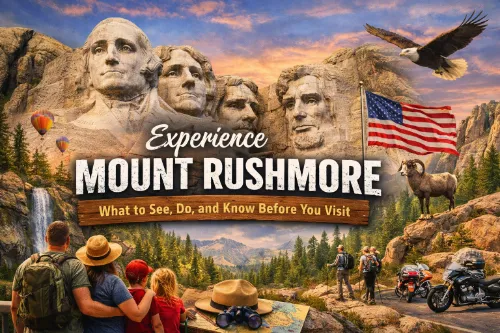
Mount Rushmore is one of those iconic places that many travelers want to see at least once. If you’re wondering how to visit Mount Rushmore, how long you need there, and what else to see in the Black Hills of South Dakota, this simple destination guide will walk you through everything. For official logistics like current hours, conditions, or closures, always cross-check with the National Park Service Mount Rushmore page.
This Mount Rushmore destination guide is designed for first-time visitors, families, couples, and road trippers who want clear, practical advice without information overload.
Where Mount Rushmore Is and How to Get There
Mount Rushmore National Memorial is in the Black Hills of western South Dakota, about 25 miles southwest of Rapid City and just outside the town of Keystone.
The memorial sits in a rugged granite landscape, surrounded by pine forests and scenic drives. Most visitors either fly into Rapid City and rent a car or arrive as part of a wider Black Hills or Great Plains road trip. If you’re starting in Rapid City, the drive to Mount Rushmore is usually around 45 minutes, depending on traffic and weather. The route is clearly signposted, and once you get close, you’ll see signs for the entrance and parking garages.
If you’re coming from nearby attractions, Mount Rushmore is also easy to combine with places like Custer State Park, Crazy Horse Memorial, and Badlands National Park. For planning hikes, wildlife viewing, or camping in the area, the official Custer State Park site is your best starting point. Many travelers plan a short loop that includes a Mount Rushmore day trip from Rapid City plus a second day for Custer State Park and a third day for the Badlands as part of their South Dakota adventure.
Entry to Mount Rushmore itself is free, but you do pay for parking. You’ll park in a multi-level garage with automated pay stations, so it’s convenient to have a card ready when you leave. A parking ticket currently entitles a non-commercial vehicle to unlimited entry to the memorial for one year from the date of purchase, which is helpful if you want to come back for a second visit during your trip. National park passes like America the Beautiful do not cover the parking fee, because parking is a concession fee rather than an entrance fee.
From the parking area, elevators and ramps connect you to the main entrance and viewing areas, which keeps access straightforward even if you’re traveling with kids, strollers, or someone who has mobility challenges.
A Short History of Mount Rushmore
Mount Rushmore features the carved faces of four U.S. presidents: George Washington, Thomas Jefferson, Theodore Roosevelt, and Abraham Lincoln. Each president represents a different chapter in the story of the United States: the founding, the expansion west, the development of the country, and the preservation of the Union.
The idea for a giant mountain carving in the Black Hills emerged in the 1920s as a way to boost tourism in South Dakota, and sculptor Gutzon Borglum led the project with the help of hundreds of workers. Work on Mount Rushmore began in 1927 and continued for more than a decade, using a mix of dynamite and detailed hand work to shape the granite.
It’s also important to recognize that Mount Rushmore stands on land sacred to the Lakota Sioux and other Indigenous peoples, and the Black Hills (Paha Sapa) hold deep cultural and spiritual meaning. Some visitors add the nearby Crazy Horse Memorial to their itinerary to hear more about Native history and perspectives in the region.
Best Time to Visit Mount Rushmore
The best time to visit Mount Rushmore National Memorial is late spring through early fall, with summer being the busiest season and May, September, and October offering fewer crowds.
You can visit Mount Rushmore year-round, but your experience will change with the season:
- Spring (April–May): Weather can be cool and changeable, but crowds are smaller. Late spring is a great time if you want a quieter visit and don’t mind packing layers.
- Summer (June–August): This is the classic time to visit Mount Rushmore, with long days, warm weather, and a full schedule of ranger programs and activities, but it’s also the busiest period, especially around holidays and weekends.
- Fall (September–October): Fall offers mild weather, fewer visitors, and beautiful light for photography, and it’s often one of the best times to visit if you prefer a calmer experience while most services are still operating.
- Winter (November–March): You can visit Mount Rushmore in winter, and the site can feel very peaceful in the snow, but expect cold temperatures and possible ice or snow on roads and walkways, with some services and programs reduced.
The best time of day to visit Mount Rushmore is early morning or late afternoon, when the light is softer and crowds are typically smaller. Because hours and activities can change by season and year, it’s always smart to confirm current operating hours on the official Operating Hours and Seasons page before your trip.
What to See at Mount Rushmore
Mount Rushmore is laid out in a way that makes it easy to find the main highlights. From the entrance, you move along a central walkway toward the main viewing area, then branch out to exhibits and trails like the Avenue of Flags, Grand View Terrace, Presidential Trail, Sculptor’s Studio, and Lincoln Borglum Museum.
Avenue of Flags
The Avenue of Flags is one of the first and most memorable features you’ll encounter when you visit Mount Rushmore, featuring flags from 50 states plus additional U.S. territories. This walkway naturally frames your first view of the presidential faces and is a favorite photo spot for many visitors.
The path is wide, paved, and relatively flat, making it accessible for strollers and wheelchairs. It’s a perfect place to pause for an introductory photo, let kids find your home state’s flag, and build anticipation as you approach the main viewing platform.
Grand View Terrace
At the end of the Avenue of Flags, you’ll reach the Grand View Terrace, the main viewing area at Mount Rushmore. This is where most classic “I visited Mount Rushmore” photos are taken, offering a clear, head-on view of all four presidents with the dramatic backdrop of the Black Hills.
Plan to spend some time here simply observing the details in the carving and watching how the light changes on the rock. Slightly shifting your position can help you avoid crowd clusters and find different angles for photos, and the terrace has railings and plenty of space to move around safely.
Presidential Trail
If you want a closer, more immersive experience, walk the Presidential Trail, a short loop that begins near the Grand View Terrace and passes through forested areas beneath the sculpture. Along the way, you’ll enjoy changing viewpoints of each presidential face and get a better sense of the monument’s scale.
Parts of the Presidential Trail include stairs and some elevation change, so it can feel a bit strenuous for some visitors, but walking the full loop usually takes about 20–40 minutes depending on your pace. For families, the trail helps break the visit into smaller, more interactive segments.
Lincoln Borglum Visitor Center and Museum
Below the Grand View Terrace, you’ll find the Lincoln Borglum Visitor Center and museum, which is the main place to learn about how Mount Rushmore was created. Exhibits explain the carving process, the tools and techniques used, and the lives of the workers who spent years on the project, and a short film provides a clear overview of the monument’s history.
The visitor center is also a useful indoor stop during hot afternoons, cold mornings, or windy conditions.
Sculptor’s Studio
The Sculptor’s Studio offers one of the most interesting viewpoints for understanding the artistic side of Mount Rushmore, with a scale model of the original design and interpretive displays. During peak seasons, ranger talks may take place here, explaining the creative decisions, changes to the original plan, and challenges of working on a sheer rock face.
Standing in the studio and looking from the model to the real mountain outside helps you appreciate the ambition and complexity of the project.
Top Things to Do at Mount Rushmore
Visiting Mount Rushmore can be as simple or as in-depth as you want. Beyond the main viewpoints, there are several activities that make your visit more engaging and informative.
Join a Ranger Program
One of the best things to do at Mount Rushmore is to join a ranger program, where rangers offer talks about the monument’s history, architecture, carving process, and natural surroundings. These programs are usually free and run more frequently in summer and shoulder seasons, and they provide a quick way to get reliable information in an engaging format.
Explore with an Audio or Self-Guided Tour
If you prefer flexibility, consider an audio tour or a structured self-guided route, which let you move at your own pace while still getting context about what you’re seeing. You can listen as you walk along the Avenue of Flags, stand on the Grand View Terrace, or explore the Presidential Trail, which works well for travelers who like to understand the site without reading every sign.
Junior Ranger Program for Kids
For families, the Junior Ranger program is an easy way to keep kids engaged and learning during a Mount Rushmore family vacation. Children complete a booklet with activities and questions about the presidents, the carving, and the natural world, and after they finish, they may receive a badge or certificate as a souvenir of their visit.
Evening Lighting Programs (Seasonal)
During certain times of the year, Mount Rushmore offers an evening lighting program, sometimes referred to as the Evening Lighting Ceremony. As the sun sets and the sky darkens, the monument is illuminated, creating a dramatic and memorable scene, and this program often includes a short ranger-led presentation.
If your travel dates allow, plan a Mount Rushmore visit that includes both daylight and evening. Check seasonal schedules for the evening lighting program on the NPS “Plan Your Visit” page so you know whether it’s running during your trip.
Food, Ice Cream, and Souvenirs
On site, you’ll find concession-run dining and a gift shop operated under contract with the National Park Service. Many visitors like to stop for ice cream, often highlighted in local guides for its connection to early American ice cream traditions, as a fun treat after walking the trails.
The gift shop is a handy place to pick up Mount Rushmore souvenirs such as T-shirts, postcards, books, and educational toys, especially if you’re visiting several NPS sites and collecting items along the way.
What Else to See Near Mount Rushmore in the Black Hills
A Mount Rushmore trip usually fits into a larger Black Hills or South Dakota destination plan, and nearby attractions can easily fill several days.
- Keystone: The closest town to Mount Rushmore, with hotels, motels, restaurants, and family attractions, making it a convenient base for visitors who want to be minutes from the memorial.
- Rapid City: The main regional hub, offering a wide range of lodging, food, and services, plus its own attractions, and acting as a natural base for a Mount Rushmore day trip from Rapid City.
- Custer State Park: Famous for scenic drives, bison herds, granite spires, and lakes; for official information on camping, permits, and wildlife viewing, check the Custer State Park page.
- Crazy Horse Memorial: Another massive mountain carving in progress that offers a different perspective on the region’s history and Native culture; their official website has details on museum exhibits and special events.
- Badlands National Park: Known for dramatic rock formations and layered colors, often added to South Dakota road trips for sunrise or sunset photography; the NPS Badlands page is the best place to check for current trail and road conditions.
For more regional trip ideas and tools, you can also browse the state tourism page for Mount Rushmore and the Black Hills on Travel South Dakota.
How Long Do You Need to Visit Mount Rushmore?
Most visitors spend 1.5 to 3 hours at Mount Rushmore, enough time to see the main viewpoints, walk part of the Presidential Trail, and explore the visitor center.
Here’s a simple breakdown:
- Short stop (1–2 hours)
- Walk the Avenue of Flags.
- Enjoy the Grand View Terrace and take photos.
- Visit the Lincoln Borglum Visitor Center and see the short film.
- Browse the gift shop or grab a quick snack.
- Half-day visit (3–4 hours)
- Do everything in the short stop.
- Walk the full Presidential Trail.
- Visit the Sculptor’s Studio and attend a ranger talk if available.
- Enjoy a relaxed meal or ice cream on site.
- Full-day in the area
- Spend a half-day at Mount Rushmore.
- Combine it with a scenic drive, a visit to Keystone or Crazy Horse Memorial, or a short hike in the Black Hills or Custer State Park.
Whether you’re building a Mount Rushmore day trip from Rapid City or a longer Black Hills road trip, this timing gives you a solid starting point.
Practical Tips: What to Know Before You Go
A few simple planning steps can make your Mount Rushmore trip smoother and more enjoyable.
Entrance, Parking, and Hours
- It is free to enter Mount Rushmore National Memorial, but you must pay a parking fee per vehicle in the on-site parking facility.
- Parking passes for non-commercial vehicles are typically valid for one year from the date of purchase, allowing unlimited entry during that period.
- National park passes like the America the Beautiful pass do not cover parking fees at Mount Rushmore because parking is a concession service.
- The grounds are generally open year-round, but building hours, visitor services, and programs change by season and holiday, so always double-check current information on the NPS “Plan Your Visit” section.
Accessibility and Mobility
Mount Rushmore is relatively accessible compared to many outdoor destinations.
- The Avenue of Flags and Grand View Terrace are paved and suitable for wheelchairs and strollers, and there are elevators from the parking facility.
- The Lincoln Borglum Visitor Center offers accessible exhibits and film showings.
- Parts of the Presidential Trail include stairs and steeper sections, but some portions are more manageable for those with limited mobility.
If someone in your group prefers an easier route, focus on the Avenue of Flags, Grand View Terrace, and the visitor center—you’ll still enjoy excellent views and learn a lot about the site.
What to Wear and Pack
Weather in the Black Hills can shift quickly, so it’s smart to prepare for a range of conditions.
- Dress in layers, especially in spring and fall.
- Wear comfortable walking shoes, as you’ll be on your feet for most of the visit.
- Bring sun protection such as a hat, sunglasses, and sunscreen.
- Pack a light jacket or sweatshirt, even in summer, for early mornings or evenings.
Having a small daypack with water, snacks, and layers can make your time at Mount Rushmore more comfortable.
Safety and Etiquette
Mount Rushmore is straightforward to visit, but basic safety and respect are important.
- Stay on marked paths and obey railings and barriers.
- Keep an eye on children, especially near stairs or edges.
- Follow posted rules about pets, drones, and smoking.
- Remember that this is a national memorial and a place of meaning for many visitors, so quiet, respectful behavior is appreciated, especially during ranger programs or evening lighting.
Simple Sample Itineraries
Here are a few easy ways to fit Mount Rushmore into your Black Hills destination plan.
One Morning at Mount Rushmore
- Arrive early to enjoy softer light and easier parking.
- Walk the Avenue of Flags and spend time on the Grand View Terrace.
- Visit the Lincoln Borglum Visitor Center and watch the film.
- Walk at least part of the Presidential Trail.
- Grab a snack or ice cream before heading to your next Black Hills stop.
Mount Rushmore with Kids (Half-Day)
- Start with the Avenue of Flags and let kids find your home state’s flag.
- Take photos from the Grand View Terrace.
- Pick up Junior Ranger materials at the visitor center.
- Walk the most manageable section of the Presidential Trail, taking breaks as needed.
- Turn in the Junior Ranger booklet so kids can receive their badge or certificate.
- Finish with lunch or treats on site.
Black Hills Weekend Itinerary Featuring Mount Rushmore
- Day 1: Arrive in Rapid City, explore downtown, and stay overnight.
- Day 2: Take a Mount Rushmore day trip from Rapid City, then drive on to Custer State Park or Keystone.
- Day 3: Visit Badlands National Park or Crazy Horse Memorial before returning to Rapid City or continuing your road trip.
For more sample itineraries and trip ideas, the Travel South Dakota Mount Rushmore page has curated routes and planning tools.
Frequently Asked Questions About Visiting Mount Rushmore
How much does it cost to visit Mount Rushmore?
It is free to enter Mount Rushmore National Memorial, but you must pay a parking fee per vehicle in the on-site parking facility, with current rates listed on the Fees and Passes page. Parking passes are usually valid for one year for standard vehicles, and national park passes do not cover this parking fee.
How long do you need at Mount Rushmore?
Most travelers need 1.5 to 3 hours to visit Mount Rushmore comfortably, which matches suggestions from many tour and planning guides. That time allows you to walk the Avenue of Flags, enjoy the Grand View Terrace, visit the Lincoln Borglum Visitor Center, and walk part or all of the Presidential Trail.
What is the best time of day to visit Mount Rushmore?
The best time of day to visit Mount Rushmore is early morning or late afternoon, when light and crowds are typically more favorable. Many experienced visitors recommend morning if you want cooler temperatures and easier parking.
Can you do Mount Rushmore as a day trip from Rapid City?
Yes, you can easily visit Mount Rushmore on a day trip from Rapid City, since the drive is about 45 minutes each way. This leaves time to explore the memorial and add nearby stops like Keystone or a short drive into Custer State Park.
Can you hike up to the faces on Mount Rushmore?
No, you cannot hike up to the faces on Mount Rushmore, and climbing on the sculpture is prohibited. Visitors are limited to designated paths and viewing areas such as the Grand View Terrace and the Presidential Trail.
Is Mount Rushmore open year-round?
Mount Rushmore’s grounds are generally open year-round, though building hours, visitor services, and ranger programs change with the season and holidays. Check the latest details on the Operating Hours and Seasons page before you travel.
Is Mount Rushmore worth visiting?
Mount Rushmore is worth visiting if you enjoy U.S. history, famous landmarks, and scenic drives through the Black Hills, and it is frequently highlighted as one of South Dakota’s “Great 8” landmarks. When you combine it with nearby destinations like Custer State Park, Crazy Horse Memorial, and Badlands National Park, it becomes a memorable highlight of a South Dakota or broader Great Plains trip.

I’m John Michael Palmes, an SEO practitioner with over three years of hands-on experience in search engine optimization and digital marketing. I help websites improve visibility, build effective SEO content strategies, and rank better on Google using practical, data-driven approaches.
My focus is on on-page SEO, keyword research, and content optimization—the fundamentals that help both search engines and users understand a site clearly. I continuously test, analyze results, and refine strategies, sharing honest and actionable SEO insights as search algorithms evolve.