
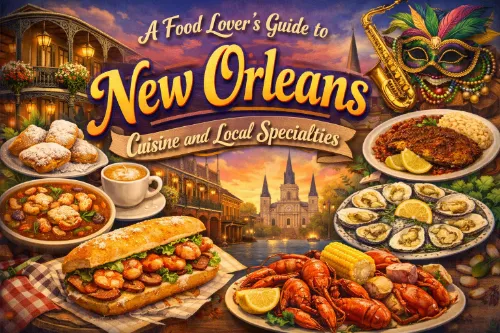
New Orleans is one of the world’s great food cities, and it fully earns its reputation as a paradise for food lovers. The city’s cuisine blends French, Spanish, African, Caribbean, and Native American influences into dishes that are bold, soulful, and unforgettable. From rich bowls of gumbo to powdered sugar–covered beignets, New Orleans cuisine is all about comfort, flavor, and heritage.
New Orleans is a world‑class food city known for its unique blend of Cajun and Creole cuisine, rich history, and iconic dishes.
Travelers come to enjoy gumbo, jambalaya, crawfish étouffée, red beans and rice, po’ boys, muffulettas, beignets, and pralines in neighborhoods like the French Quarter, Garden District, Bywater, and Mid‑City, many of which are broken down in this best neighborhoods in New Orleans for food guide.
Classic food experiences include brunch, oyster happy hours, crawfish boils, and late‑night eats after exploring the city’s music scene, all covered in detail across several New Orleans food guides.
Visitors should pace themselves, mix splurge meals with casual local joints, and make reservations at popular spots using roundups like where to eat in New Orleans.
Afterward, travelers can extend their culinary journey by exploring other American food cities like Chicago and Philadelphia or pairing New Orleans with a Napa Valley wine trip for a complete food‑and‑wine getaway.
If you’re planning a broader culinary road trip, you can also look at other top American food destinations in this guide to American food cities and wine regions. It’s a helpful overview if you want to pair New Orleans with cities like Chicago, Philadelphia, or Napa Valley on the same itinerary.
This food lover’s guide to New Orleans will walk you through the essentials: what to eat, where to find classic local specialties, and how to build a simple food itinerary that makes the most of your time in the city. For a deeper dive, bookmark this detailed New Orleans cuisine guide and this practical New Orleans food guide so you can cross‑reference dishes, neighborhoods, and restaurant ideas as you read.
Understanding New Orleans Cuisine: Cajun vs. Creole
Before you start ordering, it helps to understand two words you’ll see on nearly every menu: Cajun and Creole. Both are central to New Orleans cuisine, but they’re not the same.
Creole cooking developed in New Orleans itself and is often called “city food.” It grew out of European, African, and Caribbean influences and frequently uses rich sauces, tomatoes, butter, and cream. Classic Creole dishes include Shrimp Creole, oysters Rockefeller, and many versions of gumbo and red beans and rice. If you want to compare how New Orleans stacks up with other urban food hubs, you might enjoy this broader American food cities and wine regions overview.
Cajun cuisine, on the other hand, is “country food,” rooted in the Acadian people who were exiled from Canada and settled in rural Louisiana. Cajun food is hearty and rustic, focused on smoked meats, sausage like andouille, and one‑pot dishes such as jambalaya. While you can find Cajun dishes in New Orleans, you’ll especially see them in more casual spots, markets, and neighborhood joints.
The good news: you don’t have to choose. Most visitors sample both Cajun and Creole flavors as they eat their way across the city, and this flexible New Orleans cuisine guide can help you plan which styles to prioritize based on your taste.
Must‑Try Savory Dishes in New Orleans
When you’re planning what to eat in New Orleans, start with the classics. These are the dishes every food lover should try at least once, many of which are highlighted in this list of the best foods to try in New Orleans.
1. Gumbo
Gumbo is the iconic New Orleans dish: a thick, deeply flavored stew built on a dark roux (a mix of fat and flour) and the “holy trinity” of Cajun and Creole cooking—onion, bell pepper, and celery. From there, cooks add different proteins and seasonings to create their own style.
Common gumbo variations include:
- Chicken and andouille sausage gumbo
- Seafood gumbo with shrimp, crab, or oysters
- Mixed gumbo with several meats and seafood in one pot
Gumbo is usually served over rice in a deep bowl. It’s rich, warming, and one of the best introductions to New Orleans cuisine. For more context and dish ideas, this focused New Orleans cuisine guide breaks down how gumbo compares to other local specialties.
2. Jambalaya
Jambalaya is a one‑pot rice dish that shows off the city’s blend of influences. It’s often compared to Spanish paella, but with a distinctly Louisiana twist. Rice is simmered with sausage, vegetables, and sometimes chicken or shrimp until everything is tender and packed with flavor.
You’ll see two main styles:
- Creole jambalaya (sometimes called “red jambalaya”) includes tomatoes.
- Cajun jambalaya skips the tomatoes and is browner, smokier, and a bit drier.
If you’re hungry and need a filling, budget‑friendly option, jambalaya is one of the best dishes to order in New Orleans. You can see how it ranks with other beloved staples in this list of the best foods to try in New Orleans.
3. Étouffée
Étouffée literally means “smothered” in French, and that’s exactly what you get: seafood, usually crawfish or shrimp, smothered in a rich, thick, spiced sauce and served over rice. The sauce is made with a light roux, vegetables, and stock, creating a gravy that clings to every grain of rice.
Crawfish étouffée is a must for anyone visiting during crawfish season, but shrimp étouffée is delicious year‑round. It’s a perfect example of Creole comfort food—luxurious without feeling fussy, and it’s often highlighted in curated New Orleans food guides aimed at first‑time visitors.
4. Red Beans and Rice
Red beans and rice is one of the most beloved local specialties in New Orleans. Traditionally, families cooked it on Mondays, using leftover ham bones from Sunday dinner and letting the beans simmer all day while they did laundry. Today, you’ll still see red beans and rice as a Monday special on many restaurant menus.
The dish is simple but satisfying: red beans slow‑cooked with seasoning meats, onions, garlic, and spices until creamy, then served over white rice. It’s often paired with andouille sausage or hot sausage on the side. For travelers, it’s a tasty, affordable way to experience authentic New Orleans comfort food, and it appears on almost every “what to eat” list, including this New Orleans food guide.
5. Po’ Boys
The po’ boy is New Orleans’ signature sandwich. Built on light, crusty French bread, it’s usually stuffed with fried seafood or roast beef and dressed with lettuce, tomato, pickles, and mayonnaise.
Popular po’ boy fillings include:
- Fried shrimp
- Fried oysters
- Fried catfish
- Roast beef with gravy
Order your po’ boy “dressed” if you want all the standard toppings. Po’ boys are easy to find throughout the city and are ideal for a quick lunch when you’re exploring neighborhoods like the French Quarter, the Garden District, or Mid‑City. If you need exact venue ideas, this guide on where to eat in New Orleans highlights reliable spots for classic sandwiches and other casual meals.
6. Muffuletta
The muffuletta (or muffuletta sandwich) is another New Orleans icon with Sicilian roots. It’s made on a large, round loaf of sesame bread and layered with Italian cold cuts—ham, salami, mortadella, provolone—and a bold olive salad.
Because it’s big and filling, many visitors share a whole muffuletta or order a half. It’s a great option if you’re planning a picnic by the Mississippi River or in a park and want something you can easily split. Muffulettas are frequently called out in specialized New Orleans cuisine guides as a must‑try sandwich, right alongside po’ boys.
7. Other Local Favorites to Look For
As you read menus around New Orleans, watch for these other savory specialties:
- Chargrilled or charbroiled oysters
- Turtle soup or mock turtle soup
- Boudin and boudin blanc (rice‑and‑pork sausages)
- Andouille sausage in gumbos and stews
- Shrimp Creole over rice
Each dish tells a different story about how New Orleans became such a diverse and flavorful food city. You can see where these dishes fit into a full trip plan in this curated New Orleans food guide.
Sweet Treats and Desserts You Can’t Miss
No food lover’s guide to New Orleans would be complete without dessert. The city is famous for sugary, indulgent treats that pair perfectly with strong coffee or a nightcap.
8. Beignets
Beignets are square, deep‑fried pieces of dough served hot and buried under a mountain of powdered sugar. They’re crisp on the outside, soft inside, and best eaten immediately.
You’ll find beignets at well‑known cafés and smaller bakeries across the city. Many visitors consider a plate of beignets and a cup of chicory coffee an essential New Orleans breakfast or late‑night snack. For more dessert ideas beyond beignets, check the sweet section of this New Orleans food guide.
9. Pralines
Pralines are sweet, melt‑in‑your‑mouth candies made from sugar, butter, cream, and pecans. You’ll see them wrapped and sold in candy shops, markets, and souvenir stores all over New Orleans.
Because they travel well, pralines are one of the easiest local specialties to take home as gifts. Just be sure to taste at least one warm, freshly made praline while you’re in the city.
10. King Cake (Seasonal)
If you visit New Orleans between early January and Mardi Gras, you’ll see king cakes everywhere. These ring‑shaped, brioche‑style cakes are usually decorated with purple, green, and gold sugar and often filled with cream cheese, cinnamon, or fruit.
A small plastic baby is baked inside the cake. Tradition says whoever gets the slice with the baby has to buy the next king cake or host the next party. It’s a fun, shareable dessert that’s deeply tied to local culture and often discussed in seasonal New Orleans cuisine roundups.
11. Other Sweet Specialties
Beyond the big names, keep an eye out for:
- Bread pudding with whiskey or rum sauce
- Bananas Foster (a tableside flamed banana dessert invented in New Orleans)
- Sno‑balls, a local twist on shaved ice with soft, fluffy ice and creative syrups
If you have a sweet tooth, New Orleans will keep you more than busy.
Where to Eat: Key New Orleans Food Neighborhoods
New Orleans is compact, which makes it easy to build a food‑focused itinerary. This dedicated guide to the best neighborhoods in New Orleans for food is a great starting point if you want to go neighborhood by neighborhood.
12. French Quarter
The French Quarter is often the first stop for visitors, and for good reason. You’ll find historic restaurants, lively cafés, and bars serving classic cocktails and late‑night snacks.
In this neighborhood, you can:
- Start your day with beignets and coffee
- Try your first bowl of gumbo or jambalaya
- Enjoy oysters, po’ boys, and Creole favorites
While some spots are touristy, they still give you a solid introduction to classic New Orleans flavors. For specific restaurant ideas, see this practical guide on where to eat in New Orleans.
13. Garden District and Uptown
The Garden District and Uptown offer a mix of elegant restaurants and relaxed neighborhood bistros. This is a great area if you want:
- Long, leisurely brunches with biscuits, grits, and cocktails
- Refined takes on Creole and Southern dishes
- Tree‑lined streets and historic homes to walk off your meal
Taking the streetcar up St. Charles Avenue and hopping off for lunch or dinner is a simple way to combine sightseeing with great food. The best neighborhoods in New Orleans for food guide offers more context on how the Garden District compares to areas like the French Quarter or Marigny.
14. Bywater, Marigny, and Treme
These more residential neighborhoods are where you’ll find a blend of soul food, modern takes on Cajun and Creole cuisine, and live music venues that serve excellent bar food.
Here, you can:
- Try fried chicken, red beans and rice, or smothered pork chops
- Eat in casual neighborhood joints packed with locals
- Pair your dinner with a night of jazz or brass band music
Visiting these areas gives you a more local, less tourist‑centric view of the New Orleans food scene. They’re also a major focus in this neighborhood‑based New Orleans food guide.
15. Mid‑City and the Warehouse District
Mid‑City and the Warehouse District (also called the Arts District) are filled with creative restaurants, brewpubs, and markets.
In these parts of the city, look for:
- Modern takes on traditional New Orleans dishes
- Excellent seafood and raw bars
- Cozy bakeries and coffee shops for beignets, pastries, and pralines
If you like mixing food with museums, galleries, or street art, this part of New Orleans is ideal. Again, the best neighborhoods in New Orleans for food breakdown can help you decide how much time to spend in each area.
Classic New Orleans Food Experiences
To make your trip extra memorable, plan around a few food experiences instead of just individual meals.
Here are some to consider:
- Traditional New Orleans brunch – Think shrimp and grits, eggs Sardou, biscuits, and strong coffee or cocktails.
- Oyster happy hour – Many bars and restaurants offer discounted raw or chargrilled oysters in the late afternoon.
- Crawfish boil (in season) – If you visit during crawfish season, look for a local bar or restaurant hosting a boil with spicy crawfish, corn, and potatoes.
- Late‑night eats – After a night on Bourbon Street or Frenchmen Street, grab a po’ boy, slice of pizza, or plate of fries to soak up the evening.
If you’d like to pair New Orleans with other iconic food cities on the same trip, you can compare this guide with a broader American food cities and wine regions resource.
Tips for Food‑Loving Visitors to New Orleans
New Orleans is an easy city for food lovers, but a few simple tips will help you enjoy more and stress less.
- Pace yourself. Many New Orleans dishes are rich and filling. Share plates or order small portions so you can sample more local specialties without getting overwhelmed.
- Mix splurges with casual eats. Plan a couple of big dinners at well‑known restaurants, then balance them with more affordable po’ boys, red beans and rice, or jambalaya at neighborhood spots. Use this roundup of where to eat in New Orleans to mix high‑end and casual stops.
- Make reservations when possible. Popular restaurants often book up, especially on weekends or during festivals. Reserve in advance so you don’t miss your must‑try places.
- Check opening days and times. Some classic restaurants close a couple of days a week or only serve brunch on specific days. A quick check before you go can save you a wasted trip.
- Ask locals. Bartenders, shop owners, and rideshare drivers are great sources of real‑time food recommendations that don’t always show up in guides.
If you have dietary restrictions—like avoiding shellfish, pork, or gluten—say so when you order. Many kitchens can point you toward safe options, even in such a seafood‑heavy city.
Bringing New Orleans Flavors Home
You don’t have to leave New Orleans cuisine behind when your trip ends. With a few smart purchases and some simple recipes, you can recreate a bit of the city in your own kitchen.
Consider bringing home:
- Creole and Cajun spice blends
- Hot sauces made in Louisiana
- Coffee with chicory
- Packaged beignet mix or pralines
At home, test out easy New Orleans‑inspired recipes like:
- A simple chicken and sausage gumbo
- Red beans and rice using smoked sausage
- Oven‑baked beignets dusted with powdered sugar
Cooking these dishes keeps your travel memories alive and helps you understand New Orleans cuisine on a deeper level. If you want inspiration for your next U.S. food trip after New Orleans, check out this guide to Chicago food and its best deep dish pizza, or explore a Philadelphia food guide focused on cheesesteaks and beyond.
You can even pivot from food to wine by planning a follow‑up escape to California using this Napa Valley wine guide, a list of the best wineries to visit in Napa Valley, or a value‑focused Napa Valley wine trip on a budget.
What to Eat in New Orleans
Top 10 Classic New Orleans Dishes to Try
- Gumbo
- Jambalaya
- Crawfish étouffée
- Red beans and rice
- Po’ boy
- Muffuletta
- Beignets
- Pralines
- Chargrilled oysters
- Bread pudding or Bananas Foster
For more detail on each of these, skim this targeted list of the best foods to try in New Orleans.
Easy New Orleans Food Itinerary for 1 Day
- Breakfast: Beignets and coffee
- Lunch: Shrimp po’ boy and fries
- Afternoon snack: Praline or sno‑ball
- Dinner: Gumbo or jambalaya with a side of red beans and rice
- Late‑night: Split a muffuletta or grab another small snack in the French Quarter
If you’re extending your trip to other cities, you can compare your New Orleans day with what to eat in Chicago or Philadelphia using their dedicated city guides.
Frequently Asked Questions
What is the best time of year to visit New Orleans for food?
The best time to visit New Orleans for food is from late fall to early spring, when the weather is cooler and major food‑related events like Mardi Gras and crawfish season overlap. Summer can be very hot and humid, but you’ll still find great restaurants and fewer crowds.
How many days should I spend in New Orleans if I want a food‑focused trip?
For a food‑focused trip, plan at least 3 to 4 days in New Orleans so you can explore multiple neighborhoods, try both Cajun and Creole dishes, and fit in a brunch, a food tour, and at least one special‑occasion dinner. Longer stays let you slow down and avoid packing too many heavy meals into each day.
Are there good vegetarian or vegan options in traditional New Orleans cuisine?
Yes, more restaurants now offer vegetarian and vegan versions of classic dishes, such as veggie gumbo, bean‑based po’ boys, and plant‑based red beans and rice. Look for modern bistros, health‑focused cafés, and menus that clearly mark vegan or vegetarian options.
Can I find gluten‑free dishes in classic New Orleans restaurants?
You can find gluten‑free options, but you’ll need to choose carefully and communicate with your server. Many grilled seafood dishes, salads, and rice‑based plates like jambalaya or some gumbos can be prepared gluten‑free, though cross‑contamination may still be a concern in busy kitchens.
Is New Orleans food generally spicy, and can I ask for milder versions?
Many New Orleans dishes are well‑seasoned but not always extremely spicy. If you’re sensitive to heat, tell your server you prefer mild spice; in many cases, they can adjust seasonings or serve hot sauce on the side so you control the level.
What is the average cost of a meal at a mid‑range New Orleans restaurant?
At a mid‑range restaurant in New Orleans, expect to pay around a moderate price for a main dish, plus extra for drinks, tax, and tip. Po’ boys, red beans and rice, and daily lunch specials are usually more budget‑friendly than multi‑course Creole dinners.
Do I need to reserve restaurants in advance, or can I usually just walk in?
For popular restaurants, especially on weekends and during major events or festivals, reservations are strongly recommended. Casual spots, po’ boy shops, and many neighborhood joints often accept walk‑ins, but you may still face a short wait at peak times.
Are there any famous New Orleans cooking classes or food tours for visitors?
Yes, New Orleans is known for its cooking schools and food tours that teach you how to make gumbo, jambalaya, and other local specialties. Food walking tours through the French Quarter or the Marigny let you sample multiple dishes in one outing while learning about the city’s culinary history.
What are some kid‑friendly New Orleans dishes for families traveling with children?
Kid‑friendly New Orleans dishes include fried chicken, macaroni and cheese, simple grilled fish, mild red beans and rice, and plain beignets. Many restaurants can adapt dishes by leaving off spicy sauces or seasonings for younger diners.
Is tipping different in New Orleans restaurants compared to other U.S. cities?
Tipping in New Orleans follows standard U.S. customs. Most diners leave around 15–20% of the pre‑tax bill for table service, more for exceptional service, and a small amount for counter‑service or takeaway if you feel inclined.
Can I safely drink tap water in New Orleans, or should I stick to bottled water?
In general, tap water in New Orleans meets safety standards, and most visitors drink it without issues. If you prefer, you can always choose bottled or filtered water, especially if you have a sensitive stomach when traveling.
What are some late‑night food options if I’m out past midnight in the French Quarter?
After midnight in the French Quarter, you can usually find po’ boy shops, pizza slices, burger joints, and bars with short menus still serving food. Some classic cafés and diners also stay open late or even 24 hours, making it easy to grab a snack after enjoying live music.
Are there any must‑visit food markets or grocery stores for local ingredients?
Yes, New Orleans has local markets and specialty shops where you can buy regional spices, hot sauces, coffee with chicory, and fresh seafood. These spots are perfect if you’re staying in a rental with a kitchen or want to bring local ingredients home.
How do I recognize tourist‑trap restaurants versus authentic local spots?
Tourist‑heavy restaurants often rely on aggressive street advertising, very long menus covering every possible style, and inflated prices for basic dishes. Authentic local spots tend to have shorter menus focused on regional specialties, plenty of local diners, and strong word‑of‑mouth recommendations.
What should I wear to classic New Orleans restaurants—are there dress codes?
Dress codes vary: casual eateries accept shorts and T‑shirts, while classic Creole restaurants may prefer smart‑casual attire, such as collared shirts and dresses. When in doubt, check the restaurant’s website or aim slightly more polished than your daytime sightseeing clothes.
Are there halal or kosher dining options in New Orleans?
Halal and kosher options are more limited than standard offerings, but a handful of restaurants, food trucks, and specialty stores cater to these dietary needs. It’s best to research in advance, confirm certifications, and call ahead to verify current menus.
How early do bakeries and cafés open if I want beignets or breakfast before sightseeing?
Many New Orleans cafés and bakeries open in the early morning, making it easy to grab beignets, coffee, or a light breakfast before tours and activities. However, exact hours vary, so it’s wise to check opening times the day before your visit.
What are some good New Orleans food souvenirs that travel well in a suitcase?
Popular food souvenirs include packaged beignet mix, pralines, hot sauces, Creole and Cajun spice blends, and locally roasted coffee. Most are shelf‑stable and easy to pack, but always follow airline rules for carrying liquids in your luggage.
Can I find non‑seafood options easily if I’m allergic to shellfish?
Yes, you can find many non‑seafood options such as fried chicken, grilled meats, vegetarian dishes, salads, and some versions of jambalaya or red beans and rice without shellfish. Be sure to clearly mention your shellfish allergy so the kitchen can avoid cross‑contamination where possible.
Are there any important food etiquette rules I should know before dining in New Orleans?
New Orleans dining etiquette is relaxed but respectful: arrive on time for reservations, wait to be seated, and treat staff courteously. It’s also common to linger over meals, especially brunch and dinner, so don’t feel rushed unless the restaurant specifically needs the table.

I’m John Michael Palmes, an SEO practitioner with over three years of hands-on experience in search engine optimization and digital marketing. I help websites improve visibility, build effective SEO content strategies, and rank better on Google using practical, data-driven approaches.
My focus is on on-page SEO, keyword research, and content optimization—the fundamentals that help both search engines and users understand a site clearly. I continuously test, analyze results, and refine strategies, sharing honest and actionable SEO insights as search algorithms evolve.