
Popular Lucky Symbols and Their Meanings
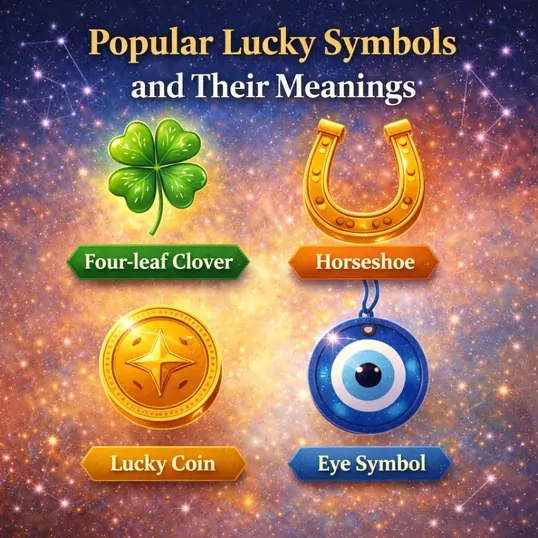
Lucky symbols are cultural representations associated with protection, prosperity, or positive outcomes rather than guarantees of luck.
Table of Contents
Popular Lucky Symbols Explained
Lucky symbols appear across cultures, traditions, and belief systems. While interpretations differ, these symbols share a common purpose: they represent hope, protection, and positive intention, not certainty.
Understanding lucky symbols means understanding cultural meaning, not superstition.
What Makes a Symbol “Lucky”
A symbol becomes associated with luck when it:
- appears repeatedly in cultural traditions
- represents protection or abundance
- is passed down through shared belief
Lucky symbols do not create outcomes. Instead, they reflect values people wish to attract or protect.
The Four-Leaf Clover
The four-leaf clover is one of the most recognised lucky symbols worldwide.
Its meaning is often linked to:
- rarity
- fortune
- positive opportunity
Historically, its symbolism comes from its uncommon nature rather than mystical power. The clover represents the idea that rare moments are worth noticing and valuing.
The Horseshoe
The horseshoe symbol has roots in European traditions.
It is commonly associated with:
- protection
- stability
- safeguarding spaces
The horseshoe’s connection to luck comes from its historical role in travel and protection rather than magical belief.
Lucky Coins
Coins are widely recognised symbols of luck across cultures.
They often represent:
- prosperity
- continuity
- value
Lucky coins symbolize the idea of circulation and sustainability, reflecting how resources move rather than guaranteeing wealth.
The Eye Symbol
Eye symbols appear in many cultures as signs of awareness and protection.
They are commonly associated with:
- mindfulness
- observation
- safeguarding intention
The eye symbol represents attentiveness rather than supernatural defence.
What Lucky Symbols Do Not Do
Lucky symbols do not create outcomes, guarantee success, or replace effort. They represent cultural meaning and intention.
Why Lucky Symbols Remain Popular Today
Lucky symbols continue to appear in modern life because they:
- carry shared meaning
- support emotional reassurance
- reflect cultural identity
People use them as reminders, not solutions.
How to View Lucky Symbols Responsibly
A practical way to view lucky symbols is as:
- cultural storytelling
- visual reminders
- expressions of hope
They gain meaning from context, not power.
Final Thoughts
Lucky symbols are not tools of control. They are cultural expressions shaped by history, tradition, and shared belief.
When understood properly, lucky symbols offer insight into what societies value rather than promises of what will happen.
That is the real meaning behind lucky symbols.
Common Questions About Lucky Symbols
What is considered a lucky symbol?
A lucky symbol is a cultural sign associated with positive values such as protection, prosperity, or hope. Its meaning comes from tradition and shared belief rather than proven effects.
Do lucky symbols actually bring good luck?
Lucky symbols do not cause events or guarantee outcomes. They function as cultural reminders and expressions of intention rather than tools that control results.
Why do different cultures have different lucky symbols?
Lucky symbols develop from history, environment, and shared experiences. Each culture assigns meaning based on what it values, fears, or wishes to protect.
Is it okay to use lucky symbols without believing in them?
Yes. Many people use lucky symbols as decorative or symbolic items without attaching supernatural meaning. Their value often lies in cultural appreciation or personal motivation.

Ivy Rose is a content writer with more than six years of experience, and a deep passion for discovering and connecting life’s patterns through Astrology, Horoscopes, and Feng Shui.
She shares simple tips, core concepts, and meaningful insights to help readers understand what’s happening in their lives as they read their stars, bringing clarity, balance, and direction through spiritual guidance.