If you’ve been in SEO long enough, you know one thing:
Google changes fast, but the fundamentals never lie.

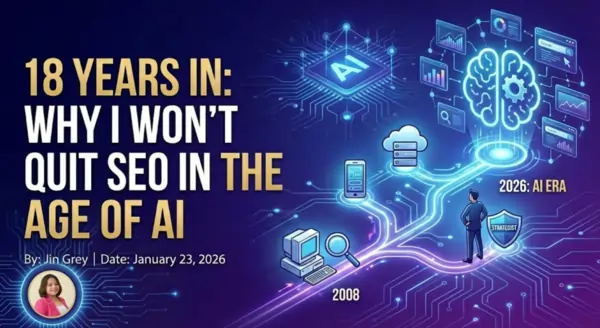
I’ve survived every major core update since 2008 — Penguin, Panda, Medic, Helpful Content, SpamBrain, Core Web Vitals — and honestly, 2026 feels like a big turning point. Not because SEO is dying (it never will), but because the way we create and consume information is evolving at record speed.
So here’s my take — straight from experience, not AI fluff — on what’s coming in SEO this 2026, and how you can stay ahead of everyone else still chasing outdated tactics.
1. Search is finally becoming “AI-first” — and that’s not a bad thing
We’ve already seen the signs. Google’s AI Overviews, generative answers, and zero-click results are no longer just experiments — they’re slowly becoming part of everyday search behavior.
Most SEOs panic when they hear “AI-powered search,” but here’s the truth:
AI won’t kill SEO.
AI will kill low-effort SEO.
If your content is thin, generic, or written just to rank — it’s over.
But if you can offer real experience, clarity, depth, and perspective?
Google still needs that. Users still need that. AI still needs that.
This is actually the best time for real SEO experts to shine.
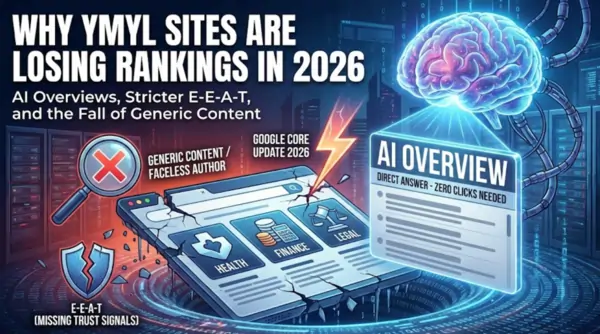
2. EEAT is no longer a guideline — it’s the gatekeeper
Let’s be honest:
Google is tired of anonymous, mass-produced, AI-filled content.
In 2026, it’s clear:
If users don’t trust the writer, Google won’t trust the page.
This is the year where:
- real author identity
- real career experience
- real expertise
- real-life examples
- real opinions and analysis
…become ranking factors in practice, not just theory.
Generic “SEO copywriters” are going to struggle.
Experts with lived experience — like us — will dominate.
3. User intent is the new keyword strategy
Anyone can stuff keywords.
Very few people can actually help the user.
Google’s direction is clear:
If your page doesn’t satisfy the intent better than any competitor, it won’t rank — even if your keyword density is “perfect.”
In 2026, the question isn’t:
“How many keywords should I include?”
It’s:
“Did I solve the user’s problem better, clearer, and faster than everyone else?”
If the answer is no, the ranking won’t stick.
4. Technical SEO will separate serious websites from hobby projects
This is the part nobody wants to hear:
Slow websites are dead websites in 2026.
Not because of penalties —
but because Google simply has better options to rank.
Technical SEO this year matters more because:
- users bounce faster
- AI summaries pull from clean, structured content
- site experience is a trust signal
- slow pages ruin search experience
If your Core Web Vitals are trash, forget rankings.
Fast + clean + stable = visibility.
5. Zero-click search will grow — but don’t panic
Yes, more users will get answers straight from Google or AI Overviews.
But here’s the catch:
When people search with intent to do, learn deeply, compare, or buy, they still click.
What loses traffic?
Surface-level content.
What keeps traffic?
- In-depth insights
- Tools
- Templates
- Case studies
- Visuals
- Human perspective
- Unique angles
AI can summarize facts.
Only you can provide experience.
That’s your edge.
6. AI content isn’t the enemy — low-value content is
AI is a tool, not the writer.
Use it for:
- research
- outlining
- summarizing
- brainstorming
But the brain — the strategy — the voice — the perspective?
That has to be human.
In 2026, the content that ranks isn’t “AI-free.”
It’s AI-assisted, human-led, expert-backed.
Let AI help you work faster.
Don’t let it replace your expertise.
7. Multi-format content will outperform text-only blogs
If your website is still relying on walls of text, you’re leaving money on the table.
2026 is the year where:
- images
- infographics
- short videos
- charts
- audio snippets
- interactive tools
…become part of your SEO strategy.
Why?
Because Google wants to see that your content genuinely helps users — not just with words, but with visuals, examples, and demonstrations.
This also improves dwell time, engagement, and “user satisfaction signals” — which directly influence rankings now.
8. Topical authority will beat backlinks in most industries
Backlinks still matter.
But topical authority matters more.
If your site becomes the go-to resource for a niche —
Google treats you like a trusted expert.
How to build topical authority in 2026:
- focus on pillars and clusters
- avoid random content
- build depth, not volume
- connect articles with strong internal linking
- stick to your niches
Authority beats brute-force link building every day.
9. The future of SEO is SXO — Search Experience Optimization
2026 is the year SEO finally moves beyond ranking tactics.
It becomes:
Search + User Experience + Trust + Value.
SXO is the new holy grail:
- Speed
- Design
- Readability
- User intent satisfaction
- Navigation
- Content clarity
- Trust signals
Pages that FEEL good to use will rank.
Pages that frustrate users will disappear.
10. Human brands will outrank faceless websites
People trust people.
Not anonymous websites with no identity.
In 2026, your biggest ranking weapon is your brand voice:
- your story
- your experience
- your insights
- your name
- your reputation
Google is trying to clean the internet.
Human creators are the solution.
Final Thoughts: 2026 Belongs to Real SEO Specialists
The people who will win in 2026 are not the ones who chase hacks.
It’s the people who build:
- helpful content
- strong brands
- expertise
- fast websites
- user satisfaction
- trust
SEO isn’t dying.
It’s evolving — and it’s evolving toward exactly the kind of SEO you’ve been doing for 17+ years, Jin.
Real.
Human.
Strategic.
Experience-driven.
If you stay consistent with this approach, 2026 won’t just be a good year for you — it will be your strongest year yet.

Hi, I’m Jean, but almost everyone knows me as Jin Grey. The name wasn’t something I created for branding—it grew naturally from who I am and how I work. “Jin” comes from my real name, Jean, and “Grey” represents the unconventional way I approach SEO and digital problem-solving. I’ve always been the kind of person who sits between extremes—creative yet analytical, strategic yet flexible, ethical yet realistic. Grey Hat SEO fit me perfectly, so the name stayed.