
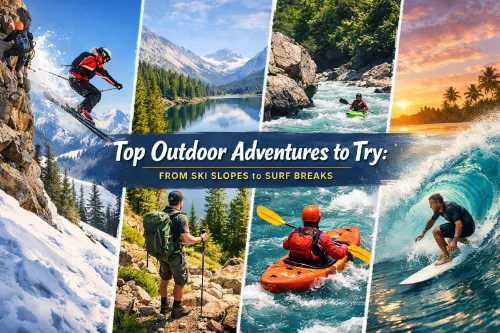
Top outdoor adventures to try include skiing at beginner‑friendly ski resorts, hiking well‑marked trails, surfing gentle beach breaks, kayaking calm lakes or coastal waters, and guided desert adventures. Each activity can be adapted for beginners with lessons, rental gear, and clear safety guidance, so you do not need advanced skills to start. To choose the right adventure, match the environment (snowy mountains, coast, rivers, or desert) to your preferences and travel season, then plan around one main activity and one or two easier add‑ons for variety.
Quick answer: The top outdoor adventures most travelers should try at least once include skiing at beginner‑friendly ski resorts, hiking accessible trails, surfing gentle beach breaks, kayaking calm lakes or coastal waters, and joining guided desert adventures. Each activity can be adapted for beginners, with lessons, rentals, and safety support available in most major destinations.
At a glance, the best outdoor adventures are:
- Skiing or snowboarding at a well‑run ski resort
- Day hikes and easy trekking on marked hiking trails
- Surfing small, consistent beach breaks with a surf school
- Kayaking on calm lakes, rivers, or coastal water trails
- Desert adventures like dune bashing, camel trekking, and sandboarding
Use this guide to understand what each activity involves, who it’s best for, and how to plan a safe, memorable trip from ski slopes to surf breaks.
Why Outdoor Adventures Are Worth It
Outdoor adventures give you more than photos. They help you move your body, clear your mind, and experience nature in a direct, personal way. Skiing, hiking, surfing, kayaking, and desert adventures each offer a different mix of adrenaline, scenery, and challenge.
You do not have to be an athlete to get started. Many destinations now offer:
- Beginner‑friendly ski resorts with lessons and rentals
- Well‑marked hiking trails close to cities
- Soft‑wave surf breaks ideal for first‑timers
- Guided kayaking tours for all levels
- Organized desert adventures with local guides
This combination makes outdoor adventures accessible to almost anyone willing to plan a little and respect basic safety guidelines.
How to Plan Your Adventure Trip
When you plan an outdoor adventure, think about:
- Season:
- Ski slopes are best in winter or early spring.
- Surf breaks, hiking trails, kayaking, and desert trips often work better in warmer months.
- Location and terrain:
- Mountains for ski resorts and trekking.
- Coasts for surfing and sea kayaking.
- Lakes and rivers for calm paddling.
- Arid regions for desert adventures.
- Time and budget:
- Short trips: focus on one main activity.
- Longer trips: combine ski slopes and surf breaks, or hiking, kayaking, and desert tours in one region.
Choose one “hero” adventure (for example, a ski holiday) and then add 1–2 lighter activities (like a day hike or easy kayaking tour) around it.
Ski Adventures: From Beginner Slopes to Alpine Resorts
Skiing is a classic winter adventure that combines speed, skill, and mountain scenery. Modern ski resorts are designed to support complete beginners.
What to Expect on Ski Slopes
Most ski slopes use clear colors and symbols to show difficulty:
- Green: Beginner runs, wide and gentle
- Blue: Intermediate runs, slightly steeper
- Black: Advanced runs, steeper and narrower
You ride up on chairlifts or gondolas, then ski or snowboard down at your own pace. Alpine skiing focuses on these downhill runs, while some areas also offer cross‑country and backcountry options for more experienced skiers.
Booking a lesson on day one is one of the smartest decisions for first‑time skiers. A detailed beginner’s guide to skiing walks you through what to expect, what gear you need, and how to make your first days on snow less stressful. You can layer that with practical skiing tips for beginners to better understand basic techniques before you arrive.
Essential Ski Gear (Even If You Rent)
You can often rent skis, boots, poles, and helmets at the resort, but understanding what you need helps:
- Skis or snowboard that match your height and skill level
- Boots that fit snugly but comfortably
- Helmet and goggles
- Waterproof jacket and pants
- Warm base layers, gloves, and socks
For a more technical breakdown of what to wear and how to handle gear, REI’s how to ski and this list of what you need to go skiing for the first time are excellent pre‑trip resources.
Hiking and Trekking: Accessible Trails for Every Level
Hiking is one of the most flexible outdoor adventures. You can start with a short, flat loop and eventually work up to summit hikes or multi‑day treks.
Types of Hiking Adventures
Common hiking options include:
- Day hikes: Short routes you can finish in 2–6 hours
- Summit hikes: Trails that lead to peaks or famous viewpoints
- Multi‑day treks: Long routes where you camp or stay in huts or lodges
For beginners, start with well‑marked hiking trails close to towns or popular natural parks.
Basic Hiking Gear and Safety
Even easy hikes are safer and more enjoyable when you carry:
- Comfortable walking or hiking shoes
- A small backpack with water, snacks, and a light jacket
- Sun protection (hat, sunglasses, sunscreen)
- Offline maps or a GPS app
Always check trail distance, elevation gain, and weather before you go, and tell someone your plan if the area is remote.
Surfing: Beach, Reef, and Point Breaks Explained
Surfing is one of the most iconic outdoor adventures and is strongly associated with freedom, flow, and fun. The key idea is simple: you paddle into a wave and ride it as it breaks toward shore. The details depend on the type of surf break.
Types of Surf Breaks
- Beach breaks: Waves that break over sand. These are usually best for beginners because falls are more forgiving.
- Reef breaks: Waves that break over rock or coral. They can be powerful and are usually better for advanced surfers.
- Point breaks: Waves that peel along a point of land, often creating long, smooth rides.
When you are new, look for beginner‑friendly surf spots with small, slow, sand‑bottom waves. This video on how to choose a beginner surf spot explains why “mushy” beach breaks with lots of white‑water are ideal for learning.
If you are ready to invest in your own equipment, you can also watch guides on choosing a beginner surfboard to understand volume, length, and shapes for new surfers.
Surf Gear and Etiquette for Beginners
To start surfing, you need:
- A soft‑top or longboard that floats well and feels stable
- A wetsuit or rash guard, depending on water temperature
- Surf wax or a traction pad for grip
Surf etiquette matters as much as technique. Beginner surf resources often stress not “dropping in” on someone else’s wave, staying clear of crowded peaks, and talking to lifeguards or local surf shops about safe zones before you paddle out.
Kayaking: Calm Water, Big Views
Kayaking is ideal if you want a more relaxed, nature‑focused adventure. It can be as easy or intense as you like, depending on where you paddle.
Types of Kayaking Adventures
- Lake kayaking: Calm, flat water, ideal for beginners and families
- River kayaking: Can range from gentle flows to whitewater (check the difficulty rating)
- Sea kayaking: Coastal routes with waves, wind, and tides to manage
For most first‑timers, guided tours on lakes or calm coastal waters are the best starting point.
Kayaking Safety Essentials
Key safety basics for kayaking include:
- Always wear a properly fitted life jacket.
- Check wind, weather, and water conditions before you go.
- Choose routes that match your skill and fitness level.
A detailed article on kayaking safety tips every beginner must know covers life jackets, weather checks, route planning, and self‑rescue basics in simple language. For an additional checklist‑style overview, this guide to essential kayaking safety rules for beginners explains how to inspect your kayak, respect weight limits, and build skills gradually.
Combining kayaking with camping or hiking can create a multi‑day adventure travel experience.
Desert Adventures: Dunes, Stars, and Silence
Desert adventures feel completely different from mountain or coastal trips. Instead of snow or waves, you get huge skies, sand dunes, and silence.
Popular Desert Activities
- Dune bashing in 4×4 vehicles with experienced drivers
- Camel trekking across dunes at sunrise or sunset
- Sandboarding down steep dunes
- Stargazing far from city lights
Most travelers book guided desert adventures because local operators understand the terrain, weather, and safety requirements.
Staying Safe in the Desert
Deserts can be intense: very hot during the day and surprisingly cool at night. To stay comfortable:
- Wear light, breathable clothing that covers your skin
- Use a wide‑brimmed hat, sunglasses, and sunscreen
- Drink more water than you think you need
- Plan active parts of the day for early morning or late afternoon
Pack a light jacket for evenings, especially if you plan to camp or stay for stargazing.
How to Combine Ski Slopes and Surf Breaks in One Trip
One powerful way to stand out as a traveler is to combine very different outdoor adventures in a single itinerary. In some regions you can ski and surf in the same country—and sometimes even on the same day.
Key Planning Factors
When you want both ski slopes and surf breaks in one trip, think about:
- Distance: How far is the mountain from the coast?
- Seasonal overlap: When are both snow and waves good in the same area?
- Packing: You need layers for cold mountains and lighter gear for warm beaches.
A common strategy is to:
- Start with a 3–4 day ski holiday at an accessible ski resort.
- Transfer to the coast for 3–5 days of surfing, beach time, or even sea kayaking.
This gives you a strong “from ski slopes to surf breaks” narrative and plenty of content opportunities.
Multi‑Adventure Packing Checklist
If you plan to ski, hike, surf, kayak, and visit the desert on the same trip, minimize what you carry by focusing on versatile gear.
Useful essentials include:
- A layer system: moisture‑wicking base layers, warm mid‑layer, and a waterproof shell
- One waterproof jacket suitable for snow and rainy coastal days
- Sturdy shoes for walking and light hiking trails, plus sandals or water shoes
- A compact daypack for hikes, desert trips, and general exploring
- A small first‑aid kit, headlamp, and power bank
Rent specialized gear (skis, surfboards, wetsuits, some kayaking equipment) at your destination to save luggage space.
Safety, Sustainability, and Responsible Adventure Travel
To make sure your adventures are safe and ethical:
- Match the activity to your true fitness and comfort level.
- Listen to guides and instructors, especially in snow, water, and desert environments.
- Check local weather and conditions before you head out.
Apply simple “Leave No Trace” ideas:
- Stay on marked hiking trails where possible.
- Pack out all your trash.
- Do not disturb wildlife.
- Respect local cultures, rules, and sacred sites.
This approach protects ski slopes, surf breaks, rivers, lakes, and deserts so others can enjoy them too.
FAQ: Outdoor Adventures From Ski Slopes to Surf Breaks
What are the best outdoor adventures for beginners?
The most beginner‑friendly outdoor adventures are:
- Skiing at ski resorts with green slopes and lessons
- Short day hikes on marked trails
- Surfing at small beach breaks with a surf school
- Guided lake or coastal kayaking tours
External guides for beginner skiing, beginner surf spots, and kayaking safety can help you prepare before you go.
Is skiing or surfing harder to learn?
Both skiing and surfing have steep learning curves, but many people find skiing easier at the very beginning because you learn on controlled ski slopes with clear progression and formal lessons. Surfing is more dependent on ocean conditions, but with a big soft‑top board and small beach‑break waves, progress can still be fast.
Do I need to be very fit for outdoor adventures?
No. You do not need to be extremely fit to enjoy most beginner‑level outdoor adventures. However:
- Basic cardio helps for hiking and skiing.
- Comfort in the water is important for surfing and kayaking.
If you are unsure, start with short, guided experiences and build up slowly.
How do I choose between skiing, hiking, surfing, kayaking, and desert adventures?
Ask yourself:
- Do you prefer cold mountains, warm beaches, lakes and rivers, or arid landscapes?
- Do you like speed (skiing, surfing), steady movement (hiking, kayaking), or vehicle‑based thrill (dune bashing)?
Start with the environment and style that excites you the most, then add complementary activities around it.
Additional Frequently Asked Questions
What outdoor adventure is best for people who are afraid of heights?
Ground‑level activities like kayaking, easy coastal walks, flat forest hikes, and gentle desert tours are ideal because they avoid cliffs, steep drop‑offs, and high viewpoints.
Which outdoor adventures are most suitable for families with young children?
Short, well‑marked hikes, calm lake kayaking with life jackets, beginner‑friendly beach days with simple bodyboarding, and gentle desert camel rides work well for most families.
How can I try outdoor adventures if I don’t know how to swim?
Choose land‑based activities like hiking, biking, or desert tours, or join water activities that require life jackets and stay in shallow, calm areas, being honest with guides about your skills.
What are the most budget‑friendly outdoor adventures for beginners?
Day hikes, city‑adjacent nature walks, DIY beach days, and low‑cost kayaking or paddleboard rentals are usually more affordable than ski trips or long guided excursions.
How do I find reliable local guides for outdoor activities in a new country?
Search recent reviews on major travel platforms, look for licensed operators, check for safety information on their site, and prioritize companies recommended by official tourism boards or trusted blogs.
What outdoor adventures are best if I only have a weekend?
Pick one base destination and choose activities that fit within a half or single day, like a local hike, a short surf lesson, a half‑day kayak tour, or a sunset desert trip.
How can I stay safe if I’m doing outdoor adventures while traveling solo?
Stick to popular, well‑marked routes, join group tours, share your plans and timings with someone you trust, keep your phone charged, and avoid pushing beyond your current skill level.
What are good outdoor adventure options for older adults or seniors?
Gentle hikes on even terrain, scenic boat or kayak tours, wildlife watching, soft desert experiences, and short, low‑impact nature walks are usually comfortable and rewarding.
How do I prepare physically for my first outdoor adventure trip?
Start walking more, add light cardio a few times a week, practice stairs or hills if you’ll be hiking, and do simple stretching to improve mobility and reduce injury risk.
What apps are useful for planning and tracking outdoor activities?
Navigation and trail apps, weather apps, offline maps, and basic fitness trackers are all helpful for planning routes, checking conditions, and monitoring distance and elevation.
How can I make my outdoor adventures more eco‑friendly?
Choose reusable bottles and containers, avoid single‑use plastics, stay on marked paths, respect wildlife, support local eco‑conscious operators, and minimize flights or long drives where possible.
What kind of travel insurance should I get for adventure travel?
Look for policies that explicitly cover adventure sports, medical evacuation, trip interruption, and equipment loss, and always confirm that your specific activities are listed as covered.
How do I deal with altitude sickness on mountain adventures?
Ascend gradually, stay hydrated, avoid heavy alcohol, listen to your body, and be prepared to rest or descend if you experience strong headaches, dizziness, or nausea.
What outdoor adventures are best during the rainy season?
Short hikes on safe, non‑muddy trails, waterfall visits, certain river trips, and some surf destinations can still be enjoyable; always check local safety updates and avoid flood‑prone areas.
What should I do if the weather suddenly changes during an activity?
Turn back early if conditions look unsafe, put on extra layers or rain gear, seek shelter if storms roll in, and follow the instructions of guides or local authorities.
How can I protect my phone and camera during outdoor adventures?
Use waterproof or splash‑proof cases, keep electronics in dry bags inside your backpack, attach wrist or neck straps, and avoid exposing gear directly to sand, snow, or saltwater.
What outdoor adventures can I do if I have limited mobility or a minor injury?
Consider scenic drives with viewpoints, short flat nature paths, accessible boardwalks, boat tours, or gentle wildlife and desert experiences that do not require long walking or heavy impact.
How do I handle language barriers when booking outdoor activities abroad?
Use translation apps, book through platforms that support your language, screenshot key phrases, and confirm important details like timing, meeting points, and safety rules in writing.
What are some signs that an adventure tour company is not safe or trustworthy?
Missing or vague safety information, poor or outdated reviews, lack of proper licenses, pressure‑selling tactics, and guides who dismiss basic safety questions are all red flags.
How can I combine outdoor adventures with remote work or a workation?
Choose a base with reliable internet and coworking or café options, schedule activities for early mornings or late afternoons, and keep one or two “deep work” days with minimal excursions.

I’m John Michael Palmes, an SEO practitioner with over three years of hands-on experience in search engine optimization and digital marketing. I help websites improve visibility, build effective SEO content strategies, and rank better on Google using practical, data-driven approaches.
My focus is on on-page SEO, keyword research, and content optimization—the fundamentals that help both search engines and users understand a site clearly. I continuously test, analyze results, and refine strategies, sharing honest and actionable SEO insights as search algorithms evolve.