
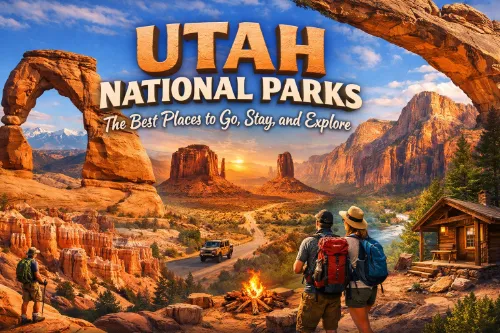
Utah National Parks are some of the most spectacular in the USA, with five major parks—Zion, Bryce Canyon, Arches, Canyonlands, and Capitol Reef—spread across Southern, Central, and Eastern Utah.
The best time to visit is in spring (April–May) and fall (September–October), when you get milder weather and smaller crowds than peak summer. Most travelers fly into Las Vegas or Salt Lake City, rent a car, and drive a loop that connects multiple parks on one unforgettable Utah national parks road trip.
Introduction: Why Utah Is the Best Destination for National Parks Lovers
Utah National Parks deliver towering cliffs, glowing hoodoos, endless arches, and wide desert vistas in a relatively compact region, making Utah a dream destination for national park lovers.
The state’s famous “Mighty 5” national parks—Zion, Bryce Canyon, Arches, Canyonlands, and Capitol Reef—offer wildly different experiences, from slot canyons and river hikes to quiet orchards and historic districts.
This destination guide is designed for first‑timers, families, and road‑trippers who want to know the best places to go, stay, and explore without wasting time. Whether you have 3–4 days or a full 7–10 days, you’ll find realistic itineraries, where to base yourself, and how to explore Utah’s national parks safely and responsibly.
Trip Planning Essentials for Utah National Parks
Best time to visit Utah National Parks
The best time to visit Utah National Parks is spring (April–May) and fall (September–October), when temperatures are milder and crowd levels are lower than in summer. In spring, wildflowers start to bloom, snow begins to melt at higher elevations, and trails gradually open up.
Fall brings crisp air, beautiful light for photography, and cooler hiking conditions, especially in Southern Utah. Summer offers long daylight hours but also intense heat, particularly in Arches, Canyonlands, and Capitol Reef, so you’ll need early starts, plenty of water, and strong sun protection.
Winter is the quietest season and can be magical in Bryce Canyon, where hoodoos dusted with snow look otherworldly, but you should expect cold temperatures, possible ice on trails, and occasional road limitations.
How long to spend in Utah’s Mighty 5
To see all five Utah National Parks, plan at least 7–10 days so you’re not spending your entire trip in the car. In about a week, you can visit Zion, Bryce Canyon, Capitol Reef, Arches, and Canyonlands at a comfortable pace, with one or two nights near each cluster.
If you have only 3–4 days, focus on two parks that are relatively close together—such as Zion and Bryce Canyon in Southern Utah, or Arches and Canyonlands from a base in Moab in Eastern Utah.
A longer trip also gives you time to explore small towns, scenic byways, and state parks between the major national parks.
Getting around: driving and distances
A car or RV is essential for exploring Utah National Parks, as public transportation between parks is limited or nonexistent. Many visitors fly into Las Vegas, Nevada, and drive about 2.5–3 hours to reach Zion National Park, making it a popular starting point for a Southern Utah national parks loop.
From Zion to Bryce Canyon, plan roughly 2 hours of driving along scenic US‑89 and UT‑12, not counting photo stops. The drive from Bryce Canyon to Capitol Reef and the town of Torrey via UT‑12 takes about 2.5–3 hours and is one of the most scenic routes in the state.
From Torrey to Moab, the base for Arches and Canyonlands in Eastern Utah, expect another 2.5–3 hours of driving. You can also start in Salt Lake City, which is roughly 3.5–4 hours from Moab and about 3.5 hours from Capitol Reef.
Inside the parks, some areas like Zion Canyon rely on park shuttles during peak seasons, so factor in time to park, queue, and ride. Cell service can be spotty, so download offline maps and keep a paper map handy.
Park passes, fees, and permits
If you’re visiting several Utah National Parks on one trip, the America the Beautiful annual pass is excellent value, covering entrance fees to all U.S. national parks and many other federal lands.
Each park also has its own per‑vehicle or per‑person entry fee if you don’t have the pass. Popular trails and corridors may require timed entry or special permits; for example, the chained section of Angels Landing in Zion now operates via a permit system, and Arches has used timed entry during busy periods.
Check official park websites before you travel so you don’t miss out on key experiences due to permit requirements or seasonal restrictions.
Utah’s Mighty 5 at a Glance
Utah is often called the best state for national parks because each of the Mighty 5 has its own personality and highlight reel.
- Zion National Park (Southern Utah): Towering sandstone cliffs, slot canyons, and iconic hikes.
- Bryce Canyon National Park (Southern Utah): Amphitheaters packed with orange hoodoos and world‑class sunrise/sunset views.
- Arches National Park (Eastern Utah): Over 2,000 natural stone arches plus short hikes and dramatic desert landscapes.
- Canyonlands National Park (Eastern Utah): Vast canyons, overlooks, and backcountry adventures carved by the Colorado and Green Rivers.
- Capitol Reef National Park (Central Utah): A quieter park with scenic drives, orchards, historic sites, and layered rock formations.
Utah’s Mighty 5 at a glance
| Park | Region | Best for | Typical base town |
|---|---|---|---|
| Zion | Southern Utah | Iconic hikes, slot canyons, big cliffs | Springdale |
| Bryce Canyon | Southern Utah | Hoodoos, sunrise/sunset viewpoints | Bryce Canyon City |
| Arches | Eastern Utah | Natural arches, short hikes, photography | Moab |
| Canyonlands | Eastern Utah | Vast canyon views, overlooks, backcountry | Moab |
| Capitol Reef | Central Utah | Quieter park, scenic drives, history | Torrey |
Use this overview to match parks to your interests, then dive into the details below.
Zion National Park: Iconic Canyons and Trails
Zion National Park in Southern Utah is one of the most famous Utah national parks, thanks to its towering sandstone walls and lush canyon carved by the Virgin River.
Zion Canyon Scenic Drive is the main spine of the park, with shuttles (in season) connecting major trailheads and viewpoints like the Court of the Patriarchs and the Temple of Sinawava.
Even if you never tackle a big hike, simply riding the shuttle, stopping at overlooks, and walking short riverside paths gives you an unforgettable experience.
For hikers, Zion is legendary. Angels Landing is a bucket‑list trail, roughly 4.5–5.5 miles round‑trip, steep and exposed, and it requires a permit for the chained section.
The Narrows, accessed from the end of the Zion Canyon Scenic Drive, takes you directly into the river between narrow canyon walls; many visitors walk 2–4 hours up the river and back, turning around when they’ve had their fill. You must always check flash‑flood forecasts and water temperatures before entering The Narrows.
Easier options include the Emerald Pools trails and the Canyon Overlook Trail (just outside the main canyon tunnel), which offer big views with less effort.
Bryce Canyon National Park: Hoodoos and Amphitheaters
Bryce Canyon National Park, also in Southern Utah, is smaller in size but huge in visual impact. Its main amphitheater is lined with viewpoints such as Sunrise Point, Sunset Point, Inspiration Point, and Bryce Point, each offering slightly different angles on the maze of hoodoos and spires.
Catching sunrise or sunset here is a must, as low light sets the orange and pink rock glowing. In winter, snow on the hoodoos adds another level of drama.
The best way to experience Bryce is to combine rim viewpoints with a hike down among the hoodoos. The classic Navajo Loop and Queen’s Garden combination is about 2.9 miles round‑trip and rated moderate, thanks to steep switchbacks and some elevation change.
Sections of the Rim Trail offer gentler walks with continuous views along the edge of the amphitheater. Because Bryce sits at higher elevation, temperatures can be cooler than in other Utah national parks, and you may feel the altitude on climbs—pace yourself and drink plenty of water.
Arches National Park: Classic Arches and Short Hikes
Arches National Park, just outside the town of Moab in Eastern Utah, is famous for Delicate Arch, Landscape Arch, Double Arch, and the Windows Section.
The park road threads through a desert landscape dotted with fins, balanced rocks, and more than 2,000 natural stone arches. It’s an excellent choice if you like a mix of scenic driving, short hikes, and photography.
Delicate Arch is the star attraction, reached via a roughly 3‑mile round‑trip trail that is moderate, with some slickrock, exposure, and no shade. You’ll want sturdy shoes, water, and sun protection, especially in warmer months.
The Windows Section and Double Arch area feature easy, mostly flat trails under 1 mile each, making them perfect for families and quick stops at sunrise or sunset. Because Arches is compact and very popular, timed entry or capacity management may be in place during the busiest months, so plan your visit time and reservations in advance.
Canyonlands National Park: Vast Canyons and Overlooks
Canyonlands National Park, also near Moab in Eastern Utah, is divided into several districts, with Island in the Sky and The Needles being the most accessible to most visitors. Island in the Sky sits on a high mesa and offers some of the best roadside viewpoints in the region.
Highlights include Mesa Arch, a short 0.5‑mile easy loop that is spectacular at sunrise, Grand View Point, a roughly 2‑mile round‑trip walk along the rim with sweeping vistas, and Green River Overlook.
The Needles District offers a more remote, backcountry feel, with longer trails weaving among colorful sandstone spires. If you have only a day or two based in Moab, most travelers prioritize Island in the Sky for its ease of access and big, layered canyon views.
With a high‑clearance or 4×4 vehicle, you can explore additional viewpoints and dirt roads, but you don’t need one to enjoy the main overlooks and short hikes.
Capitol Reef National Park: Underrated and Less Crowded
Capitol Reef National Park in Central Utah is often the least crowded of the Mighty 5, making it a rewarding stop for travelers who like quieter trails and scenic drives. The park stretches along the Waterpocket Fold, a nearly 100‑mile‑long wrinkle in the Earth’s crust that creates dramatic cliffs, domes, and canyons.
The main Scenic Drive leaves from near the visitor center and leads to viewpoints and trailheads, with side roads that can take you deeper into narrow canyons and viewpoints.
The historic Fruita district is a standout feature of Capitol Reef, with orchards, a schoolhouse, and a small store known for its pies and baked goods—an ideal treat after a hike. Hickman Bridge is a popular trail here, about 1.7 miles round‑trip and rated moderate, offering a natural bridge and great views of the surrounding canyon.
Cassidy Arch, roughly 3.4 miles round‑trip and more strenuous due to elevation gain, rewards hikers with a dramatic arch perched above a canyon. Capitol Reef’s combination of scenery, history, and relative calm makes it a memorable part of any Utah national parks itinerary.
Where to Stay: Best Bases and Areas
Choosing the right base towns will make visiting Utah National Parks smoother and more enjoyable.
- Springdale – The main gateway to Zion National Park, located in Southern Utah. It offers a range of hotels, inns, restaurants, and direct access to the park shuttle system that runs into Zion Canyon.
- Bryce Canyon City and nearby lodging – A small but convenient cluster of hotels, motels, and campgrounds just outside Bryce Canyon National Park’s entrance, ideal for sunrise and sunset visits.
- Moab – The adventure hub of Eastern Utah and the best base for Arches and Canyonlands. Moab has a wide mix of accommodation, from budget motels to higher‑end hotels, vacation rentals, hostels, and campgrounds, along with plenty of restaurants and outdoor outfitters.
- Torrey – A charming small town just west of Capitol Reef in Central Utah, with scenic views, cabins, motels, and lodges. It’s quiet, friendly, and perfectly positioned for exploring Capitol Reef’s Scenic Drive and nearby trails.
You’ll find both in‑park and nearby campgrounds at most Utah national parks, but they book up quickly in busy seasons, so reserve early if you plan to camp or bring an RV. Hotel prices typically peak in spring and fall, especially in Springdale and Moab, so consider shoulder‑season or weekday stays to help manage your budget.
Suggested Utah National Parks Itineraries
3–4 Day Utah National Parks Sampler
If you only have a long weekend, focus on two parks. One classic 3–4 day combo is Zion and Bryce Canyon in Southern Utah.
You could fly into Las Vegas, drive to Springdale, and spend 2 days in Zion National Park exploring the shuttle stops, hiking The Narrows or an easier trail, and enjoying Springdale’s restaurants.
Then drive about 2 hours to Bryce Canyon National Park for 1–2 days of sunrise viewpoints and a hoodoo hike like the Navajo Loop and Queen’s Garden.
Another option is to base yourself in Moab for 3–4 days and split your time between Arches National Park and the Island in the Sky district of Canyonlands National Park.
Spend one full day in Arches visiting the Windows Section, Double Arch, and Delicate Arch, and another full day driving the Island in the Sky loop with stops at Mesa Arch, Grand View Point, and other overlooks.
7‑Day Mighty 5 Road Trip
With a week, you can design a loop that touches all five Utah national parks without feeling overly rushed. A common route looks like this:
- Day 1–2: Arrive in Las Vegas or Salt Lake City and drive to Zion National Park; explore Zion Canyon and one or two signature hikes.
- Day 3: Drive about 2 hours to Bryce Canyon National Park, catch sunset at one of the main viewpoints, and hike into the amphitheater.
- Day 4: Drive UT‑12 to Capitol Reef National Park and Torrey (around 2.5–3 hours), explore Fruita and the Scenic Drive, and hike Hickman Bridge.
- Day 5–6: Head to Moab (about 2.5–3 hours), spend one day in Arches and one in Canyonlands (Island in the Sky).
- Day 7: Drive back to your starting city or add an extra day in Moab for more hiking, mountain biking, or a river trip.
Use this outline as a base and adjust nights depending on whether you prefer hiking, scenic drives, or more relaxed days in town.
Family‑Friendly and Easy‑Hikes Version
For families or travelers who prefer gentler adventures, build your Utah national parks itinerary around short trails and roadside viewpoints. In Zion, focus on the Riverside Walk, Pa’rus Trail, and Emerald Pools rather than Angels Landing.
In Bryce Canyon, combine rim viewpoints with a shortened loop into the hoodoos if everyone is feeling up for it. In Arches, the Windows Section and Double Arch are fantastic for kids and beginner hikers, while Mesa Arch and the main overlooks in Canyonlands offer huge rewards for minimal effort.
This approach makes Utah’s Mighty 5 accessible without over‑committing to strenuous hikes.
Exploring Responsibly in Utah’s Desert Parks
The desert landscapes of Utah National Parks are beautiful but fragile, so it’s important to explore responsibly. Stay on marked trails and durable surfaces to avoid damaging cryptobiotic soil crusts, which can take years to recover from a single footprint.
Pack out all your trash, including food scraps and tissues, and never carve into rocks or leave graffiti. Wildlife should be admired from a distance; never feed animals, and properly store your food and trash.
Safety is just as important as stewardship. Summer heat and dry air can lead to dehydration and heat‑related illness faster than many visitors expect, so drink water regularly, wear a hat and sunscreen, and rest in the shade.
For river and slot canyon hikes like The Narrows or certain side canyons in Capitol Reef, always check weather and flash‑flood forecasts, not just inside the park but in the wider region. Good preparation helps keep you and the parks safe for the long term.
Practical Packing and Navigation Tips
Packing smart will make your Utah national parks trip more enjoyable and safer. Bring breathable clothing you can layer, as temperatures often swing from cool mornings to hot afternoons. A wide‑brimmed hat, sunglasses, and high‑SPF sunscreen are essential for the strong desert sun.
Sturdy hiking shoes or boots with good traction are important for slickrock and uneven terrain, and water shoes or closed‑toe sandals are helpful for wet hikes like The Narrows.
Carry a refillable water bottle or hydration reservoir and aim to drink more water than you think you’ll need, especially when hiking in warmer months. A small daypack for snacks, extra layers, and a basic first aid kit is useful.
Because mobile coverage is limited in many areas, download offline maps and keep park maps from visitor centers as backup. If you enjoy photography, consider planning your days around sunrise or sunset at key viewpoints and bringing a tripod for low‑light shots or night sky photography, as these Utah national parks offer fantastic stargazing.
Frequently Asked Questions About Utah National Parks
Can I see all five Utah national parks in one trip?
Yes, you can see all five Utah national parks in one trip if you plan at least 7–10 days. In about a week, many travelers follow a loop from Las Vegas or Salt Lake City through Zion, Bryce Canyon, Capitol Reef, Moab for Arches and Canyonlands, and then back to their starting city.
Which Utah national park is best for first‑timers?
For first‑timers, Zion and Bryce Canyon are often the best Utah national parks to start with because they combine dramatic, easy‑to‑access viewpoints with a mix of short and moderate hikes. Arches and Canyonlands, based out of Moab, are a close second if you’re drawn to arches, wide canyon views, and desert scenery.
Do I need a special vehicle to explore Utah national parks?
Most major attractions in Utah national parks are accessible by regular car using paved roads. A high‑clearance or 4×4 vehicle opens up additional backcountry roads and remote overlooks, especially in Canyonlands and Capitol Reef, but it’s not required for the main scenic drives, viewpoints, and the most popular trailheads.
What’s the best base town for visiting multiple parks?
Moab is the best base in Eastern Utah for visiting both Arches and Canyonlands, while Springdale is ideal for Zion in Southern Utah. Torrey works well for Capitol Reef, and Bryce Canyon City or nearby lodging makes sunrise and sunset visits to Bryce Canyon National Park easy.
Utah National Parks truly are some of the best places in the United States to go, stay, and explore if you love dramatic landscapes and road trips.
Start with one of the sample itineraries above, choose your base towns in Southern, Central, and Eastern Utah, and book key accommodations early, especially in Springdale and Moab.
With a bit of planning, your Utah national parks road trip can cover the Mighty 5 at a relaxed pace, give you time for trails, viewpoints, and small‑town stops, and still leave you wanting to return and explore even more.

I’m John Michael Palmes, an SEO practitioner with over three years of hands-on experience in search engine optimization and digital marketing. I help websites improve visibility, build effective SEO content strategies, and rank better on Google using practical, data-driven approaches.
My focus is on on-page SEO, keyword research, and content optimization—the fundamentals that help both search engines and users understand a site clearly. I continuously test, analyze results, and refine strategies, sharing honest and actionable SEO insights as search algorithms evolve.