Your most productive week starts before Monday.
Weekend planning gives you structure before pressure begins.
It reduces stress.
It sharpens focus.
It protects your energy.
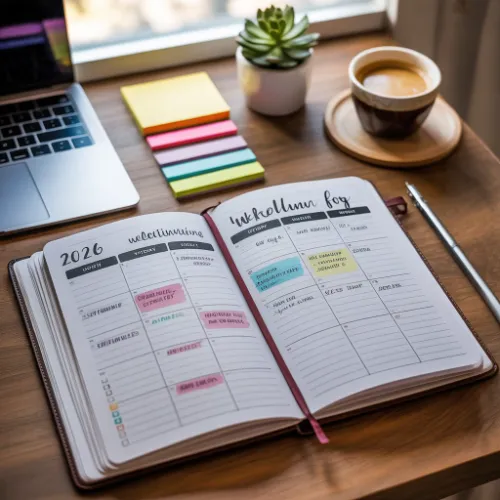
In 2026, productivity depends less on effort and more on preparation.
This guide shows you how to use weekend planning to create productive weeks that feel manageable and consistent.
WHAT WEEKEND PLANNING MEANS IN 2026 🧠
Weekend planning is short, intentional preparation.
It is not working all weekend.
It is not micromanaging your life.
It is about:
• Setting weekly priorities
• Preparing your time management system
• Reducing weekday decisions
• Protecting mental space
The goal is clarity, not control.
WHY WEEKEND PLANNING CREATES PRODUCTIVE WEEK
Most people lose productivity because they start the week reacting.
Emails decide priorities.
Meetings fill calendars.
Urgent tasks replace important ones.
Weekend planning prevents this.
Benefits include:
• Clear direction on Monday
• Less decision fatigue
• Better focus management
• Fewer distractions
• Stronger work-life balance
Prepared weeks outperform busy weeks.
HOW LONG WEEKEND PLANNING SHOULD TAKE ⏱️
Good weekend planning is efficient.
Ideal time range:
• Minimum: 30 minutes
• Maximum: 60 minutes
If it takes longer, simplify your system.
Planning should save time, not consume it.
BEST DAYS AND TIMES FOR WEEKEND PLANNING ⏰
Choose a calm moment.
Common options:
• Friday evening, light review
• Saturday morning, full planning
• Sunday afternoon, final setup
Consistency matters more than the exact day.
Pick one.
Stick to it.
You can read Productivity Mistakes You Should Avoid in 2026
STEP 1: REVIEW THE PREVIOUS WEEK 🔄
Reflection improves productivity systems.
Ask yourself:
• What tasks were completed
• What caused delays
• What drained energy
• What worked smoothly
Keep notes short.
This step prevents repeating mistakes.
STEP 2: IDENTIFY WEEKLY PRIORITIES 🎯
Every productive week needs direction.
Choose:
• One main weekly goal
• Two to four supporting priorities
Avoid overload.
If you plan too much, nothing gets finished.
STEP 3: SET REALISTIC WEEKLY GOALS 📌
Unrealistic goals reduce motivation and focus.
Good goal setting follows these rules:
• Clear outcome
• Defined deadline
• Measurable progress
Example:
Weak goal: Work on report
Strong goal: Finish report draft by Thursday
Clarity drives execution.
STEP 4: TIME BLOCK YOUR WEEK 🧱
Time blocking turns intentions into action.
Schedule:
• Deep work blocks
• Meetings
• Admin tasks
• Breaks
Your calendar becomes your execution plan.
WEEKLY TIME BLOCKING EXAMPLE TABLE
Day, Main Focus, Secondary Tasks, Notes
Monday, Deep work, Emails admin, High energy morning
Tuesday, Project work, Meetings, Avoid multitasking
Wednesday, Deep work, Review tasks, Midweek adjustment
Thursday, Collaboration, Admin tasks, Lower energy day
Friday, Wrap-up, Planning review, Prepare for next week
This structure improves workflow efficiency.
Read more: Seed Your Dreams: 7 Ways to Create an Effective Planning Weekend
STEP 5: PLAN TASKS AROUND ENERGY LEVELS 🔋
Energy matters more than time.
Match tasks to energy:
• High energy, deep work
• Medium energy, collaboration
• Low energy, admin work
Tracking energy for one week improves productivity fast.
STEP 6: PREPARE YOUR TASK LIST 📝
Your task list supports your goals.
Best practices:
• Limit daily tasks to three to five
• Separate urgent and important
• Use one task management system
Long lists create stress.
Focused lists create results.
STEP 7: RESET YOUR WORK ENVIRONMENT 🧹
Clutter drains attention.
During the weekend:
• Clean your desk
• Organize files
• Close unused browser tabs
• Clear inboxes
A clean environment supports mental clarity.
STEP 8: PLAN PERSONAL TASKS AND ERRANDS 🛒
Personal tasks disrupt focus when ignored.
Plan:
• Meals
• Errands
• Appointments
• Family commitments
This prevents midweek distractions.
Productivity includes life management.
STEP 9: SCHEDULE BREAKS AND REST 😴
Rest is part of time management.
Plan:
• Short daily breaks
• One longer rest block
• Movement or exercise
Recovery protects long-term productivity.
STEP 10: SET WEEKLY BOUNDARIES 🚧
Boundaries protect your schedule.
Decide in advance:
• Work start time
• Work end time
• Message check windows
Clear boundaries improve focus and reduce burnout.
WEEKEND PLANNING FOR REMOTE WORKERS 💻
Remote work needs structure.
Weekend planning helps by:
• Defining work hours
• Preventing overwork
• Separating work and home
Plan shutdown routines clearly.
WEEKEND PLANNING FOR STUDENTS 🎓
Students benefit from early preparation.
Plan:
• Study blocks
• Assignment deadlines
• Review sessions
Prepared weeks reduce exam stress.
WEEKEND PLANNING FOR BUSY PROFESSIONALS ⏳
If time is limited:
Focus on:
• One high-impact goal
• One improvement habit
• One rest activity
Simple plans work best.
COMMON WEEKEND PLANNING MISTAKES ❌
Avoid these mistakes:
• Overplanning
• Scheduling every minute
• Ignoring rest
• Setting unrealistic goals
• Copying others’ systems
Flexibility keeps systems sustainable.
WEEKEND PLANNING TOOLS THAT WORK 🧰
You only need a few tools:
• Calendar
• Task manager
• Notes app
Avoid tool overload.
Simple tools support consistent productivity habits.
WEEKEND PLANNING CHECKLIST ✅
Use this weekly checklist:
• Review last week
• Set weekly priorities
• Time block key tasks
• Prepare workspace
• Plan rest
This keeps planning efficient.
HOW WEEKEND PLANNING REDUCES STRESS 🧠
Planning reduces uncertainty.
You start Monday knowing:
• What matters
• What can wait
• When tasks happen
Less mental clutter means better focus.
HOW WEEKEND PLANNING IMPROVES FOCUS 🎯
Clear plans remove guesswork.
You avoid:
• Constant decision-making
• Task switching
• Distraction loops
Prepared minds work faster.
ADAPTING YOUR WEEKEND PLANNING SYSTEM 🔄
Life changes.
Your system should adapt.
Review monthly:
• What feels heavy
• What works well
• What needs adjustment
Flexible systems last longer.
BUILDING CONSISTENCY WITH WEEKEND PLANNING 🔁
One weekend plan helps.
Consistency transforms productivity.
Build a habit:
• Same day
• Same time
• Same process
Habits remove friction.
FINAL THOUGHTS 🌟
Weekend planning is not about control.
It is about clarity and intention.
When you plan your weekend,
you design a productive week before it begins.
Keep it simple.
Protect your energy.
Review weekly.
That is how productive weeks are built in 2026 🚀

I’m Geraldine Villariza, an SEO Specialist with over 3 years of experience. I’m passionate about beauty, self-care, and helping others thrive. I’ll be discussing topics like lifestyle, beauty, health and wellness, life hacks, daily tips, mindset and motivation, productivity, relationships, and love — all to help you live a more balanced and fulfilling life.