
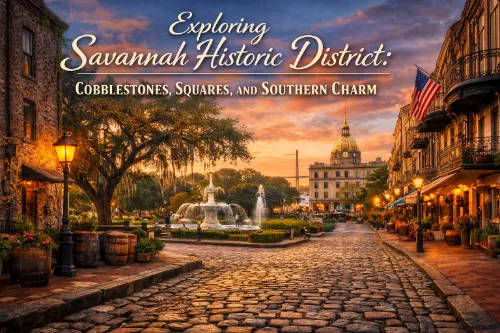
Savannah’s Historic District is the heart of Georgia’s oldest city, and it feels like stepping back in time. Cobblestone streets, moss-draped oak trees, and picture-perfect squares make this area one of the most charming destinations in the United States.
If you are planning a trip to Savannah, this guide will help you understand the layout, the best things to do, and how to make the most of your visit to the Savannah Historic District.
In this simple guide, you will learn where to walk, what to see, where to eat, and where to stay. It is designed for first-time visitors, history lovers, and anyone who wants to experience real Southern charm in downtown Savannah, Georgia.
Quick Orientation: Where Is the Savannah Historic District?
The Savannah Historic Landmark District sits in downtown Savannah, Georgia, between the Savannah River to the north and Forsyth Park to the south. The area is compact and very walkable, which is why so many travelers love exploring it on foot. The district is a designated National Historic Landmark because of its well-preserved 18th- and 19th-century homes and unique city plan.
Savannah’s city center is laid out on a grid, with streets crossing at regular intervals and opening into beautiful public squares. This design makes it easy to get oriented once you understand a few key streets and squares. To see an overview, you can browse the map and neighborhood breakdown on the official Historic Landmark District page from Visit Savannah.
The famous Savannah riverfront, including River Street and the river walk, borders the northern edge of the Historic District and offers views of passing ships and the Talmadge Memorial Bridge.
Because the main attractions are close together, you do not need a car to explore the Historic District itself. Many visitors enjoy a car-free trip, relying on walking tours, trolley tours, and rideshares when they want to go beyond the district to places like Bonaventure Cemetery, Wormsloe State Historic Site, or Fort Pulaski National Monument, which are covered in many Savannah trip guides on sites like Explore Georgia and Tripadvisor’s Savannah page.
A Short History of the Savannah Historic District
Savannah was founded in 1733 by General James Oglethorpe, and the city’s original plan still shapes the Historic District today. The grid layout, with regular squares and broad streets, was designed for defense, community, and beauty.
Over time, Savannah’s squares, churches, and homes survived fires, war, and modernization, leaving behind one of the largest and most intact historic districts in the country.
The Savannah Historic District is known for its mix of architectural styles, including Georgian, Federal, Gothic Revival, and Victorian homes. Walking through the district, you will see brick townhouses, grand mansions, and modest row houses, often shaded by oak-lined streets and Spanish moss trees that create a romantic, almost mysterious atmosphere.
If you want a deeper dive into the city’s background, the Savannah History Museum offers exhibits from 1733 to the present and is a good starting point for understanding local history. You can learn more about visiting the museum on the Coastal Heritage Society site or via the Savannah History Museum listing on Tripadvisor.
Squares and Streets: The Soul of the Historic District
The squares of Savannah are the city’s signature feature. There were originally 24 squares in the Historic District, and 22 remain today. Each square is a small park with trees, benches, monuments, and paths, and many are surrounded by beautiful historic homes and churches.
If you have limited time, focus on a handful of famous squares:
- Chippewa Square – Known for its film connection to “Forrest Gump,” this square is surrounded by lovely buildings and shaded by tall trees.
- Johnson Square – One of the oldest and most central squares, making it a good landmark when you are finding your way around downtown Savannah.
- Madison Square – This square offers a mix of history and atmosphere, with monuments and historic buildings nearby.
- Monterey Square – Often called one of the most beautiful squares in Savannah, with classic homes and Spanish moss trees framing the space.
For an easy visual overview of how each square is laid out, the Official Savannah Guide has helpful descriptions and stories for many of the historic squares.
As you move from square to square, you will notice cobblestone streets, especially near the riverfront and older sections of town. These cobblestones and brick sidewalks add to the charm but can be uneven, so wear comfortable walking shoes. Strolling along the oak-lined streets, you will see iron balconies, gas lamps, and lush gardens tucked behind historic fences.
River Street is one of the most famous cobblestone streets in the city. It runs along the Savannah riverfront and is lined with old cotton warehouses that now house shops, restaurants, and galleries. For ideas on what to do along the river walk and nearby City Market, resources like Savannah.com’s Historic District overview are useful trip planners.
Iconic Landmarks and Historic Sites You Should Not Miss
Within the Savannah Historic District, you will find many historic sites that tell the story of the city’s religious, cultural, and architectural past. Some of the most popular landmarks and house museums include:
- Cathedral of St. John the Baptist – This striking white and blue church is one of Savannah’s most photographed buildings. You can read more about it on many local guides such as this Savannah Historic District guide from the American Prohibition Museum.
- Forsyth Park – Technically just south of many squares but still part of the Historic District experience, this large park features walking paths, gardens, and the iconic Forsyth Park fountain.
- Mercer–Williams House – Known from “Midnight in the Garden of Good and Evil,” this house museum showcases stunning architecture and collected antiques.
- House museums and historic homes – Properties like the Owens–Thomas House, Juliette Gordon Low Birthplace, and others give a look inside Savannah’s historic lifestyle and architecture.
If you want to go beyond the immediate Historic District, add Bonaventure Cemetery and Wormsloe Historic Site to your list. These are covered in detail in many three-day itinerary posts, such as this popular “three days in Savannah” guide on Adventurous Kate.
Best Ways to Explore: Walks, Trolleys, and Tours
The Savannah Historic District is one of the most walkable areas in the South. Many visitors choose a self-guided walking tour using a map of the Savannah squares and main streets, which you can find through resources like Savannah First-Timer’s Guide.
If you prefer more structure, a guided Savannah walking tour is a great option. Local guides share stories about the city’s architecture, Civil War history, Revolutionary War sites, and local legends. For a curated set of walking and themed tours, check out the tour listings on Viator’s Savannah Historic District page.
Trolley tours are another popular way to see downtown Savannah, Georgia. Companies like Old Town Trolley Tours operate hop-on, hop-off services that stop at major attractions, including Forsyth Park, City Market, and River Street. You can read how the trolley works and what stops it covers in this detailed Savannah Historic District visitors guide.
For a more romantic or atmospheric experience, consider a horse-drawn carriage ride through the Historic District. Evening carriage rides and nighttime Savannah ghost tours are especially popular, since haunted Savannah stories are a big part of the city’s identity. Many visitors review different ghost tours and history walks on Tripadvisor’s Savannah attraction listings.
Food tours and Southern food–focused walks are also growing in popularity. These experiences combine local restaurants, classic dishes, and culinary history, helping you discover some of the best restaurants in the Historic District while learning about regional flavors.
Where to Eat and Drink in the Historic District
One of the joys of exploring the Savannah Historic District is discovering local food and drink. The area is filled with Southern food, fresh seafood, casual cafes, and fine dining restaurants.
For inspiration, browse the Things to Do and dining pages on Visit Savannah, which highlight popular eateries and neighborhoods. Classic Southern dishes like shrimp and grits, fried green tomatoes, biscuits, and pecan pie appear on many menus around the squares and riverfront.
Rooftop bars in the Historic District and along the riverfront are great choices if you want a view of the skyline, the river, or sunset. Several riverfront and boutique hotels feature rooftop lounges; you can find updated lists and recommendations across local guides such as Savannah.com and travel magazines like Condé Nast Traveler’s Savannah guide.
Where to Stay: Historic Inns, Hotels, and More
Staying in the Savannah Historic District lets you step outside your door and immediately be in the middle of the action. You will find a wide range of places to stay, including boutique hotels, historic inns, bed-and-breakfasts, and modern riverfront properties.
Historic inns and bed-and-breakfasts often occupy 19th-century homes with original details such as fireplaces, high ceilings, and antique furnishings. Boutique hotels combine history with contemporary style and amenities, offering a refined atmosphere that still feels connected to the city’s past. For an overview of hotels, B&Bs, and vacation rentals, the official Visit Savannah site and the Savannah, GA lodging listings on Tripadvisor are good starting points.
Riverfront hotels along River Street and the Savannah river walk are perfect if you want water views and quick access to shops and restaurants. These properties may sit in restored warehouses or modern buildings but maintain a historic feel.
There are also more budget-friendly options just outside the core of the Historic District. Staying a short distance away can save money while still giving you easy access to the main attractions by foot, trolley, or rideshare.
Sample Itineraries for the Savannah Historic District
One-Day Highlights
If you only have one day in Savannah’s Historic District, focus on a simple loop:
- Morning: Start at Forsyth Park, walk through the park and head north, passing several squares.
- Late morning: Visit the Cathedral of St. John the Baptist and stop into a nearby house museum or historic site.
- Afternoon: Make your way toward River Street, exploring Chippewa Square and Johnson Square along the way.
- Evening: Enjoy dinner at one of the best restaurants in the Historic District, then stroll along the riverfront or join a ghost tour.
You can find variations of this style of day plan on resources like Savannah First-Timer’s Guide and other local blogs.
Two- to Three-Day Deeper Exploration
If you have two or three days, you can slow down and add more variety:
- Day 1: Explore the core Savannah Historic District on foot, focusing on squares, churches, and house museums.
- Day 2: Take a trolley tour in the morning, then spend the afternoon shopping and dining around City Market and the river walk.
- Day 3: Venture to nearby sites like Bonaventure Cemetery, Wormsloe Historic Site, or Old Fort Jackson, then return for a carriage ride or rooftop bar at sunset.
For more sample itineraries and tour ideas, see curated trip plans on Adventurous Kate’s Savannah itinerary or the official Explore Georgia Savannah page.
Practical Tips for Visiting Savannah’s Historic District
To enjoy the Savannah Historic District comfortably, it helps to plan around the weather, terrain, and local customs. The best time to visit Savannah is often spring or fall, when temperatures are mild and humidity is lower.
Because the Historic District has cobblestone streets, brick sidewalks, and occasional uneven surfaces, wear comfortable shoes with good support. Light, breathable clothing is helpful in warmer months, and a light jacket may be useful in cooler evenings.
The area is generally considered safe, especially in busy tourist zones. As in any city, it is smart to stay aware of your surroundings, avoid poorly lit areas late at night, and keep valuables secure. Accessibility has improved in much of the Historic District, but some older buildings and cobblestone streets can still pose challenges for visitors with mobility issues. Trolley tours are a good option if you want to minimize walking while still seeing the main sights.
Frequently Asked Questions About Savannah’s Historic District
Is the Savannah Historic District walkable?
Yes, the Savannah Historic District is very walkable. Most major attractions, squares, and restaurants are located within a relatively small area, and the flat terrain makes walking easy for most visitors.
Do I need a car to explore the Historic District?
You do not need a car for the Historic District itself. Many travelers arrive by car, park once, and then rely on walking tours, a trolley tour, or rideshares to get around. A car is helpful only if you plan to visit more distant sites like Bonaventure Cemetery, Wormsloe Historic Site, or Tybee Island.
How many days do I need in Savannah’s Historic District?
You can get a good overview of the district in one full day, but two or three days allow you to explore more squares, museums, and restaurants at a relaxed pace. With extra time, you can also add nearby historic sites and coastal attractions.
Is the Historic District good for families?
Yes, the Historic District is family-friendly. Children often enjoy the open squares, parks, riverfront views, and trolley rides. Some museums and tours may be better suited for older kids, so check age recommendations before booking.
Is Savannah’s Historic District good for couples or solo travelers?
The district is popular with couples, thanks to its romantic streets, carriage rides, and candlelit restaurants. Solo travelers also enjoy the walkable layout, friendly atmosphere, and variety of tours and activities that make it easy to explore on your own.

I’m John Michael Palmes, an SEO practitioner with over three years of hands-on experience in search engine optimization and digital marketing. I help websites improve visibility, build effective SEO content strategies, and rank better on Google using practical, data-driven approaches.
My focus is on on-page SEO, keyword research, and content optimization—the fundamentals that help both search engines and users understand a site clearly. I continuously test, analyze results, and refine strategies, sharing honest and actionable SEO insights as search algorithms evolve.